


Scroll through TikTok for 30 seconds and you’ll notice something. The content that stops your thumb doesn’t announce itself as advertising. It looks like something a friend made. A quick product demo shot in someone’s kitchen. A genuine reaction video. A casual before-and-after filmed with a phone camera.
This shift isn’t aesthetic preference. It’s audience behavior forcing brands to adapt. Users have developed sophisticated ad-avoidance reflexes. Polished, studio-produced commercials get scrolled past almost instantly. But content that feels native to the platform, authentic in tone, and human in presentation actually gets watched.
The challenge? Creating content that feels unpolished while maintaining brand standards and driving business outcomes requires a delicate balance that traditional production methods struggle to achieve at scale.
🎭 The Authenticity Paradox
Here’s where it gets complicated. Audiences want authenticity, but they also expect quality. Too polished, and content reads as “corporate ad” and gets skipped. Too raw, and it undermines brand credibility. The sweet spot exists in a narrow band between these extremes.
Traditional video production typically optimizes for polish. Studio lighting, professional editing, scripted delivery, branded graphics. These elements signal quality but also signal “advertisement.” The viewer’s guard goes up immediately.
User-generated content sits on the opposite end. It feels authentic because it is authentic. But brands can’t control messaging consistency, product presentation accuracy, or production volume when depending entirely on real customers or influencers to create content organically.
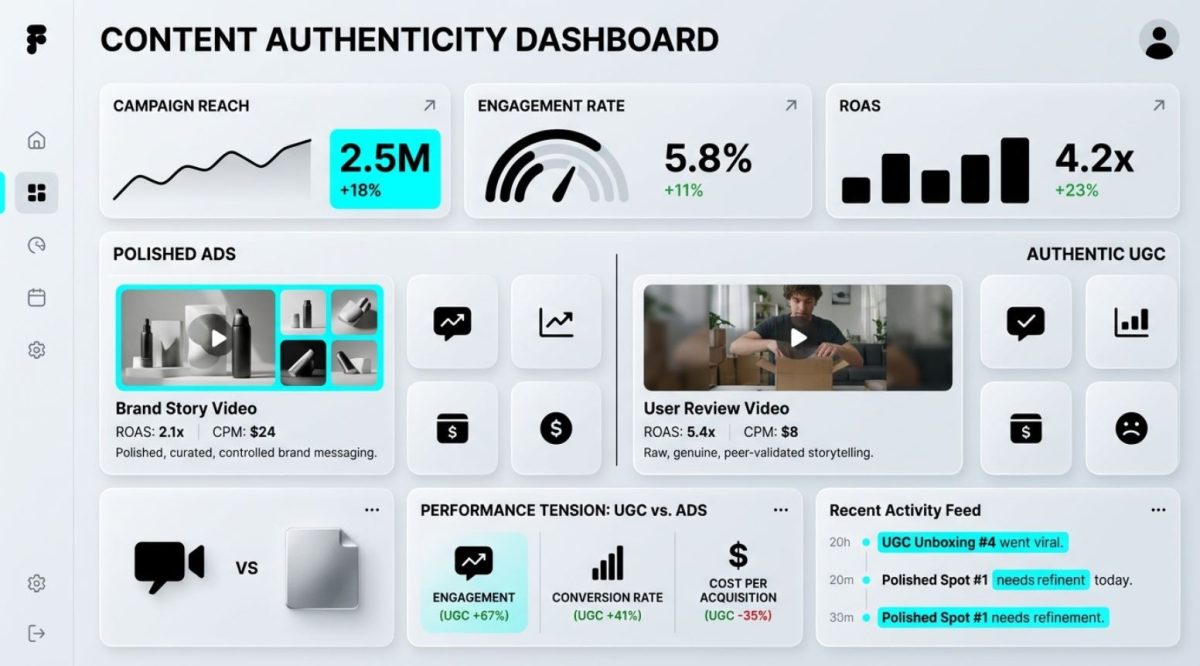
The UGC-Style Solution
This tension has given rise to a specific creative approach: UGC-style branded content. Videos that intentionally mimic the visual language of organic user posts while maintaining strategic messaging control.
The characteristics that define this format:
📱 Mobile-first framing – Vertical video that looks phone-shot 💬 Conversational tone – Speaking directly to camera like a friend 🏠 Casual environments – Real spaces, not studio backdrops ✂️ Visible editing marks – Jump cuts and informal transitions 📝 Text overlays – Platform-native caption styles 🎵 Trending audio – Sounds users already recognize
When executed well, these AI ads perform dramatically better than traditional commercials. Data shows UGC-style content can generate 4x higher click-through rates and 50% lower cost-per-click compared to polished brand videos.
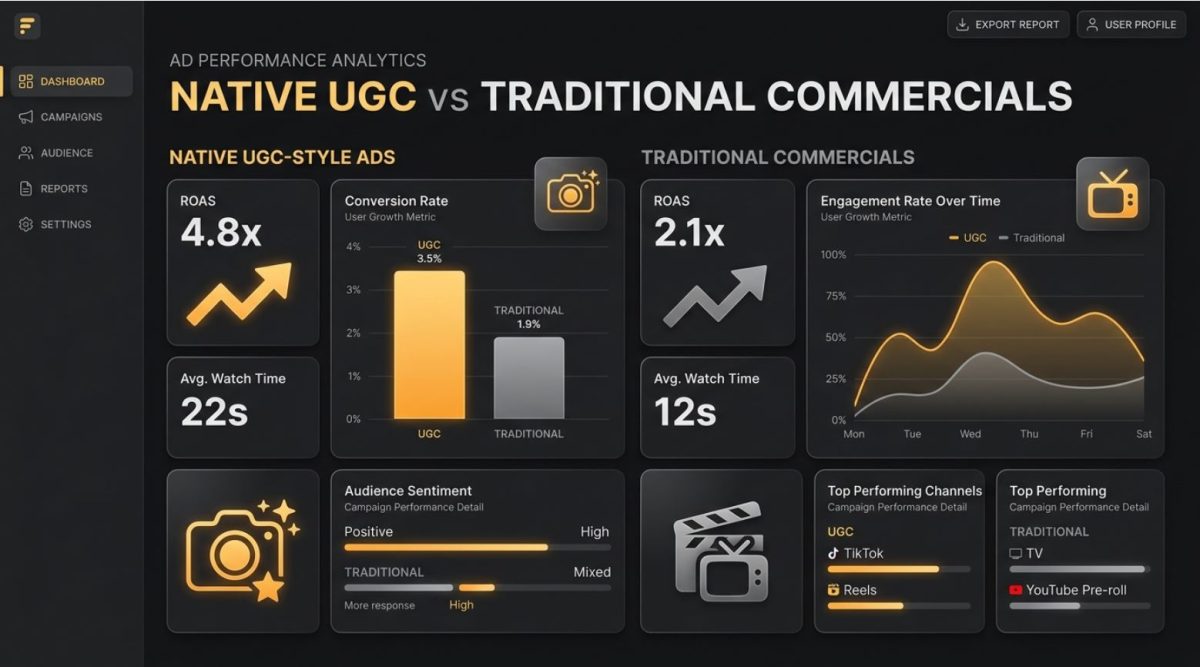
🤖 Where AI Makes This Scalable
The problem with UGC-style content has always been production volume. Hiring creators for every product launch, seasonal campaign, or market test gets expensive quickly. Coordinating dozens of individual creators to maintain messaging consistency becomes logistically complex.
AI ad generators solve this by enabling brands to produce UGC-aesthetic video promos without depending on an endless pipeline of human creators. As brands pay closer attention to the underlying quality of AI video synthesis, Seedance 2.0 reflects the kind of model progress making native-feeling creative production more reliable at scale.
Topview includes capabilities specifically designed for this format:
✅ Natural-looking avatars that mimic creator presentation styles
✅ Conversational script generation that sounds human, not corporate
✅ Platform-appropriate pacing and editing patterns
✅ Trend-aware formatting that matches current TikTok ads aesthetics
✅ Customizable environments that feel authentic rather than staged
The output maintains the casual, relatable feel that performs well while allowing brands to control messaging, test variations rapidly, and scale production to match campaign needs.
📊 The Performance Gap
Why does UGC-style content outperform traditional commercials so consistently?
Pattern Interruption 🧠 When content doesn’t look like an ad, it bypasses learned scrolling behavior. Users process it as organic content initially, giving the message a few critical seconds to land before the commercial intent becomes clear.
Social Proof Perception 👥 Even when viewers know content is branded, the UGC format carries implicit endorsement signals. “This looks like what real users post” translates subconsciously to “real people use this product.”
Platform Algorithm Favorability 📈 TikTok and Instagram prioritize content that keeps users engaged. UGC-style videos typically achieve higher watch-through rates, which signals quality to the algorithm and improves organic distribution.
Lower Defensive Response 🛡️ Polished commercials trigger skepticism reflexively. Casual presentation lowers psychological resistance, making audiences more receptive to the actual message.
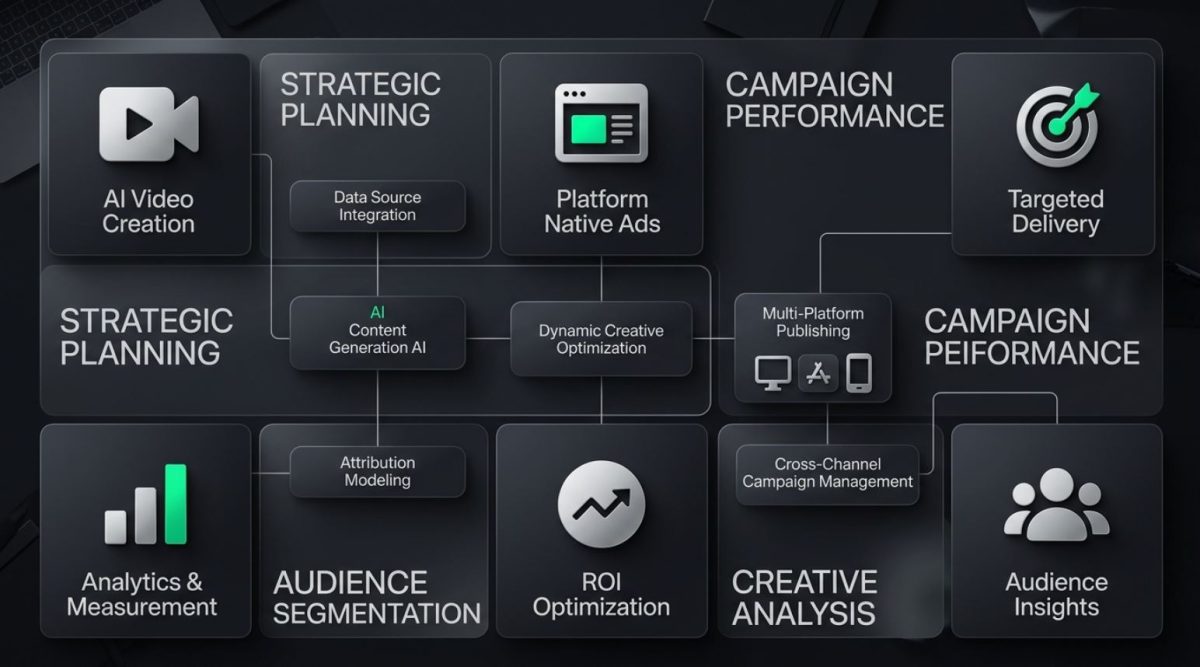
💡 Implementation Considerations
Successfully deploying UGC-style AI video ads requires intentional strategy:
Maintain Brand Consistency ✨ Just because the format is casual doesn’t mean messaging should be inconsistent. Core value propositions, product benefits, and brand voice still need coherence across all variations.
Test Authenticity Boundaries 🎯 Find where your audience draws the line between “authentic” and “trying too hard.” This varies by industry, demographic, and platform. Testing reveals what works for your specific context.
Balance Volume and Quality ⚖️ AI enables high-volume production, but flooding channels with mediocre content damages performance. Generate multiple options, then select and deploy the strongest executions.
Adapt to Platform Evolution 🔄 What reads as authentic changes as platforms and user behavior evolve. UGC aesthetics on TikTok today differ from Instagram Reels, and both will look different six months from now.
🎬 The Bigger Picture
The shift toward UGC-style content represents more than a tactical trend. It reflects a fundamental change in how audiences process and respond to marketing messages. Trust in traditional advertising continues declining while trust in peer recommendations and organic content remains high.
Brands that can produce video content feeling native to each platform while maintaining strategic coherence will consistently outperform those still operating with traditional commercial production mindsets. AI ad generators provide the operational capability to execute this approach at the volume modern platforms demand.
The best video ads no longer look like ads because audiences have made it clear what they’ll watch and what they’ll skip. The technology to produce content matching those preferences now exists. What separates effective execution from wasted effort is understanding why the format works and implementing it with strategic discipline rather than just chasing aesthetic trends.
 BBC’s Kate Adie announced as opening Keynote speaker at Infosecurity Europe 2019
 5 Common Challenges in Converting Old Media and How to Solve Them
 Trax Appoints Steve Liebman as SVP of Sales and John Vallely as COO
 IDS builds a digital strategy for spin-out success with BML Digital
 UK retail sales – best quarter on record
 Inoapps announces Abry Partners investment