

In today’s rapidly evolving digital landscape, enterprises are increasingly seeking sustainable and cost-effective ways to manage their hardware lifecycle without compromising on operational efficiency.
Refurbished desktops and kiosks offer a strategic alternative to new equipment, providing high-performance capabilities while significantly reducing capital expenditure.
Integrating refurbished hardware into the supply chain not only supports circular economy initiatives but also ensures that critical touchpoints remain functional and modern.
By choosing rigorously tested and certified units, organisations can maintain high reliability and security standards across their distributed networks.
Read on to explore how these hardware choices can drive long-term value and operational resilience for your business.
1. Performance & ROI of Refurbished Desktops
Contrary to common misconceptions, refurbished enterprise hardware does not equate to obsolete technology.
Modern ISO-certified refurbishment processes, such as those under ISO 9001 for quality management, ensure systems are tested, calibrated, and configured to meet current industrial standards through documented procedures and risk assessments.
Notably, manufacturing a single new laptop requires 240 kg of fossil fuels, 22 kg of chemicals, and 1,500 litres of water, a resource cost largely avoided by choosing refurbished units.
Reliability remains a primary concern for procurement officers, yet data suggests that certified refurbished units maintain failure rates comparable to new business desktops. When procuring reliable refurbished desktops from PCLiquidations or similar certified providers, the immediate reduction in capital expenditure often exceeds that of new inventory.
This cost efficiency allows organisations to redirect budget towards higher-value digital transformation initiatives while maintaining a reliable hardware baseline.
2. Tablet POS Kiosks
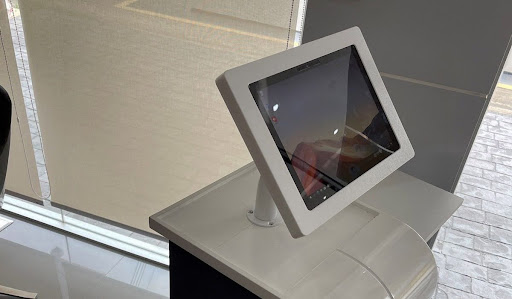
In the warehouse and on the fulfilment floor, static workstations are increasingly being replaced or augmented by mobile solutions. Modern Point of Sale (POS) kiosks utilise enterprise-grade tablets to bring computing power directly to the point of activity.
Research highlights the effectiveness of this interface; studies have shown that customers who interact with self-service kiosks typically buy 10% to 30% more than those who interact with business employees, indicating a similar potential for efficiency gains in logistics workflows.
By enabling workers to update inventory the moment items leave a pick face, organisations can eliminate batch reconciliation and significantly reduce picking errors.
Security and durability are paramount when deploying these mobile interfaces. To ensure longevity in high-traffic zones, mounting hardware such as a rugged POS tablet stand from VidaBox secures the device against theft while maintaining ergonomic accessibility for staff
These enclosures often support 360-degree rotation and concealed cabling, allowing for seamless integration into existing trade counters or packing stations without requiring bespoke fabrication.
| Pro Tip: Security is paramount for mobile inventory. Always pair tablets with ruggedised, locking enclosures to prevent theft and damage while maintaining ergonomic accessibility for temporary staff in high-traffic warehouse zones. |
3. Circular-Economy Procurement & E-Waste Reduction
The pressure to adopt sustainable practices is no longer just a reputational concern but a regulatory one. The world generated 53.6 million metric tons of electronic waste, with only 17.4% properly recycled. Refurbished hardware addresses this by keeping functional materials in circulation longer, directly combating the “take-make-dispose” model.
Extending the lifecycle of a desktop or tablet by just three years significantly dilutes the embodied carbon associated with its initial manufacture.
Forward-thinking organisations are integrating these principles into their lifecycle management programmes. This involves not only purchasing refurbished stock but also engaging in buy-back schemes for ageing hardware.
Such approaches facilitate second and third refurbishment cycles, ensuring that components like RAM and power supply units are harvested for spares rather than sent to landfill.
This circular approach aligns with emerging “Right-to-Repair” legislation, positioning companies ahead of compliance curves.
Integrating Sustainable IT for Agile, Digitally-Transformed Operations
One of the less-discussed yet critical advantages of refurbished hardware is supply chain agility. During component shortages, lead times for new industrial PCs can balloon to several months. In contrast, refurbished stock is typically available for immediate deployment.
IT teams can imagine hundreds of identical refurbished units over a weekend using standard automation tools, ensuring that operations can scale rapidly in response to demand spikes.
Security remains robust across these older generations of hardware due to backward compatibility in modern security protocols. Intel vPro technology allows for remote power cycling and maintenance, while TPM 2.0 modules ensure that encryption standards such as BitLocker function seamlessly.
Whether connecting via Wi-Fi 6 in a mezzanine storage area or using LTE for off-site logistics, these devices treat modern mobile device management (MDM) platforms the same as new hardware.
Emerging Trends in Warehouse Computing
- Mobile Edge Computing: Processing data locally at the picking station to reduce latency.
- Battery Analytics: Predictive health monitoring to schedule non-disruptive swaps for tablets.
- High-Density Connectivity: Utilising Wi-Fi 6E to support dense fleets of scanners and kiosks.
| Warning/Important: Relying solely on new manufacturing slots can leave operations vulnerable. During component shortages, refurbished stock provides a critical safety valve, allowing immediate deployment of secure, imaged units when lead times balloon. |
The Road Forward
As supply chain resilience cements itself as a board-level KPI, refurbished desktops and secure tablet kiosks are proving to be pragmatic enablers. They deliver enterprise-grade performance without the carbon premium or procurement delays associated with new hardware.
With regulatory environments increasingly favouring circular economy models, early adopters of sustainable IT strategies stand to capture both financial and operational dividends. Extending hardware lifecycles is now a strategic pillar of modern, digitally-enabled operations.
 No One is Immune! The 2019 Thales Global Threat Report Reveals Digital Transformation Era Is Putting Organizations’ Sensitive Data at Risk
 NetApp Powers the Data Fabric Bringing Digital Humans to Life
 TomTom Telematics is officially renamed Webfleet Solutions
 Kuehne+Nagel connects its customers to success with Infor Nexus
 2D Codes: Preparing for the New Dimension
 7 SAP S/4HANA Migration Challenges Supply Chain Leaders Must Prepare