

Miss a drilling-commitment date and you can kiss the lease goodbye. Blow a pipeline delivery window and penalties pile up by the hour. No wonder 83 percent of companies say contract management is their biggest headache.
In oil and gas the stakes climb even higher, because every agreement layers regulatory, safety, and dollar-dense promises that spreadsheets can’t police. That’s why purpose-built contract-lifecycle management (CLM) tools are surging.
From enterprise suites that monitor thousands of agreements in real time to project modules that plug straight into cost-control systems, modern CLM gives you one cockpit for every promise, deadline, and clause.
Over the next few minutes we’ll unpack seven platforms we’ve battle-tested for energy operations. You’ll see how we scored them, where each shines, and which one fits the way you work—whether you’re a super-major juggling global JVs or a nimble shale player tired of missed renewals.
Ready? Let’s drill in.
Why oil & gas contracting needs its own playbook
Exploration licences, production-sharing deals, pipeline tariffs, and refinery turnarounds create an unusually broad mix of contract types. Each one carries regulatory bite, safety stakes, and dollar signs large enough to rattle any CFO.
Regulators keep a stopwatch on you. Lease terms set drill-by dates and local-content ratios. Miss either and you face fines or even lose the acreage. A generic file-storage tool won’t chase those milestones for you, let alone flag a slipping environmental report.
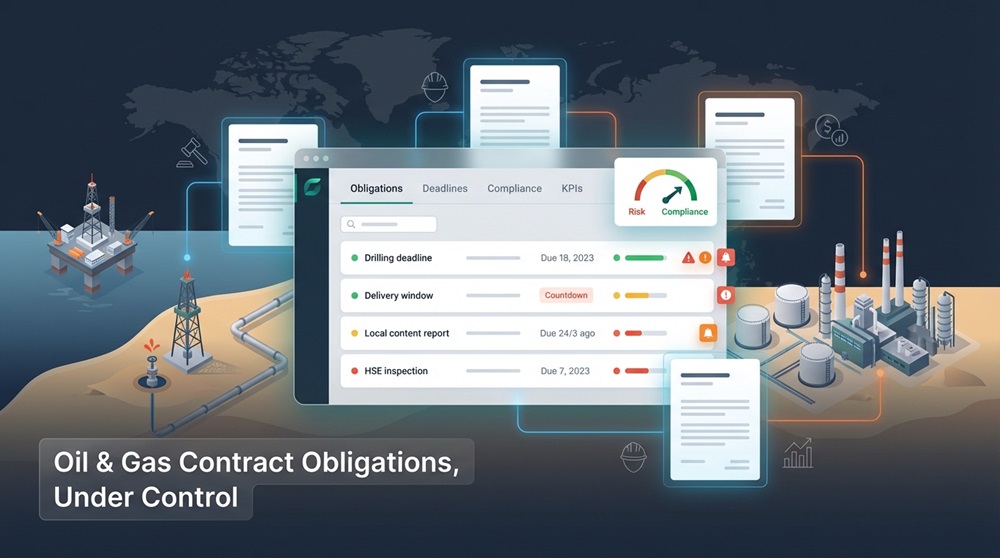
Money moves through joint ventures and production splits that rewrite themselves as prices swing. One clause caps cost recovery; another revises profit share at a preset Brent average. Tracking those cross-references by hand is a revenue leak waiting to happen.
People add more friction. Teams in legal, land, drilling, procurement, and finance often sit on separate continents and definitely on separate systems. As one refinery-logistics veteran vented on Reddit, “the same data gets input endless times … into multiple systems. It’s a nightmare.” Duplicate entry breeds errors, and errors breed headline costs.
Manual processes only add to the pain. A 2025 Malbek survey found that 83 percent of companies call contract management their biggest headache long before you layer on oil-and-gas complexity. Spreadsheet trackers crack under the weight of thousands of active service, lease, and transportation agreements.
Specialised CLM platforms address these pressure points. They store every contract in a searchable vault, map obligations to real-world deadlines, and alert the right people before trouble hits. In short, operators gain the control room they need to keep promises, stay compliant, and protect margins.
How we picked the seven “best-for” solutions
Choosing software in a vacuum helps no one, so we built a yardstick tailored to energy operations.
First, we interviewed contract managers, project controllers, and land agents across upstream, midstream, and downstream businesses. Their wish list narrowed to five must-haves: bullet-proof obligation tracking, easy links to existing systems, full-lifecycle muscle, an interface field staff will use, and pricing that makes business sense.
We turned those needs into a scoring model.
Obligation and compliance controls carried the heaviest weight at 25 percent. Integration with SAP, land, or project-control tools came next at 20 percent. Breadth of features, from drafting to analytics, earned another 20. Ease of use clocked in at 15, because adoption beats shelfware every time. Deployment flexibility and total cost of ownership rounded out the final 15.
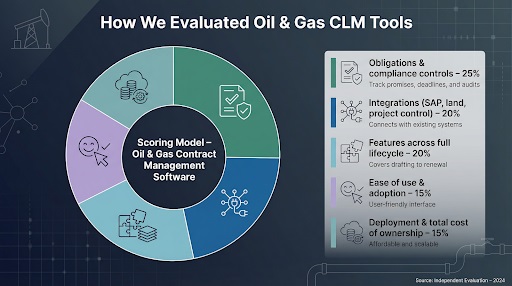
Each vendor earned one to five points per category. We multiplied the scores by the weights, compared totals, and cross-checked results against live case studies.
The outcome isn’t a beauty-pageant ranking from one to seven. Instead, we mapped each platform to the scenario where it excels, so you can focus on the tool that fits your size, risk profile, and tech stack.
Table 1 shows the raw criteria next to every vendor; keep it open while you scan the deep dives.
The seven stand-out platforms
InEight Contract: best for capital projects
If your world revolves around billion-dollar builds—offshore platforms, LNG trains, or cross-country pipelines—contracts live and die by scope control. InEight Contract shines here.
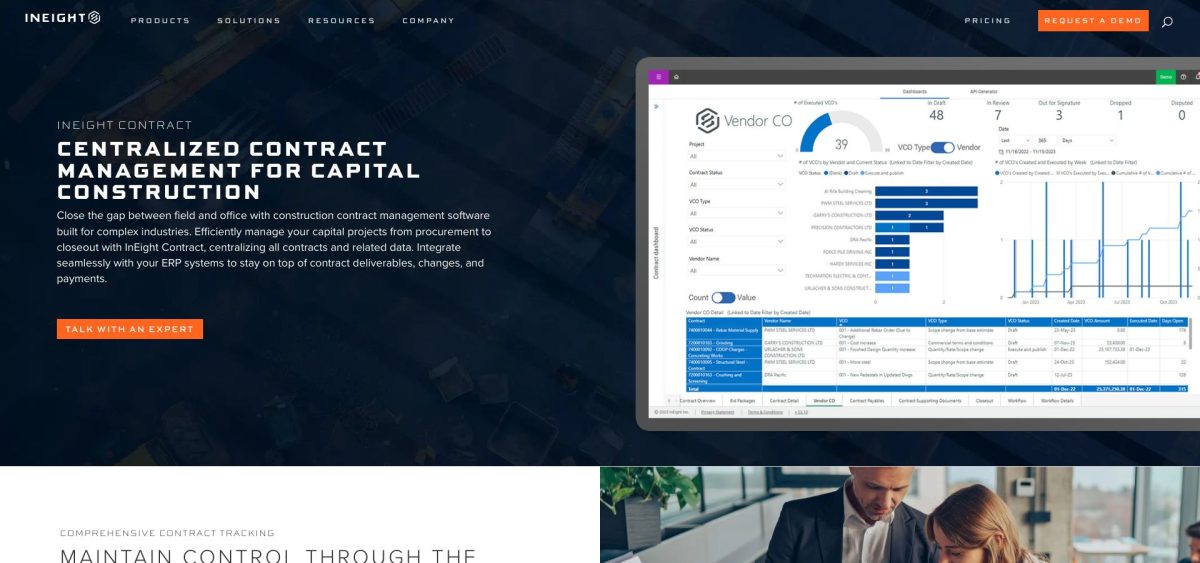
InEight Contract dashboard for capital project contract controls
The module plugs into InEight’s project-controls suite, so every bid package, change order, and pay application flows against the live construction budget and schedule. When field progress slips, the contract record flags it automatically. No swivel-chair data entry. No finger-pointing later.
Project teams value the change-order workflow. A contractor submits a variation, engineering reviews cost and delay impact, and management approves or rejects it. The new value then ripples through cost forecasts in seconds, keeping scope creep in check.
Because the tool sits beside estimates, schedules, and daily field reports, it becomes a single source of truth for owner, EPC, and subcontractors alike. Audit trail intact, disputes kept short, and project risk finally tamed.
Icertis Contract Intelligence: best overall enterprise CLM
When you operate across dozens of countries and thousands of counterparties, you need a brain, not a filing cabinet. Icertis Contract Intelligence (ICI) fills that role.
ICI ships with an Energy & Utilities accelerator that recognises joint-operating agreements, local-content clauses, and HSE mandates out of the box, then tags each obligation for automatic tracking. Integrate SAP or Oracle data and the platform syncs spend, volumes, and milestone dates without manual shuffling.
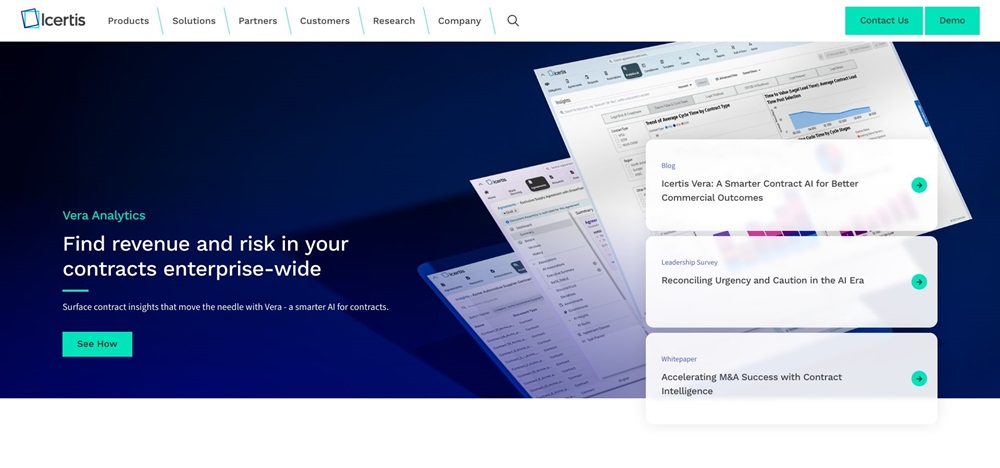
Icertis Contract Intelligence enterprise CLM interface screenshot
The standout feature is its AI Copilots. Users ask plain-language questions—“Show every LNG contract with take-or-pay above 90 percent”—and get instant answers. That generative push helped Icertis top 250 million dollars in recurring revenue.
Add deep analytics, strong clause control, and global cloud security, and you have the most complete enterprise CLM in the energy market.
Agiloft CLM: best for flexibility and integration
No two operators route contracts the same way. Agiloft embraces that variety with a no-code canvas you can twist into any shape.
Need a custom field for royalty decimal or flare-limit threshold? Add it in seconds. Want approvals to jump from land to HSE to treasury when spend tops a set amount? Drag-and-drop the workflow and save. The platform’s configurability fits upstream leasing, midstream tariffs, and retail-fuel supply without forcing you into someone else’s mould.
Integration is equally open. Agiloft pipes contract data to SAP, Salesforce, Power BI, and even on-prem databases. That two-way flow ends duplicate entry and keeps every team working from the same information.
Recent interface updates bring a cleaner, mobile-ready look, while built-in AI scans legacy PDFs and tags clauses automatically. Powerful yet cost-friendlier than heavyweight suites, Agiloft is the Swiss Army knife for teams that refuse confinement.
SirionLabs: best for obligation and performance tracking
Signing a contract is the easy part. Living up to every KPI, take-or-pay quota, and HSE metric over the next decade is where value is won or lost. SirionLabs was built for that long game.
Upload an executed agreement and the platform’s AI extracts each obligation, assigns an owner, and sets a timer. Dashboards show which commitments are green, which are slipping, and how much cash is at risk. For LNG supply or drilling-service deals, it even pairs with operational data to track service-level performance in real time.
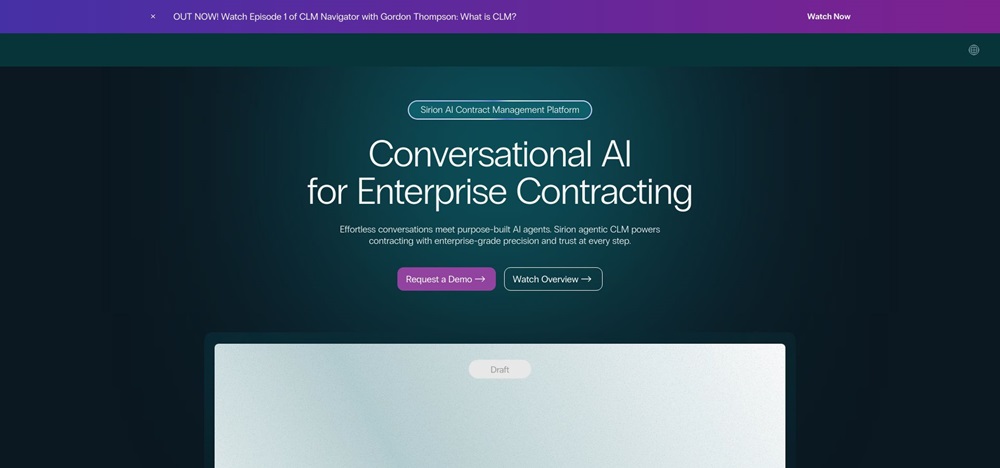
SirionLabs obligation and performance tracking dashboard screenshot
Both sides see the same scorecard, so disputes stay small and collaboration stays high. Finance teams appreciate alerts that catch missed discounts or volume rebates before the quarter closes. Legal gains an airtight audit trail when regulators or JV partners come knocking.
If your biggest fear is value leakage after the ink dries, Sirion keeps the plug in place.
AVEVA ProCon: best for mega-project risk control
When a project budget reaches billions, one undocumented change order can sink the economics. AVEVA ProCon emerged from North Sea mega-projects to stop that bleed.
Every contract, variation, and formal correspondence lives in the same workspace. Raise a change, and ProCon forces a workflow that captures cost and schedule impact before work begins. Executives see live exposure totals, not stale spreadsheets, so overruns lose their surprise factor.
The system also locks down compliance items such as performance bonds, insurance certificates, and regulatory permits. If a contractor’s cover lapses, ProCon blocks payment and sends alerts. That built-in discipline keeps owners, EPCs, and regulators aligned from design through commissioning.
For capital-project offices fighting scope creep and claim warfare, ProCon works as watchdog and referee.
Conga Contracts: best for Salesforce-centric commercial teams
If your revenue engine already runs inside Salesforce, Conga turns that CRM data into solid contracts with a single click.
Quotes, product SKUs, and price books flow straight into a draft agreement, slashing manual entry and cutting cycle time. That speed matters when you sell equipment leases, chemical supply, or pipeline capacity in tight windows.
Legal stays in control through a detailed clause library and red-line tracking inside Microsoft Word. Once signed, Conga stores the agreement back in Salesforce, sets renewal alerts, and even updates opportunity values, giving sales, finance, and compliance the same real-time view.
Implementations lean on Salesforce experience, and advanced setups often call for specialised partners. For teams already living in that ecosystem, the payoff is friction-free from prospecting call to contract signature.
ContractWorks: best for speed and budget
Sometimes you just need order fast. ContractWorks does that in a day and barely dents the budget.
Drag-and-drop every legacy file into its cloud vault, and full-text search plus AI tagging light up your documents instantly. Set renewal or compliance alerts in a few clicks, share read-only links with field staff, and you are operational before week’s end.
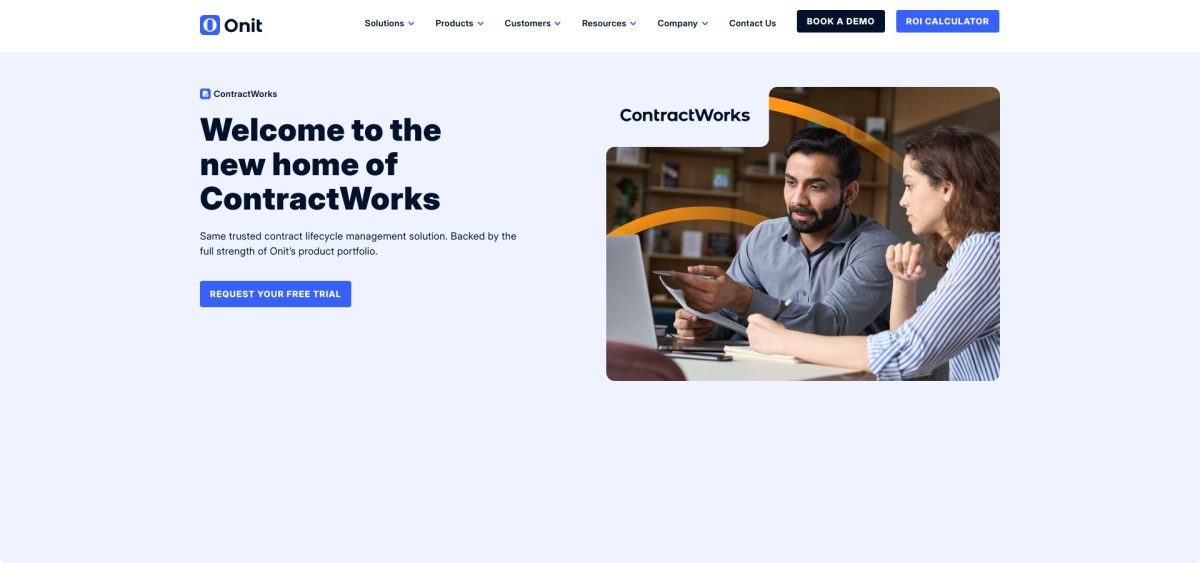
ContractWorks simple contract repository and alerts interface
Pricing is clear. Plans start near six-hundred dollars a month and include unlimited users, support, and training. That flat model lets legal, land, and finance all join without licence wrangling.
You will not find deep clause analytics or native SAP connectors here, but for small operators, service contractors, or any division flying blind on spreadsheets, ContractWorks is the fastest route to a fenced-in risk profile.
How the choices stack up
Every platform above solves a different slice of the contract-risk puzzle, so the best answer depends on your mix of scale, systems, and pain points.
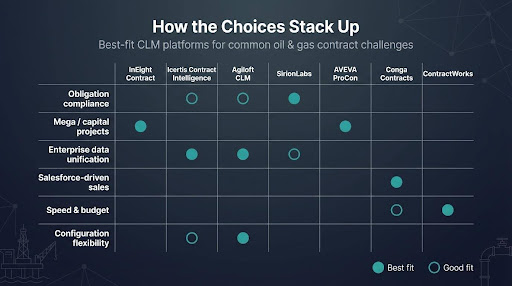
If obligation compliance keeps you up at night, SirionLabs delivers live dashboards and AI-extracted action lists. Running a megaproject? ProCon and InEight pair contract controls with cost and schedule, stopping overruns before they bloom.
Enterprise CIOs looking to unify data across procurement, JV, and trading desks often choose Icertis or Agiloft. Icertis adds strong AI and ready-made energy templates; Agiloft wins on budget flexibility and a no-code studio that adapts to home-grown workflows.
Sales-focused teams already deep in Salesforce data rarely top Conga for quote-to-contract speed. ContractWorks, by contrast, is the quick, budget-friendly net for groups that only need order, search, and deadline alerts.
Use the scorecard in Table 2 to weigh what matters most: compliance discipline, integration reach, feature depth, adoption ease, or cost. Circle your top two platforms, book demos, and drop a sample contract into each. Ten minutes of live data usually reveals the winner.
 Paragon Software Systems Celebrates Success in Helping Drive Choice and Convenience for Argos Shoppers
 Businesses must establish trust online in less than 10 minutes or risk losing customers
 European Delivery Companies Leading Last Mile Innovation Strategies
 The current landscape in the supply chain industry when it comes to talent & what to expect in 2022
 Cegid launches new distributed order management solution to help retailers speed up deliveries to consumers and reduce costs
 Peak Covid-19 will see doubling of home deliveries as people avoid crowds, forecasts ParcelHero