

Every creator knows that feeling. A video sits quietly for a few days, barely moving and then suddenly it starts climbing. Views coming in from the homepage, from suggested feeds, from places you didn’t even expect. That moment when the algorithm picks something up and runs with it is genuinely exciting.
Most creators eventually figure out that this isn’t luck. Recommendations are quietly responsible for the majority of what gets watched on YouTube. Not search. Not people typing in your channel name.
The algorithm deciding, on its own, that a viewer might like your video and putting it in front of them. That’s the engine behind most of the platform’s traffic and for creators, it’s probably the most important thing to understand. The system behind it isn’t random though. Not even close.
What YouTube Is Actually Trying to Do
At its core, the whole thing has one goal: keep people watching. YouTube wants viewers to stay on the platform as long as possible, so it’s constantly trying to predict what any individual person will actually enjoy next.
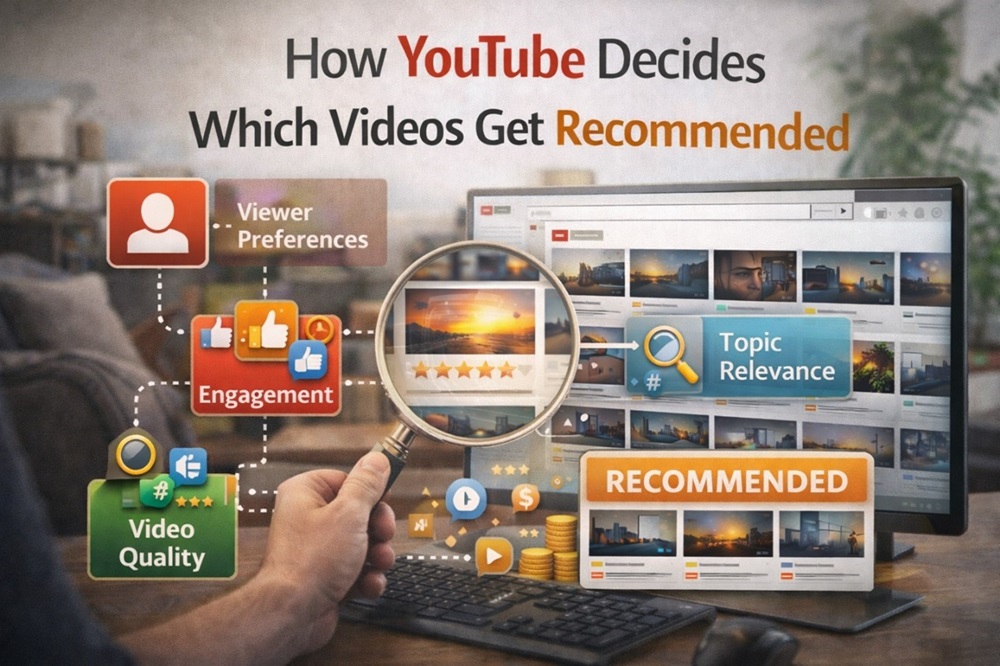
To do that, it studies behavior obsessively. What you watch, what you skip, which channels you keep returning to, how long you typically stick with a certain type of content before switching. Based on all of that, it builds a pretty detailed picture of your preferences and then tries to match you with videos that fit. For creators, that changes how you need to think about success. Uploading a video isn’t enough. The question is whether the video performs well enough with its specific audience to convince the algorithm it’s worth recommending more broadly.
Why Those First Views Matter More Than You Think
When a video goes live, YouTube doesn’t immediately push it to a large audience. Instead, it starts small by showing the video to a limited group of viewers to see how they respond. During this early stage, the algorithm collects its first signals, and views are the starting point. Without people actually watching the video, YouTube has very little data to evaluate. There is no click-through rate to measure, no watch-time patterns to analyze, and no engagement signals to study. Views are what open the door for everything else.
As those first views begin to come in, YouTube starts looking at other signals more closely. It checks how long people stay on the video, whether they clicked because of the thumbnail, and whether viewers interact through likes or comments. If those early signals look positive, the platform becomes more confident recommending the video to a larger audience. If the early response is weak, the algorithm may quickly move on to other content. This is why many creators try to understand ways to grow YouTube views early, so their videos have a better chance of being recommended and reaching a wider audience.
5 Things YouTube Determines Which Videos Get Recommended
Watch Time Is the Real Currency (views)
Views get the process started, but watch time is what actually determines how far a video travels. There are two things YouTube is tracking here. Total watch time the raw accumulation of minutes people spend watching and retention, meaning what percentage of the video the average viewer actually sits through.
Someone clicking your video and leaving after eight seconds is almost worse than not clicking at all. It tells the algorithm the video didn’t deliver on whatever the thumbnail or title promised. But someone who watches 80% of a ten-minute video? That’s a strong, clean signal that the content is doing its job. High retention videos tend to keep showing up in recommendations because YouTube knows they hold attention. Low retention videos quietly disappear.
Nobody Clicks, Nobody Sees It
Click-through rate CTR is the percentage of people who actually click your video when it shows up in their feed. And it matters a lot. YouTube is constantly testing thumbnails and titles in front of real viewers. When a high percentage click, the algorithm reads that as interest and serves it to more people. When most viewers scroll past, the video gets deprioritized fast.
This is why a genuinely great video can still underperform. If the thumbnail is muddy or the title doesn’t spark any curiosity, it doesn’t matter what’s inside. Nobody ever gets there. The presentation isn’t separate from the content. On YouTube, it basically is part of the content.
Engagement Sends a Different Kind of Signal
Watch time and CTR are the heavy hitters, but engagement still matters. Likes, comments, shares, new subscribers gained from a single video these all feed into how YouTube evaluates content.
When viewers take the time to leave a comment or share something with a friend, it suggests the video hit something real. It created a reaction worth expressing. The algorithm picks up on that. It’s not that engagement alone can make a bad video perform well. But for two videos with similar watch time, the one generating actual discussion is probably going to get the edge.
Consistency Teaches the Algorithm Who You’re For
Channels that publish sporadically across random topics are harder for YouTube to recommend confidently. The algorithm doesn’t have a clear picture of who the audience is or what they want.
Channels that stay consistent same general topic, same type of viewer, reliable upload rhythm give the system exactly what it needs. Over time, YouTube gets increasingly confident about who to show your videos to. New uploads get matched to the right audience faster because the pattern is already established.
Consistency also does something for the audience itself. When viewers know what to expect from a channel, they’re more likely to click when a new video shows up.
You Can’t Game It But You Can Work With It
A lot of creators waste energy trying to trick the algorithm. Keyword stuffing, chasing trends that don’t fit their channel, copying whatever format went viral last week. It rarely works long-term. The reason is simple: YouTube’s system is designed specifically to reward content that viewers genuinely enjoy. Anything that inflates surface metrics without delivering real value tends to get filtered out eventually.
The smarter play is just focusing on what the platform already measures. Are people clicking? Are they staying? Are they coming back? Creators who consistently improve those numbers through better hooks, tighter editing, stronger thumbnails, understanding how to grow YouTube views strategically tend to see their recommendation performance climb steadily over time.
When Recommendations Kick In, Everything Changes
The difference between a video living or dying on YouTube often comes down to whether recommendations pick it up. Direct subscribers only go so far. Search traffic has a ceiling. But when a video starts appearing on homepages and in suggested feeds, it taps into an audience that has no idea who you are and suddenly that doesn’t matter, because YouTube already decided they’d probably like it. That’s when view counts start moving in ways that feel almost surreal. That’s when channels actually grow.
Conclusion
YouTube’s recommendation system isn’t mysterious it’s logical. It rewards videos that earn attention, hold attention, and generate genuine reactions. Early views give it data to work with. Retention and CTR tell it whether the video is worth pushing further. Engagement confirms that something real is happening.
None of that requires going viral or having a massive existing audience. It requires understanding what the platform is measuring and consistently making content that performs well against those signals. Do that long enough, and the algorithm stops being something you’re fighting against. It starts working for you.
 New online domain name is perfect for Rainbow Dynamics
 How Trucking Companies Can Contribute to Accidents
 Delta Cargo Selects IBS Software to Power Digital Transformation
 Alliance for Artificial Intelligence in Healthcare (AAIH) Convenes in Boston and Basel
 New logistics robotics specialist aims to shape the future of the industry
 Zenzic to Present UK’s Future in Connected Mobility at Microlise Transport Conference