

A few years ago, an engine builder working with high-performance motorcycle engines faced a persistent problem. Aluminum cylinders kept overheating and wearing faster than expected under extreme RPM conditions. Traditional cast-iron liners solved the wear issue, but they also added weight and limited heat dissipation. The trade-off reduced engine efficiency and performance.
The solution came from a surface engineering technology that has been transforming mechanical components for decades: nikasil plating.
Today, this advanced coating is widely used in high-performance engines, aerospace components, and precision industrial machinery. Engineers prefer it because it improves durability, reduces friction, and enhances thermal management without adding weight.
Understanding why requires a closer look at the materials science behind the process.
What Is Nikasil Plating?
Nikasil plating is a nickel–silicon carbide composite coating applied through electroplating to create an extremely hard, wear-resistant surface.
The name comes from the German terms Nickel, Karbid, and Silizium. The coating consists of a nickel matrix embedded with microscopic silicon carbide particles.
Typical technical characteristics include:
| Property | Typical Value |
|---|---|
| Coating thickness | 50–100 µm |
| Hardness | 500–700 HV |
| Friction coefficient | 0.08–0.12 |
| Silicon carbide particle size | 2–10 µm |
| Max operating temperature | ~800°C |
These properties make Nikasil coatings significantly harder and more durable than untreated aluminum surfaces.
Many advanced manufacturing providers specializing in precision coatings—including companies like FastPreci—use controlled electroplating processes and strict inspection methods to ensure coating quality and consistency.
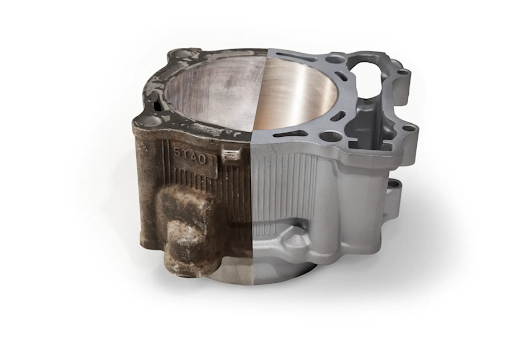
The Electroplating Science Behind Nikasil
The performance advantages of Nikasil coatings come from their unique microstructure.
Nickel Matrix
Nickel acts as the structural base of the coating. It provides strong adhesion to the aluminum substrate and protects the component from corrosion.
Silicon Carbide Reinforcement
Silicon carbide particles are among the hardest materials used in engineering applications. They are distributed evenly throughout the nickel layer during plating.
These particles serve two functions:
- They dramatically increase surface hardness
- They reduce friction between moving components
As the coating wears slightly over time, new silicon carbide particles become exposed, maintaining consistent wear resistance.
How the Nikasil Plating Process Works
Producing a reliable coating requires precise process control. The typical manufacturing sequence includes several critical steps.
1. Surface Preparation
The aluminum component is thoroughly cleaned and chemically etched. This process removes contaminants and creates microscopic roughness for better adhesion.
2. Electroplating Bath
The component is submerged in an electrolyte solution containing nickel salts and suspended silicon carbide particles. Electric current causes nickel to deposit onto the surface while trapping carbide particles in the coating.
Typical plating conditions include:
- Current density: 2–5 A/dm²
- Bath temperature: 50–60°C
- pH level: 3.5–4.5
3. Precision Honing
After plating, the surface is honed to achieve the required dimensional tolerance and surface finish, often around Ra 0.2–0.4 µm.
4. Quality Inspection
Final inspection methods may include:
- Ultrasonic thickness measurement
- Adhesion testing
- Surface roughness verification
These steps ensure the coating meets strict performance standards.
Case Study: Performance Engine Cylinders
A motorsport engineering team once compared two aluminum racing cylinders.
Cylinder A: Cast-Iron Liner
- Weight: 4.2 kg
- Peak operating temperature: 240°C
- Cylinder wear after 100 hours: 0.08 mm
Cylinder B: Nikasil Coated
- Weight: 3.4 kg
- Peak operating temperature: 210°C
- Cylinder wear after 100 hours: 0.02 mm
The Nikasil-coated cylinder reduced wear by 75% while improving heat dissipation and lowering overall engine weight.
Why Engineers Prefer Nikasil
Several performance advantages explain the popularity of this coating.
Superior Wear Resistance
Silicon carbide particles create a surface that resists abrasion even under high pressure and high RPM conditions.
Improved Heat Dissipation
Because the coating is extremely thin, it allows aluminum components to retain their natural thermal conductivity.
Reduced Friction
Lower friction improves mechanical efficiency and reduces energy losses.
Lightweight Design
Unlike cast-iron liners, Nikasil coatings add minimal weight to the component.
These benefits make Nikasil especially valuable in high-performance engines where every gram and every degree of temperature matters.
Nikasil vs Cast-Iron Liners
Engineers often compare these two approaches when designing cylinder systems.
| Feature | Nikasil Coating | Cast-Iron Liner |
|---|---|---|
| Weight | Very light | Heavy |
| Heat transfer | Excellent | Moderate |
| Wear resistance | Very high | High |
| Manufacturing complexity | Higher | Lower |
| Repairability | Requires re-plating | Easier |
For high-performance applications, Nikasil typically offers the better balance of durability and thermal efficiency.
Where Nikasil Technology Is Used
Although most famous in engine cylinders, the technology has expanded into several industries.
Automotive and Motorsport
High-performance engines rely on Nikasil coatings to reduce friction and increase durability.
Aerospace Engineering
Lightweight aircraft components benefit from the coating’s wear resistance and heat stability.
Motorcycle Engines
High-RPM motorcycle engines frequently use Nikasil-coated cylinders for reliability.
Industrial Machinery
Precision mechanical systems use Nikasil coatings to reduce wear in moving components.
In these sectors, surface engineering specialists—including FastPreci—help manufacturers implement advanced coating processes that improve component lifespan and mechanical performance.
Common Failure Causes and Prevention
Despite its advantages, improper coating application can lead to problems.
Typical causes of failure include:
- Poor surface preparation
- Contamination during plating
- Incorrect honing procedures
Preventing these issues requires strict quality control and experienced plating technicians.
Frequently Asked Questions
What is Nikasil plating?
Nikasil plating is a nickel-silicon carbide composite coating applied through electroplating to improve wear resistance and reduce friction on metal components.
How thick is Nikasil coating?
Typical coating thickness ranges between 50 and 100 microns, depending on the application.
Is Nikasil better than cast-iron liners?
In many high-performance applications, Nikasil coatings provide better heat transfer, lower weight, and improved wear resistance.
How long does Nikasil plating last?
With proper maintenance, Nikasil-coated cylinders can last tens of thousands of operating hours in industrial systems or hundreds of thousands of kilometers in engines.
Can Nikasil plating be repaired?
Yes. Worn coatings can usually be chemically stripped and re-applied using the same electroplating process.
What engines use Nikasil technology?
Many high-performance automotive and motorcycle engines use Nikasil-coated cylinders to improve efficiency and durability.
Final Thoughts
The reason engineers trust Nikasil plating is simple: it combines advanced materials science with practical mechanical benefits.
By embedding extremely hard silicon carbide particles within a nickel matrix, this coating produces a surface that resists wear, reduces friction, and manages heat efficiently.
For high-performance systems where durability and weight both matter, Nikasil coatings remain one of the most effective solutions available. As surface engineering technologies continue evolving, this innovative coating will likely remain a cornerstone of modern mechanical design.
 Brands struggling to emulate connections with customers, but technology can help
 What USA Businesses Can Do to Build Steady YouTube Subscribers
 DevOps Leader Copado Achieves “In Process” FedRAMP Authorization
 Best Practices for E-Learning Software Implementation in Healthcare
 Volvo Group selects BlackBerry QNX for its Dynamic Software Platform
 Decoding the Code: Unveiling the Secrets of Bitcoin Scripts