


**This post is sponsored by Semrush. When you purchase through links in this article, we may earn an affiliate commission from Semrush.**
Start tracking your brand’s true search visibility with the Semrush One Solution, designed to measure both traditional SEO performance and AI-era discoverability. Explore the platform here.
Search is undergoing its largest transformation since Google’s earliest algorithm updates, and it is reshaping how brands across every industry — including supply chain, logistics, and enterprise IT — attract visibility. Enhanced visual SERP features and the rise of AI Overviews are rewriting the rules of click-through optimization, forcing marketers to rethink how they appear, how they compete, and how they measure success.
Traditional organic rankings are no longer the anchor that guarantees traffic. Instead, SERPs are now crowded with visual and interactive layers: AI-generated summaries, image carousels, local packs, LSAs, video strips, PAA boxes, and structured data-driven elements that push classic blue links further down the page. Even when rankings improve, traffic often drops due to zero-click behavior driven by AI Overviews.
This shift is particularly important for supply chain technology brands, where complex B2B solutions rely on discoverability, authority, and trust signals. Understanding how these new visual SERP features influence user attention is now essential to sustaining pipeline growth.
Why Traditional Rankings Matter Less Today
The modern SERP is no longer a simple list of links. It is a mosaic of rich features that compete for the user’s attention. In many industries, more than half of all queries never result in a click, as AI Overviews provide immediate answers without requiring users to visit a website.
This means:
- Improved rankings do not always increase traffic
- Lower-ranked results can outperform higher results through stronger visual presentation
- AI Overviews frequently dominate the top of the page, absorbing intent before users scroll
- Measuring AI visibility is almost impossible without specialized tools
- SEO practitioners now rely on experiments such as ALL CAPS title tags to drive incremental CTR gains
These challenges reflect the new reality many organizations face: “Rankings went up, but traffic dropped. What now?” Enhanced visual SERP features help explain this gap between position and performance.
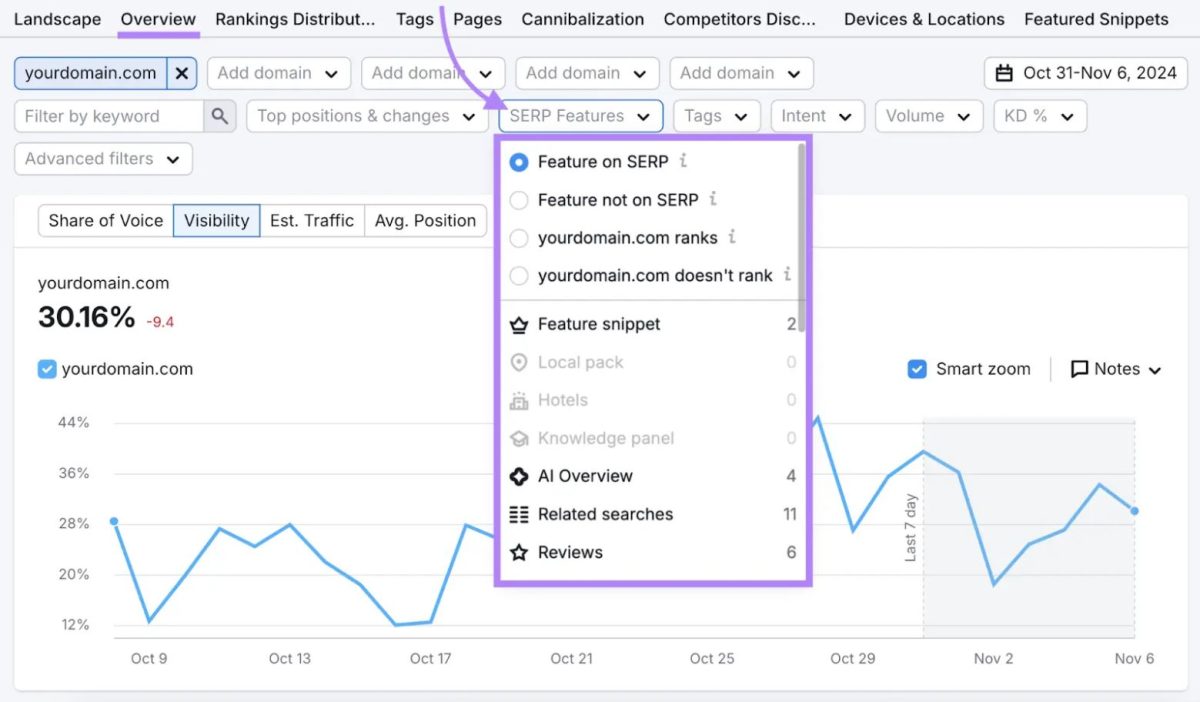
Why Enhanced Visual SERPs Stand Out
1. They mirror the real shifts happening right now
Clients and internal stakeholders often ask why strong rankings do not translate into clicks. Visual SERP changes offer a clear explanation.
Users frequently never reach organic listings because they remain within AI Overviews or other SERP modules. This shift makes the topic not only relevant but urgent for SEO, GEO, and content strategy teams.
2. They directly support Generative Engine Optimization (GEO)
Visual SERP optimization is more than design. It contributes to the signals AI systems use for citation, such as:
- Entity completeness
- Structured data quality
- Freshness signals
- Trust and authority
- Topical alignment
Since AI Overviews usually cite only the top one or two sources, GEO requires strengthening all SEO signals simultaneously. Visual SERP elements provide the cues AI systems use to determine citation-worthiness.
3. They highlight a measurement gap
You cannot optimize what you cannot see. Many marketers lack:
- Visibility into AI citations
- Tools to track AI Mode presence
- Benchmarks for GEO performance
- Metrics for zero-click loss
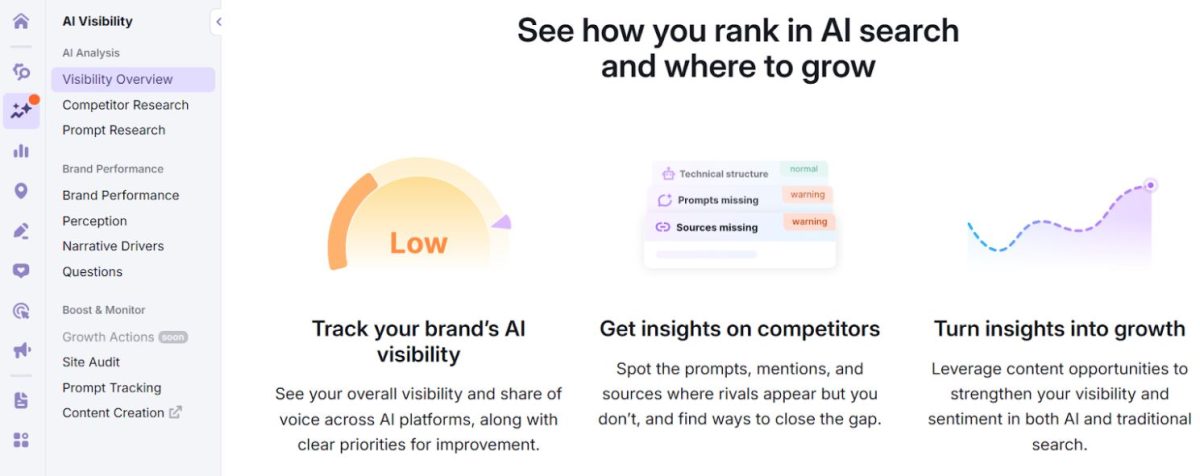
This is where the Semrush AI Visibility Toolkit becomes instrumental. It quantifies brand presence inside AI-generated responses, benchmarks visibility, identifies misinformation, and shows which signals influence AI citation.
How Enhanced Visual SERP Optimization Helps Marketers
1. It explains traffic drops even when rankings rise
Enhanced SERP insights clarify:
- How AI Overviews redirect attention
- Why organic position no longer guarantees visibility
- Where user intent is being captured upstream
This helps teams communicate performance more transparently to leadership.
2. It reveals the visual elements that influence CTR
Modern CTR optimization includes:
- Featured snippets
- Image packs
- PAA box presence
- Video thumbnails
- Schema-driven enhancements
- Title tag formatting tests
These elements allow brands to stand out even without top rankings.
3. It supports GEO-first content planning
To earn AI citations, brands must focus on:
- Semantic completeness
- Data-rich structure
- Content freshness
- Entity alignment
Visual SERP elements guide where these improvements are needed most.
4. It enables meaningful measurement with the Semrush AI Visibility Toolkit
This toolkit allows marketers to:
- Track citation frequency across AI platforms
- Measure AI visibility share
- Identify freshness and structure gaps
- Benchmark competitors
- Conduct data-driven CTR experiments
This turns a previously unmeasurable problem into an actionable workflow.
5. It simplifies client and stakeholder communication
SERP complexities can now be demonstrated through:
- Full-page SERP captures
• Zero-click impact charts
• AI placement reporting
• Visual breakdowns of competitive landscapes
This makes performance reporting far clearer and more compelling.
The Bottom Line
We are entering the first era where rankings alone no longer guarantee visibility, and visibility no longer guarantees traffic. Enhanced visual SERP features, combined with the rise of AI Overviews, fundamentally redefine how audiences discover content and which brands earn trust.
The organizations that thrive in this environment will be those that adapt early — strengthening all SEO signals, building GEO-ready content, tracking AI visibility across platforms, and competing visibly across every SERP module.
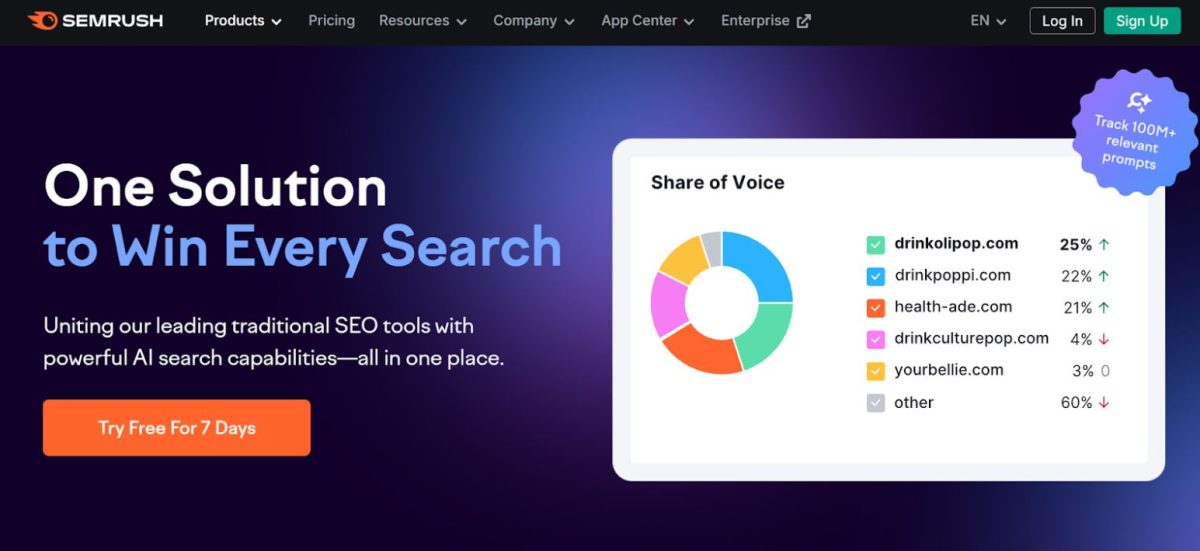
Start optimizing where it matters most with the tools that measure both AI and traditional visibility in one unified platform. Explore the full Semrush One Toolkit today.
 How to keep the warehouse clean and safe
 Uniserve partners with Logistics Reply to Deliver Transformation to Customers Supply Chains
 LLamasoft Recognized for Outstanding Market Impact, Company Culture
 Sage & Amazon Web Services Collaboration Powers AI Innovation in Accounting & Compliance
 90% of Industry Professionals Call for Greater Connection Across Global Supply Chains
 Inventory management in the aerospace supply chain