


Oil systems are built around one central requirement. Oil must move through the system at the right pressure, at the right time, and under controlled conditions.
Whether the system lubricates bearings, transmits hydraulic power, cools rotating equipment, or supports combustion engines, pressure stability determines whether the system operates reliably or degrades into failure. Pressure sensors are not passive measurement devices in these systems. They are active guardians of stability. They provide continuous feedback on how oil behaves under load, during startup, and through long operating cycles.
This article examines how pressure sensors directly help maintain stability in oil systems by translating pressure behavior into actionable signals. The focus is practical and grounded in real operating environments. Every section connects oil pressure behavior to sensor measurement and then to system stability.
The goal is to explain how engineers use pressure data to detect instability early, prevent damage, and maintain reliable operation across lubrication systems, hydraulic circuits, engine oil systems, and industrial oil circulation loops.
Understanding Pressure Stability in Oil Systems
Pressure stability in an oil system means more than holding a target pressure value. It means maintaining predictable pressure behavior under steady operation and controlled response during transient events. Oil systems rarely operate under static conditions. Pumps start and stop. Loads vary. Temperatures rise. Valves open and close. Each event introduces pressure changes that must remain within acceptable limits.
Stable pressure indicates that oil flow, viscosity, pump performance, and mechanical clearances are aligned. Unstable pressure indicates a mismatch. Pressure sensors provide the only continuous window into this balance. Without pressure measurement, instability develops silently until mechanical failure becomes unavoidable.
In practice, engineers evaluate pressure stability through trends rather than single readings. A stable system shows repeatable pressure behavior during startup, consistent operating pressure under load, and predictable decay during shutdown. Pressure sensors capture these patterns and allow deviations to be identified early.
Pressure Dynamics Under Steady Conditions
Under steady operating conditions, oil pressure reflects equilibrium between pump output, system resistance, and oil properties. In a lubrication system, steady pressure ensures that oil films remain intact between moving surfaces. In a hydraulic system, steady pressure maintains force transmission and actuator control. In an engine oil system, steady pressure supports bearing protection and cooling.
Pressure sensors measure this equilibrium continuously. Small pressure deviations under steady conditions often indicate gradual changes such as oil contamination, viscosity loss, or internal leakage. These changes rarely trigger alarms immediately. Instead, they appear as slow pressure drift that only a sensor can reveal.
For example, in an industrial gearbox lubrication loop, a pressure sensor downstream of the pump may show a gradual pressure decline over weeks. Flow remains adequate, but pressure stability erodes. This often signals increasing internal leakage due to bearing wear. Without pressure monitoring, the system appears functional until catastrophic failure occurs.
Pressure Dynamics During Transient Conditions
Transient conditions are where pressure sensors prove their highest value. Transients include startup, load changes, valve actuation, temperature swings, and emergency shutdowns. During these events, oil pressure can rise or fall rapidly. Stability depends on how quickly and smoothly the system responds.
Pressure sensors capture transient spikes and drops that reveal mechanical stress. Rapid pressure drops during startup may indicate pump cavitation. Pressure overshoot during valve closure may point to restricted return paths. Repeated pressure oscillations may signal air entrainment or unstable flow.
In hydraulic oil circuits, transient pressure instability directly affects actuator performance. Pressure sensors allow engineers to correlate pressure behavior with motion quality. Jerky motion often aligns with pressure oscillations that are invisible without sensors.
Detecting Instability Before Mechanical Failure
Pressure sensors help maintain stability by detecting instability before physical damage occurs. Mechanical failures are rarely sudden. They are preceded by pressure anomalies that develop over time.
Pump wear provides a clear example. As pump clearances increase, the pump struggles to maintain pressure under load. Pressure sensors detect this as delayed pressure buildup and reduced peak pressure during demand. Engineers recognize this pattern and schedule maintenance before flow loss causes overheating or seizure.
Seal failure follows a similar pattern. Early seal degradation causes pressure fluctuations rather than complete loss. Pressure sensors reveal these fluctuations long before oil leaks become visible. This early detection prevents contamination and secondary damage.
In lubrication systems, bearing wear reduces hydrodynamic pressure support. Pressure sensors detect subtle pressure instability under load that correlates with increasing metal contact. This allows corrective action before bearing failure.
Role of Pressure Sensors in Lubrication Systems
Lubrication systems rely on stable pressure to maintain oil films between moving components. Pressure sensors monitor whether the system provides sufficient force to distribute oil evenly across contact surfaces.
In centralized lubrication systems, pressure sensors verify that oil reaches distant lubrication points. A pressure drop indicates blocked lines or collapsed filters. Stable pressure confirms uniform distribution.
In turbine lubrication systems, pressure sensors detect loss of oil film pressure during speed changes. This is critical during startup and shutdown when bearings are most vulnerable. Pressure sensors provide real time feedback that operators use to control ramp rates and avoid damage.
Pressure stability in lubrication systems is tightly linked to temperature. As oil heats, viscosity drops and pressure changes. Pressure sensors reveal whether the system compensates adequately or drifts toward instability.
Role of Pressure Sensors in Hydraulic Oil Circuits
Hydraulic systems convert oil pressure into mechanical force. Pressure stability directly determines system responsiveness and control accuracy. Pressure sensors provide continuous insight into how force is generated and transmitted.
In hydraulic circuits, pressure sensors monitor supply pressure, actuator pressure, and return pressure. Deviations between these points reveal internal leakage, valve malfunction, or flow restriction.
Pressure fluctuations often precede hydraulic failures. Cavitation in pumps appears as pressure ripple and noise. Pressure sensors detect this ripple early. Blockages create upstream pressure rise and downstream pressure loss. Sensors capture this imbalance.
Pressure stability also affects safety. Excess pressure can damage hoses and fittings. Pressure sensors trigger relief mechanisms before structural failure occurs.
Role of Pressure Sensors in Engine Oil Systems
Engine oil systems operate under extreme conditions. Pressure must remain stable across wide temperature ranges and rapid speed changes. Pressure sensors are essential for maintaining engine reliability.
During cold start, oil viscosity is high and pressure rises quickly. Pressure sensors ensure that pressure remains within safe limits and does not overload seals or filters. As the engine warms, pressure should stabilize. Failure to stabilize indicates oil degradation or pump wear.
At high load, pressure sensors confirm that oil delivery meets bearing demand. Pressure drop under load signals insufficient lubrication and impending damage.
Modern engines rely on pressure sensors to detect oil starvation during cornering or acceleration. These transient pressure losses are short but damaging. Pressure sensors capture them and allow system design improvements such as baffles and accumulators.
Role of Pressure Sensors in Industrial Oil Circulation Loops
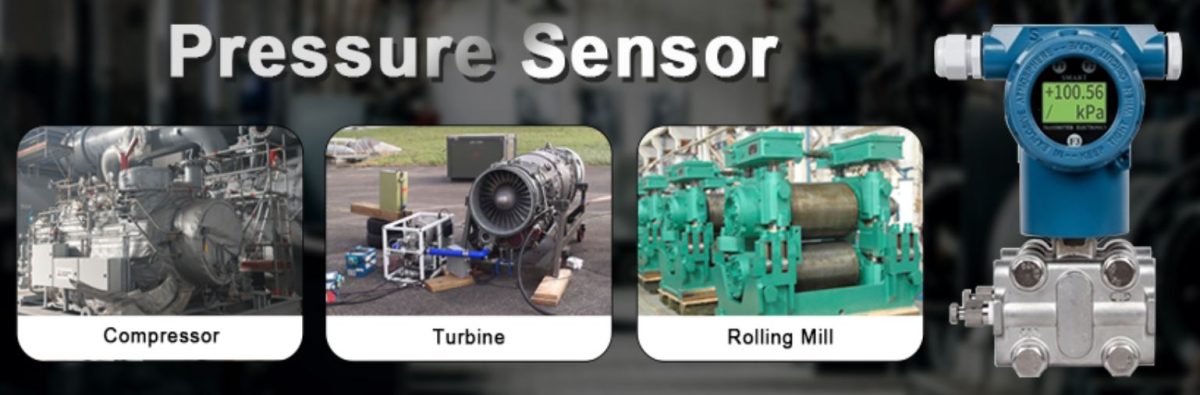
Industrial oil circulation systems support large machinery such as compressors, turbines, and rolling mills. These systems operate continuously and rely on stable pressure for cooling and lubrication.
Pressure sensors monitor pressure at multiple points in the loop. Consistent pressure across the system indicates balanced flow. Pressure imbalance indicates fouling, blockage, or pump degradation.
In these systems, pressure sensors are often used for condition monitoring rather than control. Engineers analyze long term pressure trends to predict maintenance needs. Stable pressure trends confirm healthy operation. Deviations prompt inspection.
Interpreting Pressure Fluctuations
Pressure fluctuations are not random noise. They carry information about system health. Pressure sensors convert these fluctuations into measurable signals that engineers interpret.
Cavitation causes rapid pressure oscillations and localized pressure collapse. Sensors detect high frequency pressure variation that correlates with cavitation intensity.
Blockages create sustained pressure rise upstream and pressure drop downstream. Pressure sensors placed strategically reveal the location of restriction.
Oil degradation affects viscosity and compressibility. Pressure sensors detect slower pressure response and increased fluctuation under load.
Pump wear reduces volumetric efficiency. Pressure sensors reveal delayed pressure buildup and increased ripple.
Seal failure introduces leakage that destabilizes pressure. Sensors detect pressure decay and instability under constant demand.
Static Pressure Loss Versus Dynamic Pressure Instability
Static pressure loss and dynamic pressure instability represent different failure modes. Pressure sensors help distinguish between them.
Static pressure loss appears as a consistent pressure drop under all conditions. This often indicates leakage, worn pumps, or clogged filters. Pressure sensors show reduced baseline pressure.
Dynamic pressure instability appears as fluctuating pressure under varying conditions. This often indicates flow turbulence, air entrainment, cavitation, or mechanical resonance. Pressure sensors capture oscillations and transient events.
Understanding this difference allows engineers to diagnose issues accurately. Treating dynamic instability as static loss leads to incorrect solutions.
Sensor Placement and Stability Interpretation
Pressure sensor placement determines how stability is interpreted. Sensors placed near pumps measure supply pressure. Sensors placed near loads measure delivery pressure. Sensors placed on return lines reveal flow resistance.
Incorrect placement can mask instability. A sensor too close to the pump may show stable pressure while downstream components experience starvation. Multiple sensors provide a complete picture.
Engineers choose placement based on expected failure modes. In lubrication systems, sensors near critical bearings provide early warning. In hydraulic systems, sensors near actuators reveal load response.
Pressure sensors must also be isolated from vibration and thermal gradients to avoid false readings that mimic instability.
Real Operational Scenarios Preventing Downtime
In industrial compressors, pressure sensors have detected gradual oil pressure decay during extended operation. Maintenance teams replaced worn pumps during planned shutdowns and avoided bearing failure.
In hydraulic presses, pressure sensors identified pressure oscillations during rapid cycling. Engineers corrected valve timing and eliminated unstable force output that caused product defects.
In power generation turbines, pressure sensors detected transient oil pressure loss during load rejection. System modifications improved pressure stability and prevented bearing damage.
These scenarios demonstrate how pressure sensors maintain stability through early detection and informed intervention.
Why Pressure Stability Is Critical for Reliability
Pressure stability ensures consistent lubrication, controlled force transmission, and effective cooling. Instability accelerates wear, increases heat, and promotes failure.
Pressure sensors provide the data needed to maintain this stability. Without accurate pressure measurement, systems rely on assumptions that rarely hold under real operating conditions.
Reliable oil systems depend on pressure sensors as much as on pumps and valves.
Effects of Inaccurate or Delayed Pressure Readings
Inaccurate pressure readings mislead operators and control systems. Delayed readings hide transient instability. Both conditions destabilize oil systems.
Slow sensor response fails to capture rapid pressure drops that damage components. Poor accuracy masks gradual degradation. Pressure sensors must match system dynamics to be effective.
Engineers select sensors based on response time, accuracy, and durability to ensure meaningful pressure data.
What Engineers Monitor in Pressure Data
Engineers monitor baseline pressure, pressure rise time, pressure decay, ripple amplitude, and transient behavior. These parameters reveal system health.
Trends matter more than single values. Pressure sensors enable trend analysis that supports preventive maintenance and stability management.
Preventive Maintenance Enabled by Pressure Sensors
Pressure sensors support condition based maintenance. Stable pressure trends confirm health. Deviations prompt inspection.
This approach reduces downtime and prevents catastrophic failure. Pressure sensors provide objective evidence that guides maintenance decisions.
Practical Limitations in Real Oil Systems
Pressure sensors face harsh conditions including temperature extremes, vibration, contamination, and chemical exposure. These factors affect sensor reliability.
Sensor drift and fouling can introduce error. Engineers account for these limitations through calibration and redundancy.
Despite advanced sensor technology, oil system complexity and variability mean pressure sensors cannot eliminate instability entirely. They remain the primary tool for managing it.
Conclusion
Pressure sensors help maintain stability in oil systems by translating pressure behavior into actionable insight. They reveal equilibrium under steady conditions, capture instability during transients, and expose degradation before failure occurs.
Across lubrication systems, hydraulic circuits, engine oil systems, and industrial circulation loops, pressure sensors serve as the foundation of stability. They do not prevent instability alone. They make it visible. That visibility allows engineers to design, operate, and maintain oil systems that remain reliable under real world conditions.
In oil systems, stability begins with pressure. Pressure sensors ensure it is understood and controlled.
 Levoni Group Chooses Infor for Digital Transformation
 How a Clean Business Environment Can Improve Customer Satisfaction
 Momentum 2024: Technology Drives Supply Chain Commerce into a New Era
 Two months on from the Suez Canal blockage – four factors supply chains need to consider
 Analytics and AI: Navigating Enterprise Success with Cloud Contact Centers
 Harnessing the potential benefits of Robotic Process Automation