

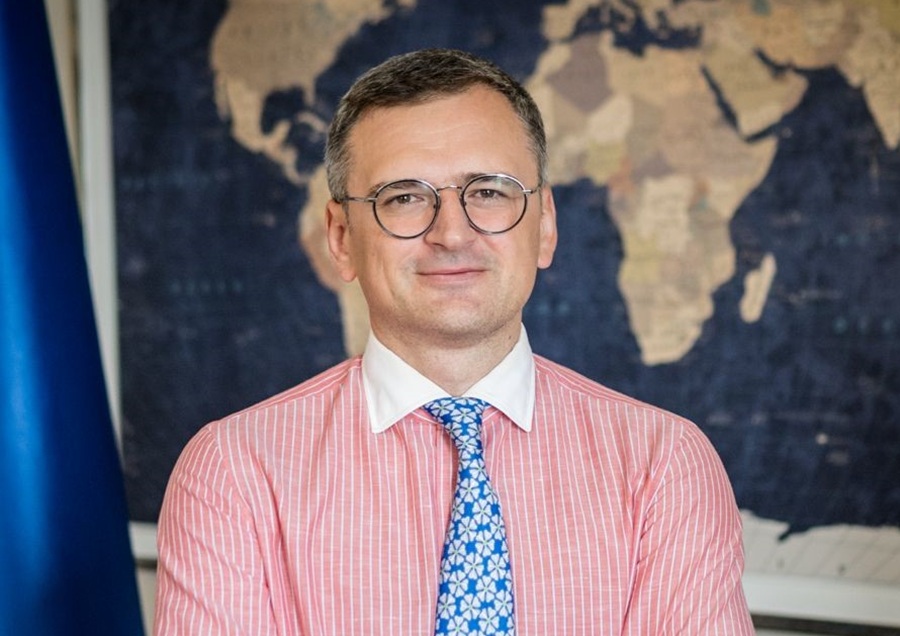
Infosecurity Europe, the most influential information security event, running from 2-4 June 2026 at Excel London, has today announced a keynote programme focused on geopolitics and cyber conflict, headlined by former Ukrainian Minister of Foreign Affairs, Dr. Dmytro Kuleba.
Dr. Dmytro Kuleba will take to the keynote stage on Wednesday, 3 June at 10:05, delivering his talk on ‘Ukraine’s Hybrid War and the New Cyber Frontline.’ Serving as Ukraine’s Minister of Foreign Affairs from 2020 to 2024, Kuleba was a key architect of the nation’s wartime strategy alongside President Volodymyr Zelensky. A highly respected diplomat and global spokesperson during the conflict, he led Ukraine’s international engagement at the highest level, helping to secure political, military and economic support while communicating the realities of the war to a worldwide audience.
Drawing on his experience living and working at the centre of the world’s first full-scale hybrid war, Kuleba will move beyond technical theory to share the critical learnings his country gained while under constant digital siege. He will detail how Russia coordinated cyberattacks with kinetic strikes: from the crippling of telecommunications to the weaponisation of disinformation. He will explain why Western enterprises are now the primary front line and what their cyber teams must know to survive this new era of “permanent shock.”
Attendees will gain a unique perspective on the tactics of modern conflict: including the necessity of cloud sovereignty, the psychological impact of state-backed intrusions, and how to maintain operational continuity when the traditional rules of engagement no longer apply. This is a rare opportunity to hear directly from a leader who has navigated the intersection of geopolitics and cybersecurity at the highest possible level.
This geopolitical focus comes amid Infosecurity Europe’s 2026 Cybersecurity Trends Research which uncovered that more than half (59%) of cybersecurity professionals say geopolitical tensions are making European cyber collaboration harder, while 16 per cent say tensions have had no impact, highlighting a growing divide across the industry. Countries including the UK (62%), France (68%) and Denmark (69%) all report that collaboration is becoming more difficult.
The research also highlighted the conflict and need for a collaborative approach with over four in ten (43%) cybersecurity professionals believing the EU should have the power to ‘command and control’ national cyber defences in the event of a major cross-border cyber crisis. Just 19 per cent oppose giving the EU these powers and a further 34 per cent support EU control, but only for specific critical sectors. In total, 77 per cent support some level of EU intervention in a major cyber crisis.
Opening the keynote stage on Tuesday, 2 June, Professor, Director of CISO Network, SANS Institute, Ciaran Martin will chair the morning sessions, setting the tone for a programme shaped by real-world geopolitical and cyber challenges. As the founding CEO of the UK’s National Cyber Security Centre, Martin led the response to more than 2,000 nationally significant cyber-attacks and helped establish the UK as a global leader in cybersecurity.
Commenting on the significance of the programme, Ciaran Martin said:
“The world is so unstable right now. What that means for cyberspace and cybersecurity leaders isn’t yet clear and won’t be for some time. So how do we prepare for a whole range of difficult possibilities, and protect ourselves as best we can? Infosecurity Europe is critical for such discussions and insights”.
This is hugely important as the Infosecurity research highlights that while 42 per cent of professionals believe their country is doing enough to work with European partners, 43 per cent say the opposite. In the UK, more than half (53%) believe not enough is being done, and in Germany this rises to 57 per cent, pointing to growing concern about the effectiveness of current cooperation models.
Despite this, the benefits of collaboration are obvious, with a third (33%) of respondents identifying threat intelligence sharing as the single greatest advantage of working more closely across borders, while 27 per cent point to improved incident response coordination.
Further shaping the geopolitical discussion, a senior representative from the National Cyber Security Centre (NCSC) will deliver a keynote on ‘Cyber Security 2026 – State of the Nation’ on Tuesday, 2 June at 11:05. The session will outline the UK’s cyber threat landscape, national priorities and what they mean for you; with an outline on how the threat picture is shifting, where the NCSC is focusing its efforts in the coming years, and how government, industry and critical national infrastructure can work together to build resilience at scale.
Attendees will hear what emerging regulation and guidance mean for security professionals, and leave with clear, practical steps security leaders can take to align with the UK’s national cyber strategy.
Registration for Infosecurity Europe is open and free until 5 May. After this date, the entry cost to attend will be £49, which includes access to the exhibition show floor and multiple content theatres featuring industry-leading speakers.
 Jungheinrich again honored as “Beste Logistik Marke”
 Jabra research shows more than three-quarters of UK office workers don’t use AI
 9 Mistakes to Avoid After a Car Accident
 Winners revealed at 2025 Network Group Awards
 A look at some of the best EV tyres on the market
 Focus on competence as a general contractor & solution design specialist