

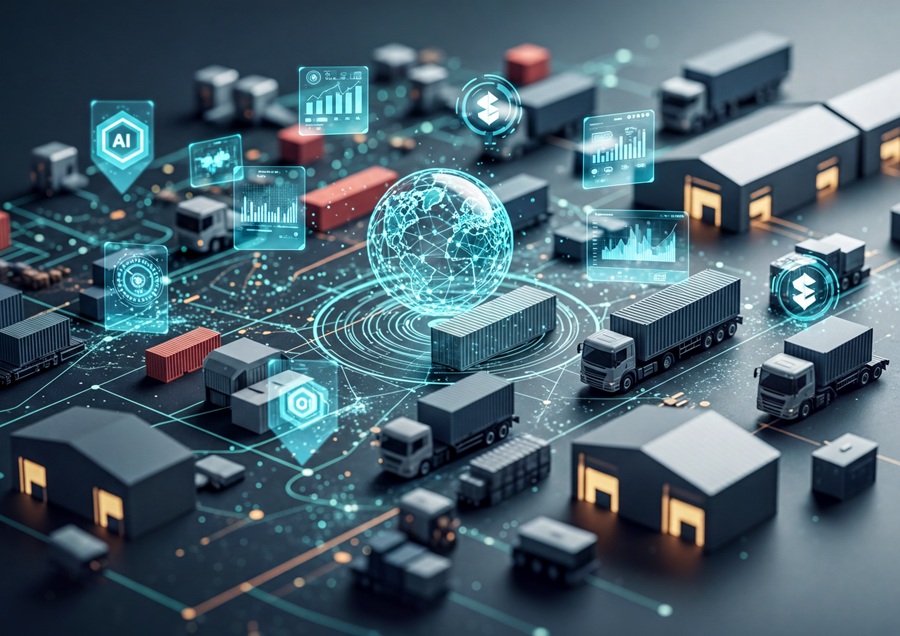
Whether dealing with geopolitical trade disruptions, sudden spikes in inflation, or the accelerating impacts of climate change, the mandate for modern enterprise management is clear: organizations must be agile, adaptive, and highly synchronized.
For enterprise decision-makers, IT administrators, and operational leaders alike, survival requires abandoning legacy silos. The new standard for maintaining a competitive edge lies in seamlessly unifying strategy, financial forecasting, and operational execution through next-generation supply chain planning.
What Is Integrated Business Planning (IBP)?
Historically, Sales and Operations Planning (S&OP) operated in functional isolation. Supply chain directors focused on reducing inventory costs, sales teams chased revenue growth, and finance departments worried about margin preservation. These competing metrics created internal friction, latency, and significant value leakage.
Integrated Business Planning (IBP) software breaks down these functional barriers. IBP is a holistic management model that aligns commercial, financial, and supply chain operations into a single, continuous decision-making loop. By sharing a unified data foundation, enterprises can execute cross-functional scenario planning in hours rather than weeks.
For enterprise leaders, the ROI of IBP is profound, often yielding incremental EBITDA improvements of 1% to 3% annually through reduced inventory holding costs, minimized premium freight expenses, and improved order fulfillment. For SMBs, adopting cloud-based IBP solutions provides the agility needed to compete with larger enterprise operations, allowing them to rapidly pivot sourcing strategies when localized disruptions occur.
The Technology Stack: Agentic AI, IoT, and Blockchain
Transitioning to an adaptive supply chain requires a modern technological infrastructure. IT teams and SaaS buyers must evaluate solutions not just for their discrete capabilities, but for their interoperability, data management, and cybersecurity postures.
Agentic AI and the Enterprise Knowledge Graph
The most significant leap in supply chain planning is the shift from predictive forecasting to autonomous, Agentic AI. Traditional planning relies heavily on “tribal knowledge”—the undocumented expertise living in the minds of veteran planners. When these individuals leave or face unprecedented black swan events, organizations struggle to react.
The goal of modern supply chain architecture is to convert tribal knowledge into digitized knowledge models. By deploying an Enterprise Knowledge Graph (EKG), companies can connect disparate data points across the organization to map the complex relationships between raw materials, supplier capacities, and customer demand. Platforms like o9 Solutions leverage this digital brain approach, enabling AI agents to autonomously analyze the “four W’s” of management: what happened and why, what is the current state, what is likely to happen, and what actions should be taken.
These AI agents can run continuous post-game analytics, detecting root causes for forecast misses and dynamically recommending optimal inventory rebalancing or dynamic pricing adjustments without requiring manual human intervention for every minor shift.
IoT Edge Computing and Blockchain Traceability
You cannot optimize what you cannot see. The Internet of Things (IoT) and edge computing provide the real-time telemetry needed to feed AI models. By tracking temperature, humidity, and location through connected sensors, logistics teams can proactively address bottlenecks or spoilage before they result in stockouts.
Concurrently, blockchain technology is revolutionizing supply chain cybersecurity and trust. By establishing immutable distributed ledgers, blockchain secures data sharing across multi-tier supplier networks. This is critical for tech admins managing cybersecurity postures, as smart contracts can automate procurement verifications and payments while protecting the network from unauthorized data manipulation or fraud.
How to Align Supply Chain Planning with Geopolitics and ESG Mandates
Supply chain planning in 2026 extends far beyond warehouse automation and robotics integration; it requires navigating broader macroeconomic and environmental realities.
Mitigating Geopolitical Risk
The reliance on heavily concentrated, single-region sourcing is a massive vulnerability. Highlighting the severity of this issue, recent supply chain research from Vinturas reveals that over half of businesses experienced shipment delays of up to a month over the past year due to sustained geopolitical, tariff, and labor disruptions. Advanced supply chain planning systems enable organizations to map their entire n-tier supplier network to identify these hidden dependencies. When geopolitical tensions arise, predictive analytics can instantly simulate the financial and operational impact of shifting to a “China Plus One” strategy, nearshoring production, or friend-shoring critical component manufacturing.
Driving Sustainability and ESG Compliance
Sustainability is no longer a peripheral marketing initiative; it is a core regulatory and operational mandate. Consumers, investors, and governments demand transparent, ethical sourcing. Modern IBP solutions embed environmental, social, and governance (ESG) metrics directly into the planning process. This allows organizations to track Scope 1, 2, and 3 carbon emissions alongside financial costs. By optimizing transportation routes, reducing empty miles, and enforcing circular economy principles (like reverse logistics and remanufacturing), businesses can achieve their carbon reduction targets while simultaneously driving down operational costs.
Actionable Takeaways: Your Supply Chain Optimization Checklist
To successfully modernize your supply chain planning and build a resilient, AI-driven operating model, stakeholders across the organization must take coordinated steps. Use this checklist to guide your implementation strategy:
- Establish a Single Source of Truth: SaaS buyers and IT teams must prioritize the integration of CRM, ERP, and WMS software into a unified data model. Eliminate spreadsheet-based planning to ensure commercial, finance, and supply teams are viewing the same real-time data.
- Digitize Tribal Knowledge: Conduct workshops with your most experienced planners. Identify their heuristic decision-making rules and work with your data science teams to codify these rules into your AI and machine learning algorithms.
- Run Cross-Functional Scenario Planning: Enterprise decision-makers should routinely stress-test the supply chain. Simulate disruptive events (e.g., a port strike, a sudden tariff increase, or a supplier bankruptcy) to evaluate the financial and operational impacts, ensuring mitigation playbooks are ready before crises occur.
- Secure the Extended Network: Technical admins must audit the cybersecurity protocols of tier-1 and tier-2 suppliers. Implement blockchain or secure API integrations to ensure that data shared across the extended supply chain is both verifiable and protected against cyber threats.
- Embed Sustainability into Sourcing: Supply chain directors should update procurement scorecards to weight ESG compliance and carbon footprints alongside traditional metrics like cost and lead time.
By embracing integrated business planning and deploying agentic, self-learning technologies, organizations can move beyond reactive firefighting. The future of supply chain planning belongs to those who view volatility not as a threat, but as an opportunity to outmaneuver the competition through speed, intelligence, and continuous adaptation.
 Exploring the most used low code modules for edge analytics
 Breakout Session Geared Toward Women in the Industry Gained Much Attention at ELEVATE – Construction’s Heavy Work Conference, Inspiring A Webinar to Further Conversation
 New product innovation takes the Linnworks Connected CommerceOps platform to the next level
 Majority of finance leaders struggling to keep pace with the speed of e-commerce, investigation reveals
 Royal Mail Strikes – How brands can combat ongoing impacts
 Pandemic driving shoppers online, but retailers missing opportunity due to failed deliveries