


Let’s talk about something that’s driving solar sales teams absolutely crazy: proposal turnaround times. Here’s a scenario that might hit home with you.
A qualified homeowner shows interest during your pitch, asks for a proposal, and you promise to get it to them “soon.” Then what happens? You spend 4-6 hours manually designing their system, calculating shading, placing panels, and crunching numbers. By the time you deliver that proposal three days later, they’ve already signed with your competitor who got theirs out the same day.
What you might be missing here is the right solar design software that can turn hours of manual work into minutes of automated precision. The truth is, speed kills in solar sales, and the companies winning deals in 2026 are the ones leveraging AI-powered design tools that eliminate the proposal bottleneck entirely.
The solar design software market has exploded with innovation, but not all platforms deliver on their promises. Some still require manual roof sketching, others produce inaccurate shading analysis, and many lack the financial modeling depth that closes deals.
We’ve tested the leading platforms and identified the five instant solar design softwares that are actually worth your time and money in 2026.
Key Takeaways
- Instant solar design software can reduce proposal creation time from 4-6 hours to under 10 minutes, dramatically improving your sales velocity and lead conversion rates
- The best platforms combine AI-powered roof detection, automated shading analysis, and accurate financial modeling without requiring manual input or site visits
- SolarGenix leads the market with patent-pending AI trained on tens of thousands of real CAD blueprints, delivering engineer-level accuracy in minutes
- Pay-per-proposal pricing models are becoming more attractive than monthly subscriptions for smaller solar sales teams and independent reps
- Integration with CRM systems and branded proposal templates can increase close rates by presenting professional, consistent materials to prospects
What Makes Solar Design Software “Instant” in 2026?
Traditional solar design involves hours of manual work: sketching roof layouts, calculating angles, analyzing shading patterns, placing panels, and running financial models. Instant solar design software automates these processes using artificial intelligence, satellite imagery, and advanced algorithms.
True instant design means entering just a property address and getting a complete, sales-ready proposal within minutes. This includes accurate roof modeling, optimal panel placement, shading analysis, energy production estimates, and financial projections. The best platforms require zero manual input while delivering results accurate enough to stake your reputation on.
But here’s what separates real instant software from “fast” design tools: no manual tweaking required. Many platforms claim automation but still need human intervention to adjust panel placement or fix roof detection errors. Genuine instant software delivers proposal-ready designs without touching anything after hitting “generate.”
Why Solar Companies Need Instant Design Software
The numbers don’t lie: 60% of solar leads are lost due to slow follow-up, and proposals delivered within 4 hours are 7 times more likely to convert than those sent after 24 hours. In today’s competitive market, speed isn’t just convenient—it’s survival.
Consider your current CAC (Customer Acquisition Costs). If you’re spending $500-$3,000 to generate each qualified lead, every lost prospect due to slow proposals is money down the drain. Instant design software typically increases conversion rates by 40-60% simply by eliminating the proposal delay.
From an operational perspective, design bottlenecks limit your sales team’s capacity. If each proposal takes 4 hours of engineering time, your team can only handle a few prospects per day. Instant software removes this constraint entirely, allowing your best closers to focus on what they do best: selling.
The ROI calculation is straightforward: instant design software typically pays for itself with just 2-3 additional closed deals per month. For most solar companies, that happens within the first 30 days of implementation.
1. SolarGenix – Solar Proposal Software
Pricing: ~$2.00 per proposal (minimum ~$50 purchase / 25 proposals)
Key Differentiator: Patent-pending AI trained on tens of thousands of real CAD project files from actual solar installations
SolarGenix represents the next evolution in solar design automation. Unlike competitors that rely primarily on basic satellite imagery analysis, SolarGenix uses proprietary, patent-pending AI trained on tens of thousands of real CAD project files, giving it a deeper understanding of roof structures, obstacles, and optimal panel placement for residential solar systems.
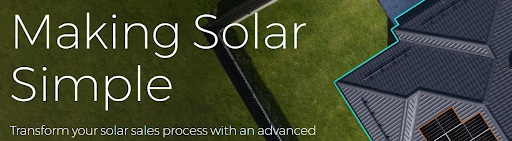
What makes SolarGenix truly instant:
- AI-Driven Roof Detection: Automatically models residential roof shape, orientation, pitch, and obstacles from aerial imagery, eliminating the need for site visits or manual roof sketching
- Advanced Shading Analysis: Uses sun-path modeling and visual data to simulate shadows across different seasons, helping identify higher-exposure roof zones
- Automated Panel Placement: Instantly places panels in optimized layouts based on sunlight exposure and spacing requirements, without manual drag-and-drop
- Complete Financial Modeling: Generates personalized ROI, payback periods, and savings estimates using local utility rates and automatically applied incentives
The pay-per-proposal pricing model is particularly attractive for smaller solar teams and independent reps who want to avoid expensive monthly subscriptions. At roughly $2 per proposal, you only pay for what you use, and each proposal remains valid for 30 days.
Best for: Solar sales teams prioritizing speed, automation, and proposal consistency; companies looking to avoid recurring software fees; and professionals who want proposal-ready designs without manual drafting.
“Our AI delivers true automation for solar proposals, allowing teams to generate professional, presentation-ready designs in minutes.”
— Built by a team with deep hands-on experience in solar design and engineering
2. PropoSaFlow – Streamlined Sales Focus
Pricing: Subscription-based (contact for pricing)
Key Differentiator: Sales-focused workflow optimization
PropoSaFlow takes a sales-first approach to solar design, emphasizing speed and presentation quality over technical precision. The platform focuses on getting professional-looking proposals in front of prospects quickly, with templates designed specifically for homeowner presentations.
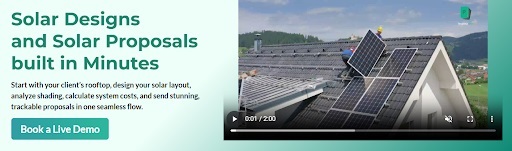
Key features:
- Rapid proposal generation with customizable templates
- CRM integration for seamless lead management
- Mobile-friendly design tools for field sales reps
- Automated follow-up sequences and email campaigns
- Basic financial modeling and savings calculations
The platform excels at helping sales teams maintain momentum with prospects through automated follow-up sequences and professional presentation materials. However, the technical accuracy may not match more engineering-focused platforms.
Best for: Sales-heavy organizations prioritizing speed over technical precision, teams needing strong CRM integration, and companies with dedicated engineering staff for final system design.
3. SolarSaaS – All-in-One Platform
Pricing: Monthly subscription tiers
Key Differentiator: Comprehensive business management suite
SolarSaaS positions itself as more than design software—it’s a complete business management platform for solar companies. Beyond proposal generation, it includes project management, customer communication tools, and business analytics.

Comprehensive features:
- Solar system design and proposal automation
- Project management and installation tracking
- Customer portal for ongoing communication
- Financial analysis and performance monitoring
- Team collaboration and workflow management
- Integrated payment processing and financing options
While the breadth of features is impressive, the learning curve can be steep for teams that just want fast proposal generation. The platform works best for established solar companies needing full business process automation.
Best for: Established solar companies wanting comprehensive business management, teams needing project tracking through installation, and organizations requiring detailed analytics and reporting.
4. Makt.tech – European Innovation
Pricing: Contact for pricing
Key Differentiator: European market specialization and regulatory compliance
Makt.tech brings European precision to solar design software, with particular strength in handling complex regulatory requirements and diverse roof types common in European markets. The platform has expanded globally but retains its focus on technical accuracy and compliance.
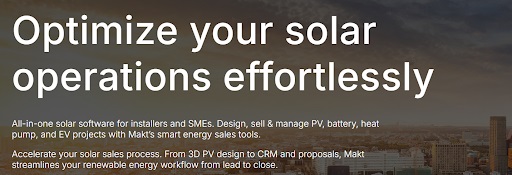
Technical strengths:
- Detailed regulatory compliance checking
- Advanced roof geometry handling
- Multi-language support and regional customization
- Integration with European component databases
- Sophisticated shading analysis algorithms
- Weather data integration from multiple sources
The platform’s attention to regulatory detail makes it particularly valuable for companies operating in markets with complex permitting requirements or unique technical standards.
Best for: Companies operating in regulated markets, international solar installers, and teams needing detailed technical documentation for permitting and engineering review.
5. SolarEsPro – Rapid Deployment Focus
Pricing: Competitive monthly plans
Key Differentiator: Quick implementation and user-friendly interface
SolarEsPro emphasizes getting solar teams up and running quickly with minimal training. The platform prioritizes ease of use and fast onboarding over advanced features, making it accessible for smaller teams or companies new to design software.

User-friendly features:
- Intuitive drag-and-drop interface
- Quick setup and minimal training required
- Basic but reliable design automation
- Standard financial modeling and ROI calculations
- Simple proposal templates and customization
- Responsive customer support and training resources
While not the most sophisticated platform available, SolarEsPro delivers reliable results for teams that need straightforward design capabilities without complexity.
Best for: Smaller solar companies, teams new to design software, and organizations prioritizing ease of use over advanced technical features.
Choosing the Right Platform for Your Team
Selecting instant solar design software depends on your specific needs, team size, and business model. Here’s how to evaluate your requirements:
For Speed and Accuracy: If your primary goal is eliminating proposal delays while maintaining engineering-level precision, platforms with advanced AI capabilities like SolarGenix offer the best combination of speed and reliability.
For Comprehensive Business Management: Established companies needing full workflow automation should consider all-in-one platforms like SolarSaaS that handle everything from design through installation.
For Sales-Focused Teams: Organizations prioritizing sales velocity and presentation quality over technical precision might prefer platforms like PropoSaFlow that emphasize customer-facing materials and CRM integration.
For Regulated Markets: Companies operating in complex regulatory environments benefit from platforms like Makt.tech that handle compliance checking and detailed documentation requirements.
For Simple Implementation: Smaller teams wanting quick deployment with minimal learning curves should consider user-friendly options like SolarEsPro.
Budget considerations also matter. Pay-per-proposal models work well for smaller teams or seasonal businesses, while monthly subscriptions make sense for high-volume operations. Calculate your expected proposal volume and compare total costs across different pricing structures.
The Future of Instant Solar Design
The solar design software market continues evolving rapidly, with AI capabilities becoming more sophisticated and automation reaching new levels of accuracy. Key trends to watch in 2026 include:
Enhanced AI Training: Platforms are incorporating more real-world project data, improving accuracy and reducing manual corrections. SolarGenix’s approach of training AI on actual CAD files represents this trend toward reality-based automation.
Integration Depth: Better integration with CRM systems, financing platforms, and installation management tools creates smoother workflows from initial prospect to completed installation.
Mobile Optimization: Field sales teams increasingly need full design capabilities on tablets and smartphones, driving mobile-first platform development.
Regulatory Automation: Software is beginning to automatically check local permitting requirements and generate code-compliant designs, reducing administrative overhead.
These advances mean instant design software will only get faster, more accurate, and more comprehensive. Companies adopting these tools early gain significant competitive advantages in lead conversion and operational efficiency.
Implementation Best Practices
Successfully deploying instant solar design software requires more than just signing up for an account. Here are the practices that separate successful implementations from disappointing ones:
Start with pilot testing: Choose 10-20 prospects and create proposals using both your current process and the new software. Compare accuracy, time investment, and conversion rates before full deployment.
Train your entire sales team: Even “instant” software requires understanding of features and capabilities. Invest in proper training to ensure your team can maximize the platform’s potential.
Establish quality checkpoints: While automation reduces errors, maintain review processes for high-value prospects or complex installations. Balance speed with accuracy based on deal size and complexity.
Integrate with existing workflows: The best software should enhance your current sales process, not replace it entirely. Map out how automated proposals fit into your lead nurturing, follow-up, and closing procedures.
Measure and optimize: Track key metrics like proposal delivery time, conversion rates, and customer feedback. Use this data to refine your approach and identify areas for improvement.
Conclusion
Instant solar design software has evolved from a nice-to-have convenience to an essential competitive advantage. With 60% of leads lost due to slow follow-up and conversion rates 7 times higher for rapid proposal delivery, the companies winning in 2026 are those that have eliminated the proposal bottleneck entirely.
The platforms we’ve highlighted represent the best options available, each with distinct strengths for different business models and team sizes. Whether you choose SolarGenix’s patent-pending AI automation, PropoSaFlow’s sales-focused approach, or another platform that fits your specific needs, the key is getting started now.
By implementing the right AI automation tools and eliminating manual design work, you’ll be able to close more deals, reduce CAC, and scale your operations without hiring additional engineering staff. The solar market rewards speed and accuracy—instant design software delivers both.
So evaluate these platforms, run pilot tests, and choose the solution that transforms your proposal process from a bottleneck into a competitive advantage. Your sales team and your bottom line will thank you.
 Mindtree Recognised by ISG for Innovative Managed and Public Cloud Services
 Grow Your Personal Brand with the Best YouTube Tools for Content Creation
 Hitting back at ecommerce packaging costs
 How trading infrastructure shapes the future of decentralized exchanges
 AI, Sustainability, & the New Blueprint for Supply Chain Resilience in 2026
 Sparrows Group Engages Progressive TSL to Transition Asset Management to the Infor Cloud