


Industrial automation works because thousands of tiny messages move reliably between sensors, controllers, drives, valves, and safety devices. Those messages are not all equal.
A stop command, a safety interlock, and a vibration trend can share a facility, yet each needs a different balance of timing, reliability, range, and resilience.
That is why modern plants rely on specialized signal paths and purpose-built communications choices instead of a single, one-size network.
Wireless and wired links, gateways, segmentation rules, and security controls all shape whether automation stays steady during interference, maintenance, and unexpected faults.
Deterministic Timing Keeps Machines Coordinated
Many automation tasks depend on predictable delivery, not just high bandwidth. Motion control, coordinated robotics, and interlocked process steps can fail if latency swings from one cycle to the next, even when average speed looks fine.
Specialized signaling reduces timing uncertainty by using fit-for-purpose protocols, tight time synchronization, and clear prioritization for control traffic. This helps controllers make decisions on stable inputs rather than “stale” values that arrive late or out of order.
When engineers treat timing as a design requirement, they plan the signal route end to end: where data is generated, how it is queued, and which links are allowed to contend.

Edge Data Collection Needs Long-Range Low-Power Options
Not every signal is a control loop. Many valuable automation signals are condition and status updates: tank levels at distant points, asset utilization, temperature trends, and compliance logging. These often live outside convenient cable runs, yet still need consistent delivery.
Long-range, low-power wireless can fill that gap when engineered with realistic expectations about payload size, duty cycle, and interference. The key is using specialized paths that match the nature of the data, instead of forcing every sensor onto a network built for high-rate control traffic.
When you need dependable coverage between dispersed assets and the systems that consume their data, purpose-built aggregation hardware matters. Teams deploying LoRaWAN Gateways often focus on placement, backhaul reliability, and monitoring so edge signals stay visible even when sites are difficult to reach. This reduces blind spots and keeps trend data consistent across remote zones.
Noise, Distance, And Harsh Sites Demand Robust Signaling
Industrial sites are tough on signals. Metal structures, rotating machinery, electrical noise, and physical obstructions can reduce link quality and turn clean lab performance into intermittent field behavior. Automation systems only perform when physical connections support reliable signal flow. You must plan and install the physical network so cables are routed, shielded, and supported for industrial conditions. This makes structured cabling services essential where timing, noise immunity, and long runs matter most. A strong cabling foundation cuts downtime and ensures control and monitoring data flows as intended. Wireless deployments often need interference awareness and rapid ways to detect and address spectrum impacts.
Cables can solve some problems, yet cabling is not always practical across moving equipment, remote assets, or areas where installation time drives downtime costs. In those cases, specialized wireless approaches are chosen for resilience, coverage, and maintainability rather than headline throughput.
Good designs assume conditions will change: forklifts appear, temporary structures go up, weather shifts, and nearby radios come and go.
Layered Networks Separate Control From Business Traffic
Plants increasingly connect operations technology with analytics, planning systems, and remote support. That connectivity is useful, but it raises the stakes for how signals are routed and which communications are permitted to cross boundaries.
Guidance for industrial control systems commonly emphasizes segmentation and controlled conduits between zones, often implemented with boundary protections such as firewalls and carefully managed gateways.
Specialized signal architecture improves troubleshooting. When control traffic is separated from monitoring, historian uploads, and general IT services, teams can pinpoint whether a problem is physical layer noise, routing policy, or an overloaded application rather than chasing everything at once.
Secure Communication Is Now A Safety Requirement
Automation signals are operationally sensitive: they can start motors, change setpoints, and open valves. Security is no longer a bolt-on feature, because insecure signaling can become a reliability and safety issue if unauthorized access or malicious traffic disrupts control logic.
Widely used industrial security standards, such as the ISA/IEC 62443 series, frame cybersecurity as a lifecycle practice for industrial automation and control systems. That approach ties requirements to risk, roles, and maintainable processes instead of treating security as a one-time hardening checklist.
Secure signaling supports operational continuity. When authentication, boundary rules, and least-privilege pathways are planned alongside functional requirements, plants can allow remote visibility and support without turning control networks into open highways.
Matching Protocols To Use Cases
The fastest way to create fragile automation is to treat all data the same. A practical design starts by classifying signals: hard real-time control, safety-related messaging, supervisory monitoring, maintenance diagnostics, and business reporting, each with its own tolerance for delay and loss.
From there, teams choose specialized paths and boundaries. Control networks prioritize determinism. Monitoring networks prioritize coverage and observability; enterprise connections prioritize governed access.
Validation closes the loop. Site surveys, interference checks, acceptance tests, and ongoing monitoring make the signaling strategy measurable, so reliability is not based on hope. That discipline is what turns a mix of protocols and gateways into a coherent automation system.

Modern industrial automation relies on specialized signal paths because industrial reality is messy: timing constraints are strict, environments are noisy, and networks now span from sensors to cloud services.s.
When signaling is designed with segmentation and lifecycle security in mind, plants gain both reliability and control over risk. Using trusted guidance for ICS architecture and established industrial security standards helps teams scale connectivity without sacrificing the core promise of automation: predictable operation, day after day.
 Chanelle Pharma Partners with SAP to Accelerate Global Growth & Advance Pharmaceutical Manufacturing Excellence
 70% of Organisations Do Not Provide Completely Connected User Experiences
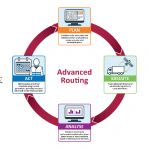 Paragon launches on the Geotab Marketplace to give fleet managers increased visibility & control of routing process
 What does the full fibre rollout mean for your business?
 What Do Professional Crypto Solutions for Fintech Projects Look Like?
 Global Standard BRCGS AA Grade Attained by Oakland International Estate