


Inventory space is the heart of operations, but too often it becomes a chaotic black hole.
Shifting from “storage” to an organized system isn’t just about tidiness. It’s a strategy that directly impacts efficiency, profitability, and morale.
The End of the Treasure Hunt
One of the most obvious, yet devastating, drains on business efficiency is the time employees spend looking for things. In a disorganized warehouse or stockroom, workers become treasure hunters. They walk up and down aisles, check mislabeled bins, or dig through pallets to locate a single item. This is non-billable, non-productive time that adds up to hours of lost labor each week.
- Reduced search time: When every item has a designated, logical home (such as bin locations or zone-based storage), employees go directly to the source. What used to take 15 minutes can take 15 seconds.
- Faster order fulfillment: In e-commerce and wholesale, speed is everything. An organized space allows for a streamlined “pick and pack” process, drastically cutting the lead time from order receipt to shipment.
- Quicker restocking: When receiving new inventory, a clear system tells staff exactly where items go without hesitation, preventing bottlenecks at the loading dock.
- Onboarding ease: A well-organized space is intuitive. New hires can learn the layout in hours rather than weeks, becoming productive members of the team almost immediately.
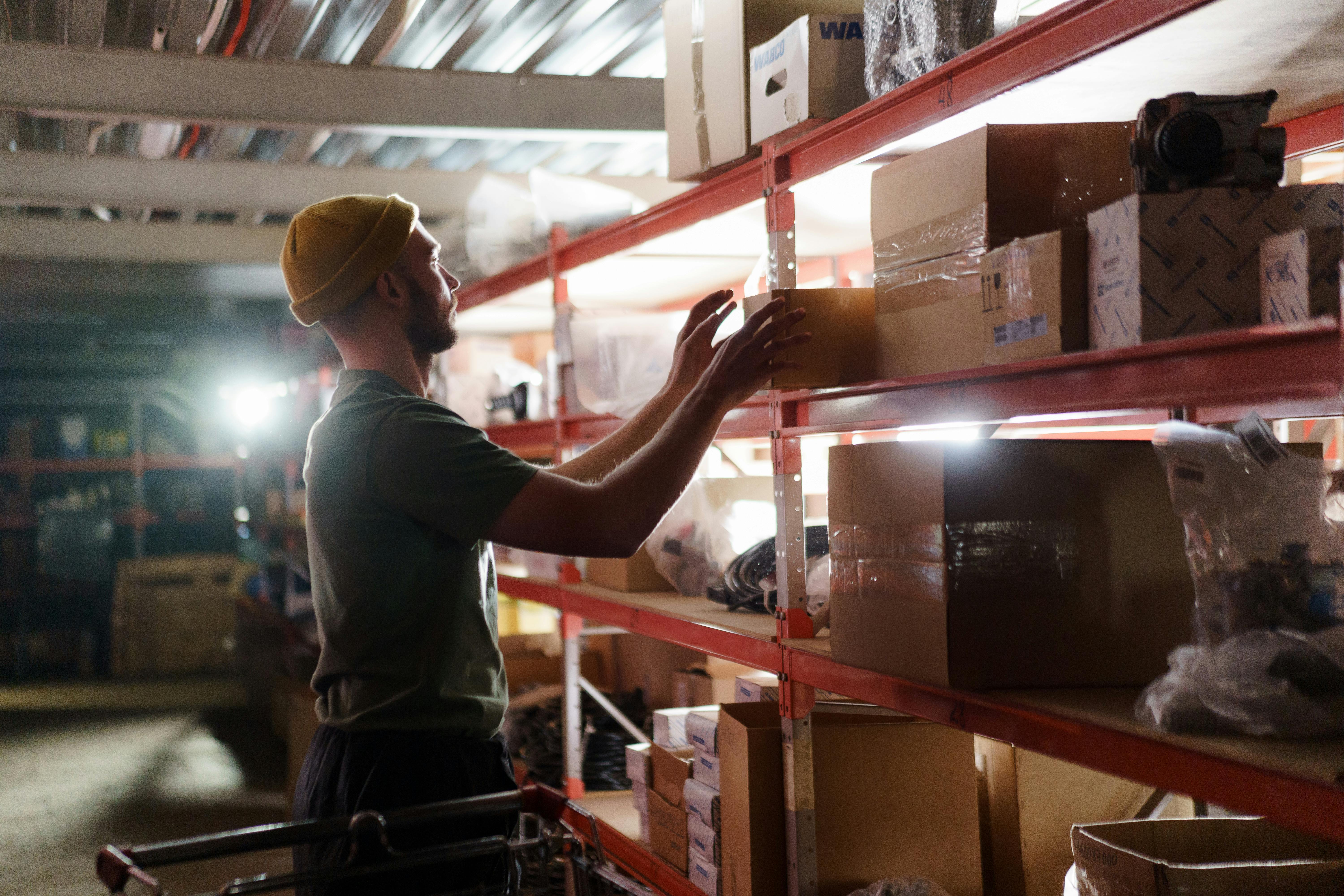
Maximizing Your Physical Footprint (Without Moving)
Real estate isn’t cheap. When your inventory space is cluttered, you’re paying for square footage you’re not actually using. Disorganization often tricks you into thinking you need a bigger warehouse when really you just need to optimize what you already have.
Sometimes smart logistics means looking outside your four walls. For businesses drowning in seasonal stock or excess materials, a clean, secure external storage spot can be a game-changer. Services like https://www.sparefoot.com/ with the best selection of storage units online, with over 20,000 facilities across the U.S. to choose from, let you decongest your main space without locking into a long-term lease. Your primary workspace stays lean and focused on fast-moving goods.
- Vertical storage: Use your height. Taller racking can double capacity without expanding your footprint.
- Clear aisles: Designated zones and aisles eliminate dead space where items get lost.
- Inventory consolidation: Regular organization forces you to liquidate obsolete stock and free up room for what actually sells.
- Data-driven layout: Place your top-selling SKUs in the most accessible spots to cut travel time.
Financial Accuracy
Inventory is often your biggest asset. If you don’t know what you have or where it is, you’re flying blind financially. Disorganization leads to shrinkage, theft, damage, or just plain misplacing stuff. And when you can’t find a product, you end up ordering more than you need, tying up cash.
- Accurate cycle counts: Labeled bins let you do small, regular counts instead of shutting down for a massive annual inventory. Perpetual accuracy, minimal disruption.
- Reduced dead stock: When items are visible and rotated properly (first in, first out), less product expires or becomes obsolete.
- Better purchasing decisions: You stop over-ordering “just in case” and start buying based on actual demand, freeing up working capital.
Boosting Employee Morale and Safety
The state of a workplace reflects how much a company values its employees. Working in a chaotic, cluttered, or hazardous inventory space is exhausting and demoralizing. It creates unnecessary physical strain and mental stress. Conversely, a clean, organized, and logical workspace sends a powerful message of respect and professionalism.
- Physical safety: Cluttered aisles are a leading cause of trips, slips, and falls. Unstable stacks of boxes can collapse. Organized spaces ensure that emergency exits are clear, fire code regulations are met, and heavy items are stored at appropriate heights to prevent lifting injuries.
- Reduced mental fatigue: Chaos is cognitively draining. When employees don’t have to memorize random locations or waste energy navigating obstacles, they have more mental bandwidth for critical thinking and quality control.
- Accountability and pride: When a space is organized, it’s easier to maintain. Employees take pride in a clean, functional workspace. It fosters a culture of accountability where everyone feels responsible for maintaining the system.
- Lower turnover: High-stress, inefficient environments lead to burnout. An efficient, safe, and organized warehouse improves job satisfaction, which in turn reduces costly employee turnover and training expenses.

Creating Scalability and Flexibility
A business that’s out of space is a business that’s struggling to grow. When every corner is stuffed, there’s no room for new products, seasonal peaks, or higher order volumes. An organized system builds scalability right into your infrastructure.
- Adaptable systems: Modular shelving and flexible labeling (QR codes, RFID) let you reconfigure easily as your product mix changes.
- Smooth seasonal transitions: Organized spaces allow for “wave planning”, temporarily shifting prime pick zones to holiday best-sellers without disrupting your core flow.
- Technology integration: You can’t implement a warehouse management system or barcode scanning in chaos. Organization comes first. Get that right, and real-time tracking boosts efficiency even further.
- Customer satisfaction: Scalability means handling growth without dropping the ball. Organized inventory keeps accuracy and shipping speeds high, protecting your reputation.
Elevating the Customer Experience
While customers rarely see your stockroom, they feel its effects in every interaction. Inventory organization has a direct, causal link to customer satisfaction. In an era of instant gratification, customers expect accuracy and speed.
- Order accuracy: When items are easy to find, and bin locations are clearly marked, the chance of picking the wrong size, color, or SKU plummets. Fewer returns mean lower reverse logistics costs and higher customer trust.
- Faster shipping: As mentioned, an organized pick path accelerates the fulfillment process. In a competitive market, offering same-day or next-day shipping is often only possible if the picking process is optimized.
- Accurate stock information: For businesses with physical storefronts or integrated e-commerce, organized inventory enables accurate “real-time” stock visibility. There is nothing worse than selling a product online only to discover it was lost in the back room. An organized space ensures that “in stock” actually means available.
- Professionalism: When customers interact with staff, employees who aren’t stressed about finding products or correcting errors provide a calmer, more helpful, and more professional service.
Getting organized isn’t just about looking tidy; it’s a strategic shift. It saves time, frees up space, boosts morale, and turns your warehouse from a cost center into a real competitive advantage.
 TruTac launch TruFleet at CV Show
 FourKites Elevates Executives to Drive Industry Adoption & Accelerate Customer Value
 Expert comment on the latest Dominican Republic quantum ransomware attack
 Walmart overhauls supply chain team in omnichannel push
 Avetta survey finds more executives are prioritizing Environmental, Social & Governance (ESG) efforts
 Comparing Online vs. Traditional Lenders for Personal Loans