

In a global market where delays can trigger a domino effect across the entire network, equipment readiness has emerged as a cornerstone of operational stability.
Maintaining machinery at peak performance ensures that every link in the supply chain remains fluid, preventing the bottlenecks that often result from unexpected mechanical failures.
By prioritising the health of physical assets, organisations can transition from a reactive stance to a proactive strategy that safeguards productivity.
Integrating advanced diagnostic tools and rigorous maintenance schedules further strengthens this resilience by providing visibility into potential vulnerabilities before they escalate.
When equipment reliability is treated as a strategic priority, the entire supply chain becomes more adaptable to external pressures and fluctuations.
Explore these three essential equipment readiness tips to discover how you can fortify your operations against the unexpected.
Why Preparedness Matters
Recent global events like wildfires, port lock-ups, and semiconductor shortages have proven that supply chain resilience is a survival requirement rather than a strategic luxury.
Many boardroom discussions overlook equipment readiness as a controllable lever of resilience. When a service truck or a dock lift suddenly fails, the consequences include overnight freight premiums and missed performance targets.
Mastering heavy equipment maintenance and parts availability helps your organisation remain agile during external shocks. You can implement the following three tactics immediately without a major capital program.
1. Turbo-Charge Vehicle Maintenance With a 4-Post Car Lift
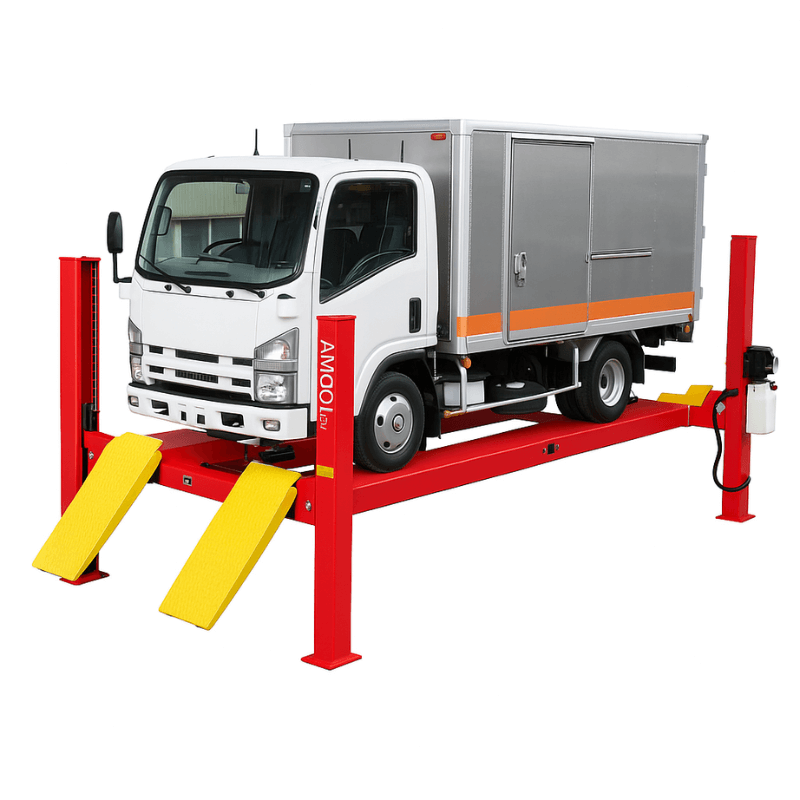
Keeping fleet vehicles healthy starts with giving technicians safe, fast under-body access. A purpose-built 4-post car lift serves as a critical infrastructure upgrade that drastically changes repair workflows. Today’s models accommodate Class-3 box trucks and most yard spotters, yet still free up floor space when the runways are raised.
For operations seeking to modernise their maintenance bays, integrating HeavyLift Direct’s industrial-grade 4-post lift solutions for fleets allows technicians to work with greater speed and safety. Beyond efficiency, this equipment strengthens compliance with OSHA 1910.178 and ALI/ANSI ALCTV mandates.
Key Advantages
- Operational Speed: Drive-on runways eliminate the need to manually align lifting arms, getting vehicles in the air in seconds.
- Certified Safety: Built-in multi-level locking positions ensure a rigid, mechanical hold that meets strict industrial standards.
- Service Versatility: Compatible with rolling bridge jacks to allow for simultaneous wheel, brake, and suspension work.
- Heavy-Duty Stability: Specifically engineered to handle the high-tonnage and long wheelbases of modern fleet box trucks.
Ideal For
- Last-Mile Delivery Fleets: Optimised for the high-volume maintenance of delivery vans and box trucks.
- Municipal & Utility Services: Built to handle the heavy-duty requirements of city maintenance and emergency vehicles.
- Logistics & Distribution Hubs: Perfect for on-site repair centres managing constant trailer and yardster rotation.
- Commercial Service Centres: Designed for high-bay garages that require ALI/ANSI-certified equipment.
| Pro Tip: Upgrading to a 4-post lift can reduce mean-time-to-repair.This infrastructure shift allows technicians to safely service larger fleets while reclaiming valuable floor space when not in use. |
2. Pair Predictive Maintenance With Guaranteed Parts Availability
Predictive maintenance isn’t just buzzworthy; predictive maintenance can reduce overall maintenance costs by up to 20% and unplanned downtime by up to 50%. But sensors and analytics only go so far; you still need parts on hand when the algorithm pings a developing issue. For wheel-loader fleets, that means stocking OEM-quality items like hydraulic seals, pins, and wear plates.
Why Aftermarket Parts Matter
- Precise fit: Tolerance mismatches amplify vibration and accelerate failure.
- Warranty alignment: Many telematics-driven service plans remain valid only with certified components.
- Proven life cycles: OEM specs align with the predictive models you’re using.
Parts-Availability Planning
- Identify safety-stock thresholds for each critical assembly.
- Map supplier lead times, including current port congestion buffers.
- Establish a critical-asset ranking so wheel loaders that feed the crusher during peak season never wait for a seal kit.
Vendor-Managed Inventory (VMI) or on-site kitting can close remaining gaps. Sourcing reliable Case wheel loader parts from HW Part Store ensures critical machinery stays operational, with exact-fit aftermarket options to minimise downtime. Stocking parts before trouble strikes helps turn maintenance planning into reliable uptime.
| Warning/Important: Avoid relying on generic components for critical machinery. Tolerance mismatches in non-OEM parts amplify vibration and accelerate failure, potentially voiding warranties that rely on certified predictive maintenance models. |
3. Integrate Maintenance KPIs With Supply-Chain KPIs
Even the best lift or the deepest parts bin won’t help if leadership can’t see the connection between equipment readiness and fill rate. Start by pairing asset-centric metrics like MTTR, MTBF, and lift utilisation with supply-chain metrics such as OTD (on-time-delivery) and OTIF (on-time-in-full).
Step-by-Step
- Build a cross-functional dashboard – maintenance, warehouse, and transportation all share a single view.
- Set “impact multipliers.” Example: Every 60 minutes of loader downtime cuts dock throughput by 12 truckloads.
- Review during S&OP or IBP cycles to ensure capacity forecasts reflect real maintenance constraints.
Gartner reports that firms executing integrated dashboards are twice as likely to maintain OTD during a crisis. That’s resilience in action.
| Key Insight: Firms that link maintenance KPIs with supply-chain metrics are twice as likely to maintain on-time delivery during disruptions, proving that data integration is a requirement for true resilience. |
The Path Forward
Supply-chain resilience lives and dies on equipment readiness. If your shop is still juggling floor jacks, waiting days for replacement loader seals, or tracking KPIs in separate spreadsheets, now is the time to act. Start with a quick maintenance-readiness audit or utilise an equipment readiness checklist. Future disruptions won’t wait, and neither should your uptime strategy.
 Volvo Group, Qualcomm Ventures, Zebra Technologies to Share Strategies & Best Practices at FourKites’ Summit
 What Are Current Transformers and How Are They Used?
 Attack campaign involving stolen OAuth user tokens issued to two third-party integrators
 IBM Security new report – data breach average a record $4.4million!
 Thai Leisure Group announces seven figure refurbishment plan
 Supporting Software Supply Chain Security with Systems Management