


Over 2,000 commercial vehicles were pulled off the road during the last CVSA Brake Safety Week, with 15% found to have critical brake violations discovered during inspections. When these massive machines fail to stop, the resulting collisions are rarely minor. Identifying who must pay for the damages is a multi-layered process because federal law distributes responsibility among several entities.
The Trucking Company and Maintenance Providers
The fleet owner bears the primary legal responsibility to ensure that every vehicle is roadworthy. Under current safety standards, companies must document a brake performance assessment during every scheduled safety inspection. If a carrier skips these checks or ignores a mechanic’s warning to save on overhead, they can be held strictly liable for any resulting crash.
Liability often shifts if the trucking company outsourced its repairs. When a third-party shop performs a brake job incorrectly or installs the wrong components, that provider may be sued for professional negligence. In complex brake failure cases, a truck brake failure attorney from Silverthorne Attorneys can help victims subpoena maintenance logs and determine whether a repair provider failed in its duties. Working with a seasoned legal specialist also helps victims avoid common missteps during the claims process.
Modern trucking depends on high-tech systems to manage deceleration. While most drivers are diligent, the CVSA’s 2025 Brake Safety Week data showed a 15.1% out-of-service rate for brake-related violations across the industry. This statistic highlights a systemic failure in how maintenance is prioritized by major logistics firms.
Drivers and Manufacturers
Truck drivers are the last line of defense against mechanical failure. Federal regulations require drivers to perform pre-trip inspections and complete a Driver Vehicle Inspection Report (DVIR) for every journey.
The following factors contribute to on-road brake failure:
- Drivers must monitor low-air alarms and report any unusual pedal feel immediately
- Using brakes improperly on steep grades can lead to overheating and total failure
- Cargo loading companies may be liable if an overloaded trailer puts illegal strain on the system
In some cases, the hardware itself is the problem. If a brake chamber or ABS system has a design defect, the manufacturer may be held liable under product liability laws. It is not uncommon for liability to be split, with a manufacturer paying a percentage for a faulty part and the carrier paying the rest for failing to catch the issue during a routine check.
Proving Fault in Complex Accidents
Gathering evidence quickly is the only way to prevent critical data from being lost. Most modern trucks contain an Event Data Recorder (EDR), or “black box,” which captures exact vehicle speed and braking force at the moment of impact.
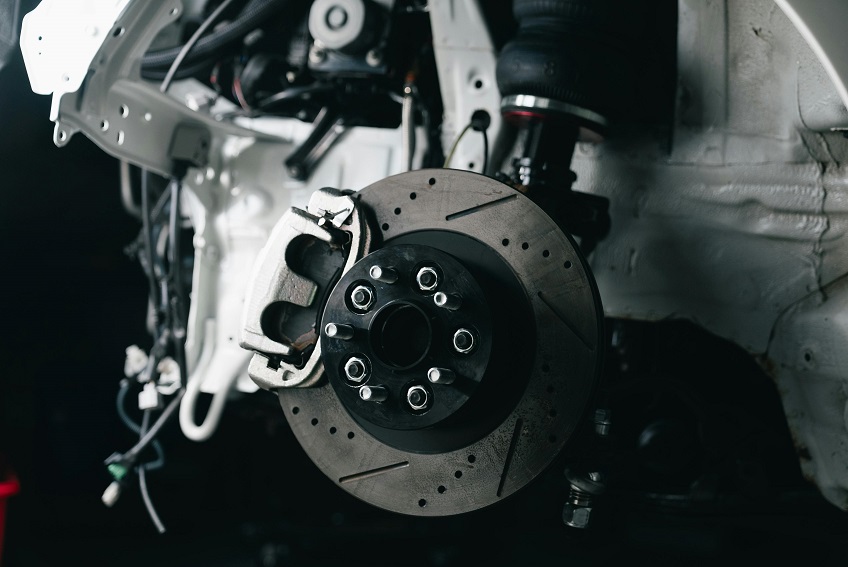
Investigators also look for physical evidence, such as “S-cam” violations or rusted rotors, that suggest long-term neglect. So while it’s sensible to invest in new technologies to upgrade your fleet, including AI route planners, this should not come at the expense of taking truck safety seriously at the most basic level.
Establishing Negligence Through Federal Records
Proving liability requires a deep dive into the Federal Motor Carrier Safety Administration (FMCSA) Safety Measurement System. This database tracks a trucking company’s history of maintenance violations and previous road incidents. If a carrier shows a pattern of neglected brake systems, it strengthens a victim’s claim for punitive damages.
An attorney will often cross-reference these federal records with the vehicle’s internal maintenance logs and sensor data. When these records don’t align, it usually points to a deliberate attempt to hide mechanical failures.
The Role of Post-Crash Inspections
Immediately following a severe collision, law enforcement or specialized inspectors often perform a Level 1 inspection. This process involves a physical examination of the brake linings, drums, and air-line connections to identify immediate failures. These technical reports serve as foundational evidence when determining if a part was worn beyond legal limits.
Expert witnesses can use these findings to reconstruct the seconds leading up to the impact. Because brake heat dissipates and components can be tampered with, securing the vehicle for a private inspection is a time-sensitive priority. This physical proof often bridges the gap between a driver’s testimony and the mechanical reality of the crash.
Your Path to Legal Recovery
Securing compensation requires a detailed look at electronic logging devices and physical maintenance records. Because multiple parties, from the manufacturer to the loading crew, can share fault, these cases are rarely straightforward.
Understanding the nuances of fleet responsibility ensures that no negligent party escapes accountability. If you are looking for more advice on supply chain-related issues like this, our other posts provide ample coverage of topics that matter to you.
 What Are Carrier Management Services and How They Improve LTL Shipping Efficiency
 Drone Technology: How First Responders Are Empowered by it
 Leading Dutch telephone retailer Belsimpel launches identity verification platform Verifai
 Carrs Billington to Maximise Fleet Efficiency with End-to-end Solution from Microlise
 NCSC Cyber Aware Campaign: Is the password model broken?
 Initiative Online Print Invites Participants to “Mind on Tap” at the Online Print Summit 2026