

As work moves across phones, laptops, tablets, and changing networks, privacy habits need to move with it.
Work no longer happens in one place, on one network, or on one device.
A typical day might begin on a phone, move to a laptop, continue on a tablet, and end with a quick check on another screen before bed. For many people, that feels completely normal now. It is simply how modern work and everyday digital life operate. But that convenience creates a new challenge: privacy habits often remain stuck in a one-device mindset, even when daily behavior is not.
That gap matters more than it used to.
A person may think carefully about privacy on a work laptop, then become far less deliberate on a phone. They may protect one connection but overlook another. They may assume that security decisions made on a primary device automatically carry over to the rest of their digital life. In practice, they usually do not.
Flexible Work Has Changed the Privacy Baseline
This is why cross-device privacy tools have become more relevant.
Their value is not only technical. It is behavioral. A tool that works across devices lowers the friction involved in keeping privacy habits consistent. Without that consistency, users often end up with scattered routines: one setup for work, another for travel, another for casual browsing, and no clear standard connecting them. The more fragmented the device environment becomes, the easier it is for weak spots to appear.
Flexible work makes this even more obvious.
The old office model concentrated internet use into a smaller set of conditions. A person worked on one main computer, on one main network, often under one main system of oversight. Now the picture is different. People work from home, switch between mobile data and shared Wi-Fi, answer messages from phones, review files from tablets, and move sensitive activity across multiple environments in a single day.
That means privacy is no longer only about securing a location. It is about securing transitions.

Privacy Now Has to Follow the User Between Devices
A user may be responsible in one setting and exposed in another simply because the shift happened quickly. A train ride, a hotel check-in, a café stop, or an urgent task on a phone can all change the risk profile without much warning. This is why cross-device thinking matters: it reflects how work actually moves.
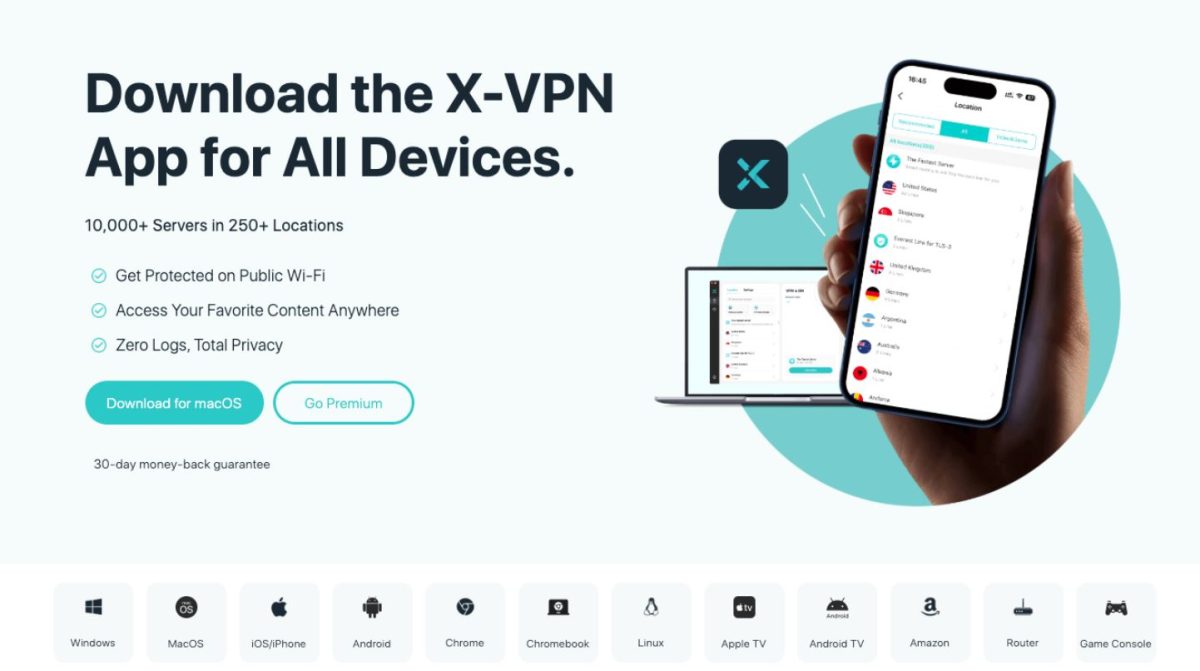
The product side of that shift is visible on X-VPN’s download hub, which positions the service across desktop, mobile, TV, routers, browser extensions, and game consoles rather than around one primary operating system. The page lists support for Windows, macOS, Linux, Android, iOS, Android TV, Apple TV, Amazon Fire TV, routers, Chromebook, browser extensions, and game consoles, while also framing the app around public Wi-Fi protection, cross-device privacy, and access from many environments.
That kind of positioning matters because cross-device privacy is not just a feature-list issue. It affects user behavior.
If setup paths are fragmented, or if users think in terms of one “main” protected device and several secondary ones, habits tend to weaken. A more unified approach encourages users to see privacy as part of their overall digital routine, not as an occasional setting they remember only when something feels risky.
Mobile Privacy Is No Longer a Secondary Concern
Mobile is especially important here.
Phones are often the most personal devices people use, but also the ones treated most casually. They connect to public Wi-Fi, move across networks, store work messages, handle financial tasks, and remain constantly active throughout the day. For many workers, the phone is not a side device anymore. It is a central one.
That makes mobile-specific privacy support part of the bigger cross-device story, not a separate niche.
This is one reason a VPN for iPhone and iPad fits naturally into a broader flexible-work discussion. X-VPN’s iOS page frames the app around privacy on public Wi-Fi, device-specific setup for Apple hardware, free no-sign-up access on iPhone and iPad, and premium coverage for up to five devices under one plan. It also says iPhone models running iOS 15.0 or later are supported.
Continuity Matters More Than Convenience Alone
What matters in that kind of setup is not only convenience. It is continuity.
A cross-device privacy tool helps users maintain one clearer standard across work and personal environments. That does not mean every device needs identical settings or usage patterns. It means the user has fewer blind spots when moving between them. In flexible work, that can make a meaningful difference because the point of exposure is often not the primary setup. It is the transition.
This is also where cross-device privacy becomes easier to understand as a business issue.
Flexible work has made device switching routine. But routine can hide risk. A person who would think carefully before joining a shared network on a laptop may behave differently on a phone because the action feels quicker and more familiar. A task that looks minor on one screen may still involve sensitive information. A small break in consistency can create more exposure than users expect.
The Strongest Privacy Habits Now Need to Move With the User
That is why the strongest privacy habits now need to follow the user, not just the device.
For readers, the takeaway is simple:
If your daily life moves across several devices, your privacy routine should move with it. The question is no longer whether one machine feels secure enough. It is whether your digital behavior stays reasonably protected as you shift between environments, networks, and screens throughout the day.
In a flexible-work world, that is the standard that makes more sense.
 EasyTip partners with Samtouch Software to help over 7,500 hospitality venues
 Choosing the Right Cybersecurity Solutions for Your Company
 Siemens increases the efficiency and service life of baggage handling systems with Service 4.0
 Lease Group leverages finance from SFS to scale business
 Risks over Brexit raise need for skilled Interim Supply Chain Executives
 IMHX reveals forward-thinking Sustainability Zone