


Global technology deployments have a logistics problem that rarely appears in project plans. Hardware procurement, vendor contracts, and shipping schedules get mapped out in detail. The regulatory layer does not. And when a shipment reaches a destination market without a proper Importer of Record in place, the consequences show up fast: customs holds, missed installation windows, and project delays that cascade across the entire deployment timeline.
The IOR gap is not a new problem. But as technology companies accelerate international expansion, particularly into markets outside Western Europe and North America, the gap is widening.
What IOR Fragmentation Actually Costs
Most global technology companies do not have a single IOR partner. They have a collection of them, assembled market by market as deployment needs arose. One provider handles DACH. Another covers Southeast Asia. A third was brought in for a specific project in the Middle East and never replaced.
This fragmentation creates operational drag that compounds over time. Each provider has its own documentation requirements, its own communication protocols, and its own interpretation of what constitutes a compliant shipment. When a deployment spans multiple markets simultaneously, which is increasingly the norm for enterprise infrastructure rollouts, coordinating across three or four IOR relationships in parallel becomes a project management problem in its own right.
The timeline impact is direct. IOR-related customs holds are among the most common causes of delayed technology deployments. A shipment that clears in 48 hours with a prepared, experienced provider can sit for two to three weeks with one that is unfamiliar with the destination market’s regulatory requirements. For time-sensitive deployments such as data center buildouts, network infrastructure upgrades, or retail technology rollouts, that difference is not recoverable.
The Coverage Claims Problem
When evaluating IOR providers, procurement and supply chain teams frequently encounter coverage claims in the 150 to 175 country range. These numbers are rarely what they appear to be.
Actual global IOR trade volume concentrates in a much smaller set of markets. Operational data across the industry consistently points to 40 to 60 countries accounting for the substantial majority of cross-border technology shipments. These are markets with active customs infrastructure, established regulatory frameworks, and enough import volume to sustain real operational expertise.
Beyond this core group, coverage claims often rest on broker networks and third-party arrangements rather than direct operational presence. A global importer of record listed as covering 175 countries may have genuine clearance capability in 45 of them and nominal coverage elsewhere through relationships that have never been tested under a real shipment.
The distinction matters because IOR liability does not care about network depth. The entity named on the customs declaration is legally responsible for the accuracy of that declaration and for compliance with all applicable import regulations. If a third-party arrangement in a fringe market produces a compliance failure, the named IOR bears that exposure.
Supply chain teams evaluating IOR partners should ask a direct question: in which markets have you cleared shipments in the last twelve months, and what was the clearance outcome? Active operational coverage looks very different from listed coverage, and the difference shows up precisely when it matters most.
Compliance-First vs. Volume-First: A Real Distinction
The IOR market splits roughly into two operating philosophies, though providers rarely describe themselves this way.
Volume-first providers optimize for throughput. They accept a wide range of shipments, move quickly through onboarding, and compete primarily on price and turnaround time. For straightforward shipments in low-complexity markets, this approach works. For regulated technology equipment in markets with active customs scrutiny, it introduces risk.
Compliance-first providers operate differently. The most visible difference is at the intake stage. Before accepting a shipment, a compliance-oriented importer of record reviews HS classification, product certifications, and documentation completeness. This pre-qualification step is where most clearance problems are prevented. It is also where the operational cost of a compliance-first approach is concentrated, which is why volume-first providers skip it.
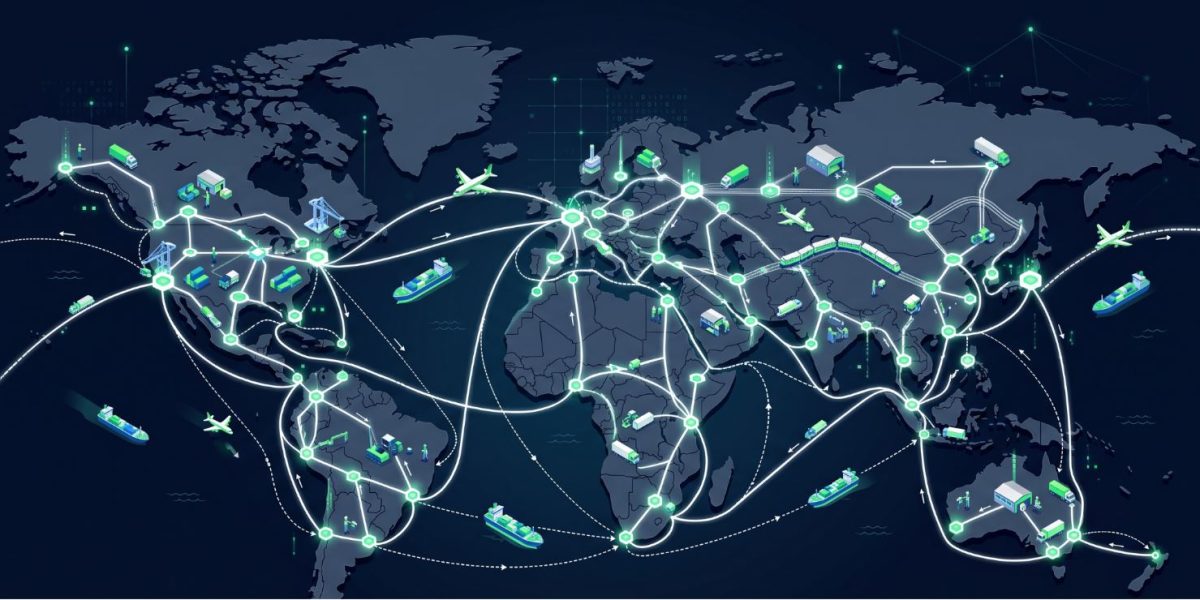
The regulatory environments in markets like Turkey, Brazil, India, and Saudi Arabia reward the compliance-first model and penalize the alternative. These markets have active customs enforcement, mandatory product certification requirements, and named regulatory bodies with real authority to hold or reject non-compliant shipments. Turkey’s TAREKS inspection system, India’s BIS certification requirements, and Brazil’s ANATEL framework all require advance preparation that cannot be compressed into a rushed clearance process. For technology shipments specifically, import compliance in Turkey involves telecom authority approvals and product safety inspections that sit outside the standard customs workflow entirely.
An IOR provider operating in these markets without direct regulatory familiarity and without government authorization where required is not offering coverage. It is offering exposure.
What Government Authorization Actually Signals
In several key markets, IOR providers are required to hold specific government authorizations to operate legally in a foreign trade services capacity. This is not a certification that can be purchased or self-declared. It is issued by trade authorities following a review of the provider’s operational and legal standing.
When a provider holds this type of authorization, it signals three things. First, the provider has been reviewed by the relevant government body and found to meet minimum operational standards. Second, the provider has ongoing compliance obligations that create accountability. Third, the provider has something to lose if a clearance goes wrong, which changes how they approach pre-qualification.
Providers without this authorization in markets where it is required are operating in a grey area. This is more common than procurement teams realize, and it is not disclosed voluntarily.
Building a More Durable IOR Architecture
The operational case for consolidating IOR relationships is straightforward. Fewer providers means fewer documentation standards to manage, clearer accountability when problems arise, and a provider that develops genuine familiarity with the shipper’s product categories over time.
The compliance case is equally strong. A provider with active coverage across the markets that actually matter, combined with a compliance-first intake process and verifiable government authorization in regulated markets, reduces the surface area for clearance failures significantly.
Global technology deployment timelines are under pressure from multiple directions. IOR fragmentation is one of the few sources of delay that is directly addressable through a procurement decision. The question is whether that decision gets made before the first shipment or after the first hold.
 Sir Peter Hendy, Network Rail Chair, to Address Bridge Strikes at the Microlise Transport Conference
 GTT Announces Enhanced Collaboration With Microsoft to Support Operator Connect Capabilities
 Latest Trends in E-commerce App Development
 Demand for Bugcrowd crowdsourced penetration testing for compliance accelerates during pandemic
 A Comprehensive Guide to Slot Game Development
 The only way physical stores can compete with eCommerce is with a radical rethink of physical space