


**This post is sponsored by Semrush. When you purchase through links in this article, we may earn an affiliate commission from Semrush.**
If your team is already relying on AI tools to move faster, the next step is making sure those tools are working with real data, not just well phrased guesses. If you want to see how that can actually fit into your workflow, you can explore Semrush One Solution.
What is happening across industries right now feels gradual, but it is reshaping how decisions are made. Whether it is marketing, operations, or planning, more of the early thinking is happening inside AI tools. People ask questions, explore options, and form conclusions before opening a single dashboard.
In supply chains and data driven environments, that shift is even more noticeable. Speed matters, but accuracy matters more. An answer that sounds right but is not grounded in real data can lead to decisions that ripple across teams and timelines.
That is where the role of reliable data starts to change. It is no longer enough to store it on platforms and review it later. It needs to be accessible at the exact moment a question is asked.
This is the idea behind Semrush One, especially with the introduction of Semrush MCP. While it is described as a way to connect APIs, what it really does is much more practical. It allows AI tools like ChatGPT, Claude, Cursor, and VS Code to pull directly from Semrush data while you are working.
Instead of treating AI as a separate step, it becomes part of a connected workflow.
That connection changes how people interact with information. You are no longer asking an AI for a general overview and then verifying it somewhere else. You are asking for insights that are already backed by data.
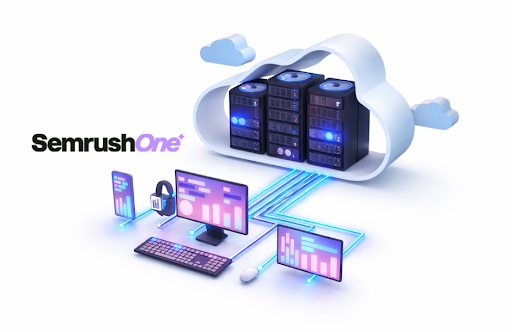
For teams used to juggling multiple systems, this removes a layer of friction that often slows things down.
Think about how often work involves switching between tools just to answer one question. A quick check on keyword trends turns into opening multiple tabs, comparing dashboards, and trying to piece together a clear picture. That process is not only time consuming, it also breaks focus.
With Semrush MCP integrated into Semrush One, that process becomes more direct. You stay inside your AI tool and still have access to the data you need.
Over time, this leads to a different rhythm of work. Instead of gathering information from different places, you spend more time understanding it and acting on it.
For example, routine monitoring becomes less manual. You can have an AI agent check keyword and backlink changes regularly and highlight anything that needs attention. Competitor tracking becomes more immediate, with alerts when something shifts rather than waiting for scheduled reviews.
Even reporting starts to feel less like a task that needs to be scheduled and more like something that happens as part of the workflow. Monthly summaries can be generated automatically and shared without the usual back and forth.
These are not dramatic changes on their own, but together they create a smoother way of working.
What makes this easier to adopt is that access to the Semrush MCP server is already included in Semrush One and the SEO Toolkit. There is no separate add on or complex setup required. It connects to tools that teams are already using, which lowers the barrier to trying it out.
That is why it is more helpful to think of this as a workflow improvement rather than a technical feature. It simplifies what already exists instead of introducing something entirely new.
The timing of this matters because AI is becoming the first point of interaction for many decisions. People are asking questions earlier in the process and relying on the answers they get to guide what they do next.
That means visibility has shifted as well. It is no longer limited to search results or dashboards. It exists in the answers themselves.
If your data is not part of those answers, it becomes harder to influence decisions at the moment they are being made.
This is especially relevant in environments where small changes can have larger impacts. When insights are delayed or unclear, the cost is not just time, it can affect outcomes across multiple areas.
By bringing real data into AI workflows, that gap becomes smaller. Decisions are based on information that is current and connected, rather than something that needs to be checked and rechecked.
To see how this works in practice, here is a quick walkthrough of setting up Semrush MCP with OpenAI tools: Video Tutorial Link
You can also include screenshots here that show how the setup works step by step, along with examples of how responses change once Semrush data is connected. This makes it easier to understand how the experience shifts from general answers to something more reliable.
The broader shift toward AI driven workflows is already in motion. The teams that adapt to it are not necessarily adding more tools. They are making better use of the ones they already have by connecting them in smarter ways.
If you want to bring your data into that same flow and make AI a more dependable part of how your team works, you can take a closer look at Semrush One Solution here.
Because as decision making continues to move into AI, the advantage will come from having the right information available at the right moment, without having to search for it.
 Mariani Packing Selects Loftware Smartflow to Manage Product Packaging & Drive Improvement
 Artificial Intelligence is the Inflection Point for Global Logistics & Freight Movement
 How to build Long-term Partnerships in Business & why are they more Beneficial for Companies
 Highway Joins Forces with Tai to Deliver Targeted Carrier & Capacity Solutions for Brokers
 IFS Softeon CEO Jim Hoefflin Named as Recipient of 2026 Pros to Know Award
 Royal Mail walkouts continue, but at what cost?