

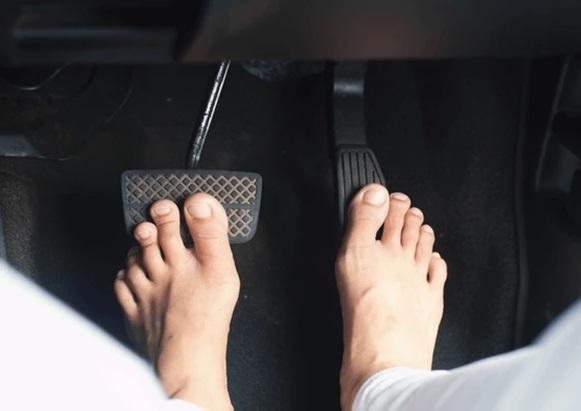
The situation of driving barefoot may arise after spending a long time at the beach, or when driving after going out for a quick errand near your home, or when uncomfortable shoes make driving difficult. Many drivers are still confused about whether barefoot driving is legal or illegal. Despite how normal the concern is, there is still a lot of confusion about what the law allows and whether driving without any shoes or sandals can lead to a ticket or legal trouble after a car accident.
In the United States, traffic laws differ from state to state, which results in various significant assumptions and myths about driving rules. People frequently search for clarity on what the law says about driving barefoot, especially when road safety and liability are involved. The short answer may surprise many drivers, but the details might vary.
Understanding the legal exceptions and practical considerations around barefoot driving in the U.S. can help drivers avoid unnecessary intimidation and make safer decisions behind the wheel.
Understanding What the Law Says About Driving Barefoot
In the United States, there is no federal law that specifically prohibits barefoot driving. In fact, many states and cities do not have a direct law banning barefoot driving. That said, legality does not always equal safety, and other traffic rules can still apply depending on the situation.
While barefoot driving is generally permitted, some localities in the U.S. impose indirect restrictions:
No significant bans in most states: 49 states have no explicit footwear requirement. Many states once had a vague “proper attire” rule but clarified that it doesn’t apply to bare feet.
North Carolina and Nebraska: Officers can cite under “inadequate control” if bare feet hinder pedal operation.
Commercial drivers (CDL holders): Federal DOT rules (49 CFR 392.7) require “safe operation,” and some trucking companies mandate shoes via policy.
Local ordinances: Rare city rules (e.g., some Florida beach towns) tie into hygiene or public safety, but enforcement is minimal.
Judges and officers focus on outcomes; if barefoot driving causes a swerve, delayed braking, or accident, you could face charges like impaired driving (fines of $100–$1,000+), careless operation, or even vehicular manslaughter in severe cases.
Legal Exceptions and Situations to Know
- In the U.S., most states’ vehicle codes do not mention footwear at all. This means driving barefoot is typically allowed unless a significant road safety issue arises.
- Whether the driver wears a shoe or not, reckless driving contributes to loss of control, delayed braking, or an accident, and law enforcement may cite the driver under reckless or careless driving statutes.
- After a devastating car crash, insurance companies may check every detail. If driving a car barefoot is argued to have affected reaction time or control, it could impact fault decisions.
- If drivers operate semi-trucks or large commercial trucks, they may be subject to workplace safety regulations or company policies that require them to wear protective footwear, even if U.S. state law is silent on the matter.
- Removing shoes because they are unsafe, such as high heels or loose sandals, can lessen the risk. In uncomfortable situations, barefoot driving may be the safer option.
- During the court proceedings, the litigation focused on driver conduct, not shoe choice. Driving alone barefoot rarely leads to penalties unless tied directly to negligent behavior.
Common Myths About Barefoot Driving
In many states, a very common misconception is that you will be fined for driving a car without wearing shoes. This is a widely spreading myth. Others believe that driving without shoes automatically increases liability in various claims of accidents, but that is not always true. Liability is determined based on actions, not assumptions.
Key Takeaways
- Barefoot driving is legal in many U.S. states.
- There are no laws to prohibit barefoot driving in most states. However, all unsafe driving laws would still apply to barefoot driving.
- The driver’s behavior will be the factor that determines liability, rather than just whether they were wearing shoes.
 11:11 Systems Acquires Select IBM VMware Cloud Service Provider Enterprise Customers
 BEUMER Group at bauma 2019: Reliable across rough terrain
 Sales VA Support for Startups: A Practical Guide
 Global welding & cutting company first to use ‘Randex VR’ system
 Streamline Operations with Innovative Solutions for Immigration Cases
 Organic Wholesaler Bio Partner Outpacing the Competition with Infor’s Industry Cloud Service