

In today’s remote work era, homeowners are seeking energy upgrades that go beyond simple efficiency tweaks.
Sunrun Solar Battery Storage stands out as a transformative solution, shifting your home from a passive energy consumer to an active grid participant. This home office upgrade is essential for creating a green, resilient workspace that stays powered during disruptions.
Whether you’re running a home-based business, managing client calls, or keeping family operations online, power reliability is critical to maintaining productivity and peace of mind.
Reliable solar energy and high-capacity battery storage from Sunrun offer a premium solution that stores renewable energy to keep your home office running during outages.
This system not only provides backup power but also intelligently manages peak energy usage to reduce your monthly electricity costs.
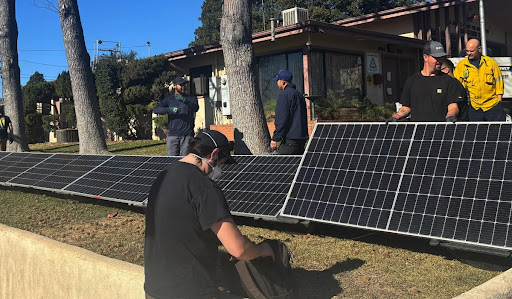
What is Sunrun Solar Battery Storage?
Sunrun Solar Battery Storage is a comprehensive energy service that pairs top-tier lithium-ion hardware with expert management. Integrating solar energy and battery storage from Sunrun helps offices lower carbon emissions, reduce reliance on the grid, and create more energy-resilient work-from-home environments.
The system captures excess power generated during the day for use during outages or expensive peak pricing hours.
This product is ideal for sustainability officers looking to upgrade supply chain infrastructure with clean technology. Unlike noisy diesel generators, Sunrun provides silent, emission-free power that seamlessly activates during grid failures. Critical servers, lighting, and communications remain online without interruption, ensuring business continuity.
“Had Jeff stop at my door and explain to me the new program. I absolutely love the fact I’m rate protected from rate increases and the consistency of my bill.” – Sey Terry
| Key Insight: Sunrun transforms your office from a passive energy consumer into an active manager. This shift provides resilience against outages while simultaneously lowering operational costs through intelligent peak shaving strategies. |
Sunrun Solar and Storage Showcase
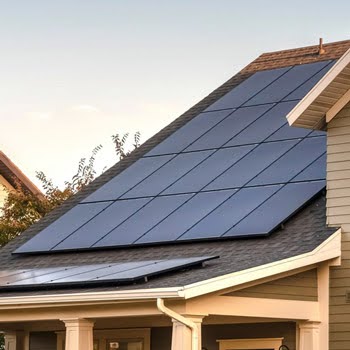
Premium Solar Panels |
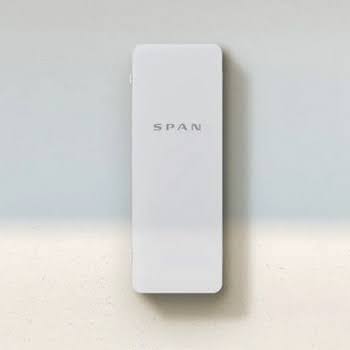
SPAN Smart Electrical Panel |
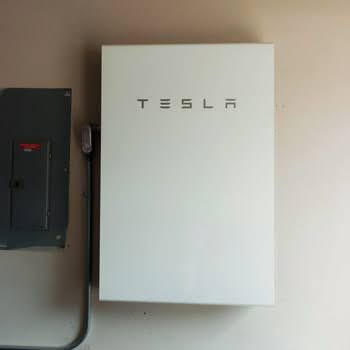
Tesla Powerwall |
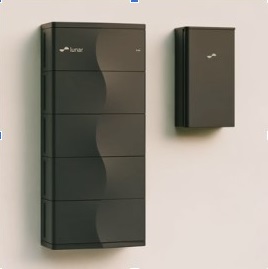
Solar Battery Storage |
Achieving Net Zero and operational stability begins with a modernised energy strategy. Our Tier 1 solar solutions provide a sustainable foundation, significantly reducing Scope 2 emissions while shielding your facilities from volatile energy markets.
For mission-critical operations, integrating the Tesla Powerwall or Lunar storage systems ensures 24/7 uptime during grid instabilities. Managed through the SPAN Smart Panel, your facility gains a data-driven energy architecture, transforming passive infrastructure into a strategic, resilient asset.
“Everything about this company was first class from design to installation, including the Tesla reserve battery pack.” – Ron, San Diego, CA
Sunrun Technical Specifications
The technical profile of Sunrun’s solar and storage systems highlights key performance metrics tailored to home energy needs. These specs support reliable power generation and backup.
- Capacity: Systems sized based on household kWh usage, sunlight exposure, and roof conditions, customised via BrightPath™ design technology.
- Power Output: Supports home energy demands with battery storage like Tesla Powerwall 3 for seamless outage protection.
- Efficiency: Optimised energy production through smart technology and monitoring for effective daily use.
- Warranty: Solar panels perform effectively for 25-30 years; comprehensive Sunrun Guarantee covers repairs, maintenance, and monitoring.
| Pro Tip: One battery often isn’t enough for a commercial setting. You should calculate your essential load requirements carefully by looking at servers, lights, and HVAC. This will help you determine if you need to stack multiple units for full coverage. |
Pros and Cons
Upgrading your home office energy supply is a significant investment that requires careful consideration. Below is a balanced look at the strengths and weaknesses of choosing Sunrun.
Pros
- Extensive installation experience across over 1 million homes.
- Flexible payment solutions like subscriptions with predictable monthly payments and little to no money down.
- Comprehensive Sunrun Guarantee covering repairs, maintenance, and monitoring.
- Integrates smart technology and battery storage like Tesla Powerwall 3 for energy control.
- Uses proprietary BrightPath™ design technology to customise systems for optimal energy production.
Cons
- Lease agreements require ongoing monthly payments over the contract term, which can extend costs beyond initial setup.
- Equipment selection is limited to Sunrun’s ecosystem, rather than fully customizable panel choices.
- Transferring a solar lease when moving involves coordinating with realtors, buyers, and escrow, adding process steps.
- Savings estimates depend on factors like utility rates, home energy use, and sunlight exposure, requiring personalised quotes for accuracy.
Rating of the Product
Design and Operation
Sunrun’s systems feature sleek, minimalist hardware like the Tesla Powerwall 3, which integrates into home exteriors without an industrial appearance. Wall-mounted designs save space, enable silent operation with no engine noise, and provide seamless power switching during outages.
Performance Specs
Sunrun systems deliver high energy density in compact units and support scalability by stacking multiple batteries to match household needs. Proprietary BrightPath™ technology optimises solar production based on sunlight exposure and energy use.
Hardware Quality
Sunrun partners with established providers like Tesla for durable components rated for indoor or outdoor use across various climates. Systems are built for long-term reliability, with solar panels expected to produce effectively for 25-30 years.
Technology Features
Sunrun employs an ecosystem of smart technology, including advanced battery storage and monitoring tools, for efficient energy management. This setup supports control over home power needs, even during grid interruptions.
Value Assessment
Sunrun offers payment plans with predictable monthly costs and little upfront investment, alongside potential state incentives and federal tax credits passed through as lower payments. Savings vary by utility rates, sunlight, and usage, determined via personalised quotes.
Environmental Impact
Sunrun enables 100% renewable solar energy storage for use anytime, reducing grid reliance during peak demand. This supports lower carbon footprints without emissions from traditional backups.
Comparison to Generac PWRcell
When upgrading a home office for green energy, the main competitor to Sunrun’s hardware is the Generac PWRcell. Sunrun typically installs Tesla Powerwalls, which offer a different value proposition compared to Generac’s modular approach.
The choice often depends on the specific power needs of the facility.
| Feature | Sunrun | Generac PWRcell |
| Chemistry | Uses lithium-ion batteries, with Tesla Powerwall 3 employing Lithium Iron Phosphate (LFP) | Uses Lithium Iron Phosphate (LiFePO4) |
| Usable Capacity | 13.5 kWh | 9 kWh – 18 kWh (Modular) |
| Continuous Power | 5 kW (Grid-tied) | 3.4 kW – 6.7 kW (Dependent on modules) |
| Design | Features wall-mounted, all-in-one design with integrated thermal management | Modular cabinet design for scalability and flexible installation |
Generac offers a modular approach that allows for smaller increments of storage, which can be useful for specific constraints. However, the hardware offered by Sunrun generally offers better continuous power output in a simpler, all-in-one form factor. For offices prioritising simplicity and high reliability, Sunrun’s solution is often superior.
“From start to finish our process has been super smooth. Love the sleek new system and battery backup for when PGE elects to turn our power off.” – Eugenia, Sacramento, CA
| Key Insight: Choose Sunrun if your priority is high continuous power output and simplicity in a single unit. Opt for Generac only if you require granular modularity to fit specific, smaller storage constraints. |
Powering the Future of Work
Sunrun Solar Battery Storage is a strategic asset for anyone with a home office aiming for a greener supply chain.
By ensuring continuity during outages and optimising energy costs daily, it transforms energy from a fixed cost into a managed resource. It works silently in the background, protecting your bottom line and the planet simultaneously.
- Resilience: Keeps the supply chain moving during grid failures.
- Sustainability: Maximises the use of renewable solar energy.
- Simplicity: Managed service with 24/7 monitoring takes the headache out of ownership.
Frequently Asked Questions
Is Sunrun Battery Storage Suitable for Total Off-Grid Living?
Sunrun’s solar battery systems, like those paired with Tesla Powerwall, are designed to work alongside the grid for backup during outages rather than supporting full off-grid living. Full off-grid setups need much larger storage capacity to cover extended low-sunlight periods, which standard home systems typically do not provide.
How Does the System Sound and Look (Aesthetics)?
Sunrun hardware, such as the Tesla Powerwall 3, offers a sleek, minimalist design that blends into home exteriors without industrial bulk. It operates silently with no engine noise or exhaust, unlike generators, making it suitable for residential settings.
What Is the Expected Lifespan (Warranty) of Sunrun Products?
Solar panels from Sunrun last 25-30 years with a gradual production decline, while the Sunrun Guarantee provides comprehensive coverage for repairs, maintenance, and monitoring without a fixed end date specified. Battery warranties depend on the partner hardware, often ensuring capacity retention over the term.
Can Sunrun Battery Fully Replace Grid Power?
Sunrun batteries act as a backup during outages or to supplement solar production, storing excess energy for later use rather than fully replacing the grid. They enhance resilience for homes tied to utility service, with savings from peak-time usage.
| Warning/Important: Do not confuse backup power with off-grid living. Most commercial installs are grid-tied to balance reliability with cost. Going fully off-grid requires significantly more hardware and engineering than standard backup solutions provide.
|
 GITEX GLOBAL 2025
 Brainactive.ai & Cint Announce Partnership to Secure Leadership in AI-Driven Market Research
 When a Workplace Injury Case Drags On: What Litigation Finance Actually Solves
 Wolverhampton Wanderers Football Club Extends Relationship with Arctic Wolf as Official Cybersecurity Partner
  Security Breach Domino Effect: Software Supply Chain Impact
 Backdoor Vulnerability: What You Need To Know About Supply Chain Attacks