

AI detection is becoming a regular checkpoint for schools, publishers, SEO teams, agencies, and businesses. The problem is that one detector rarely tells the whole story. A draft can look human in one tool, suspicious in another, and mixed somewhere else.
That is where Detector.io takes a different path. For anyone looking for an advanced AI detector, the platform brings multiple detection providers into one dashboard, then adds humanization and re-testing into the same workflow. Instead of checking a draft once and hoping the score is right, you can compare results, improve the text if needed, and check the revised version again.
Detector.io: A More Complete AI Detection Platform
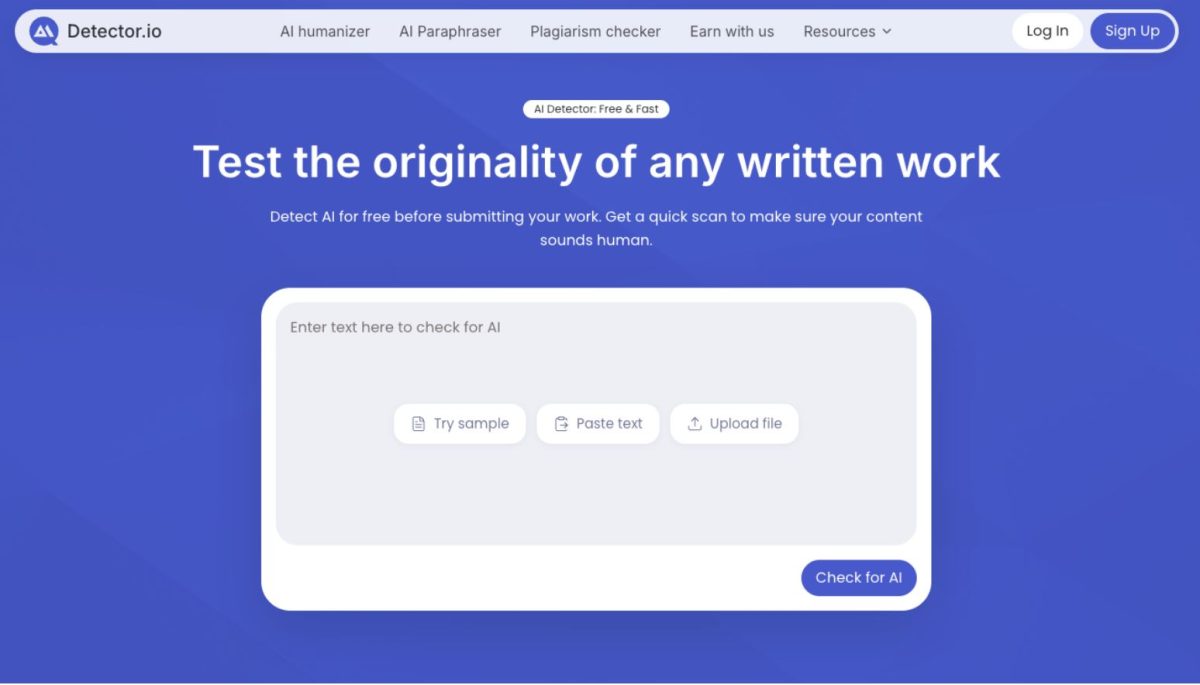
Detector.io is an AI content verification platform built for people who need more than a quick pass-or-fail answer. It works as an AI detector online, but its bigger value is the full review process around that check.
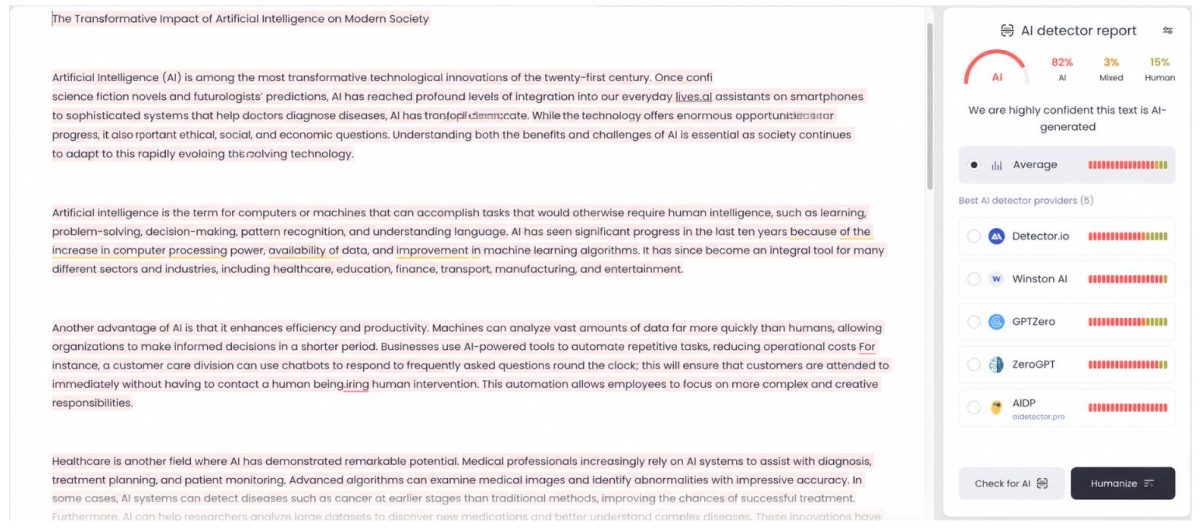
The platform lets you paste text, upload a file, or try a sample before running a scan. Results are organized into AI, mixed, and human percentages, with an average score and separate detector rows below. That makes the report easier to read than a single unexplained number.
This matters when the content has real consequences: a student paper, a contributed article, a client report, a landing page, a supplier document, or any public-facing business copy.
A Comprehensive AI Detection Suite in One Dashboard
Many people search for the most accurate AI detector as if one tool can settle every case. In practice, AI detection is more reliable when several signals are compared.
Detector.io simplifies that comparison by aggregating multiple detection engines, such as its own model, Winston AI, GPTZero, ZeroGPT, and AIDP, in one place. You can see how each detector responds to the same text without opening five tabs or pasting the same draft into separate tools.
Core Features Breakdown
5 Detectors in One
Detector.io checks content across five providers at once. This helps reduce the false confidence that can come from relying on one tool.
An accurate AI detector can still disagree with another strong detector because each system uses different models, thresholds, and signals. Some may react more strongly to predictable phrasing. Others may focus on sentence rhythm, repetition, or statistical patterns.
Detector.io does not hide those differences. It makes them visible.
Side-by-Side Detection Comparison
The report layout gives you a clearer way to detect AI text. Instead of seeing one isolated score, you can compare AI, mixed, and human probabilities across different providers.
A text that receives similar scores across several detectors sends a stronger signal. A text with split results deserves closer review. That distinction is useful for editors, educators, marketers, and business teams that need context before making a decision.
AI Humanizer
Detection alone tells you that something may need attention. It does not improve the draft, though.
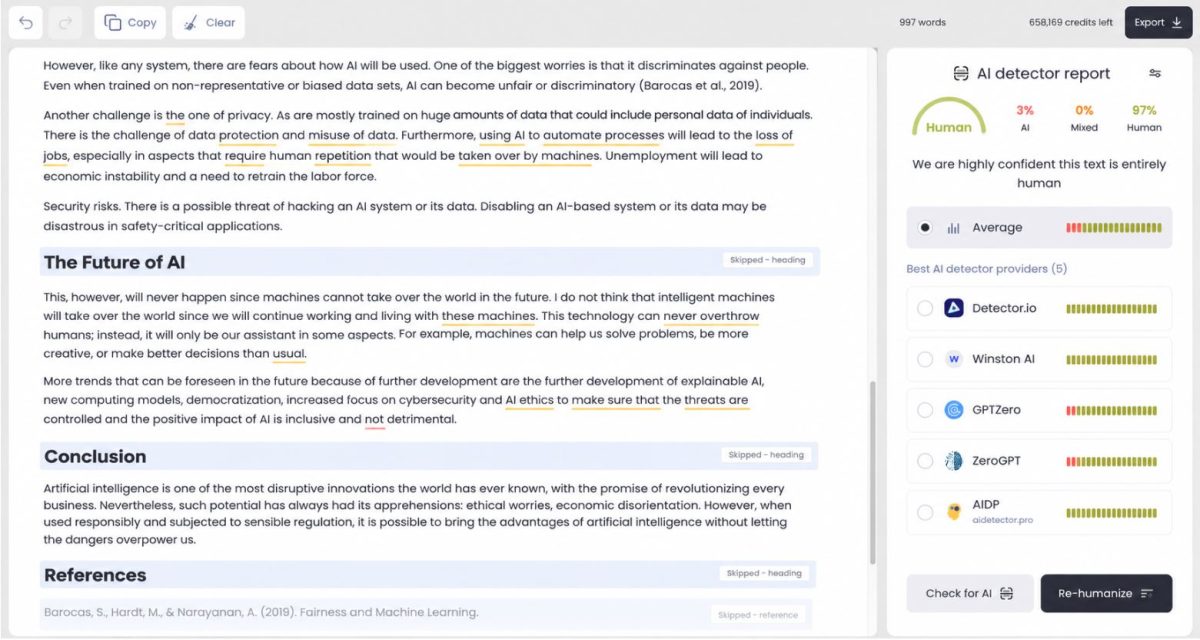
Detector.io includes an AI Humanizer for writing that feels rigid, repetitive, too formal, or too machine-like. The Humanizer supports sentence-level suggestions, so changes can be reviewed one by one. You can compare before and after versions, accept useful edits, refresh suggestions, delete weak ones, or reject changes that do not fit.
This is especially important for structured content. Titles, headings, references, citations, and formatting can be skipped or protected, which reduces the risk of a rewrite damaging the document.
Re-Testing After Humanization
A humanizer is only useful if you can verify the result. Detector.io lets you re-test the revised draft after humanization, so you can see whether detection scores changed.
That creates a tighter review loop:
- check the original text;
- compare detector scores;
- humanize selected parts;
- re-test the new version.
This turns AI content verification into a repeatable workflow.
Unified Detection Dashboard
Detection, comparison, humanization, and re-testing happen in one place.
That reduces copy-paste work, lowers the chance of checking the wrong version, and makes repeat reviews easier for teams that handle content often.
Pricing and Value

Detector.io keeps the entry point flexible, which is useful when AI checks are tied to different workloads. The $7 weekly plan is a fit for a short review window, such as a final paper, a content batch, or a one-time publishing deadline.
For ongoing checks, the $19 monthly plan gives more room. The $39 quarterly plan lowers the cost across a longer work cycle, while the $114 annual plan is the strongest option for teams, agencies, editors, and marketers who expect AI verification to become part of their normal process.
The platform also includes a 30-day money-back guarantee, so testing the full workflow does not require a long commitment upfront.
The value comes from consolidation. Instead of paying for several separate tools or manually switching between detectors and humanizers, Detector.io puts the core steps in one workflow. That can save you time and reduce review friction.
Pros and Cons
Pros
- Five detector providers in one tab.
- Side-by-side score comparison for better context.
- Built-in AI Humanizer for flagged or unnatural text.
- Immediate re-testing after humanization.
- Sentence-level controls instead of blind full-document rewrites.
- Protected sections for citations, headings, references, and structure.
Cons
- AI detection still needs human judgment.
- Different detectors can still disagree.
- More comparison data takes more attention to interpret.
What the Workflow Feels Like
Detector.io feels built for people who want clarity without turning content review into a research project.
The main actions are direct: check for AI, humanize, re-humanize, copy, clear, accept all, reject all, and export.
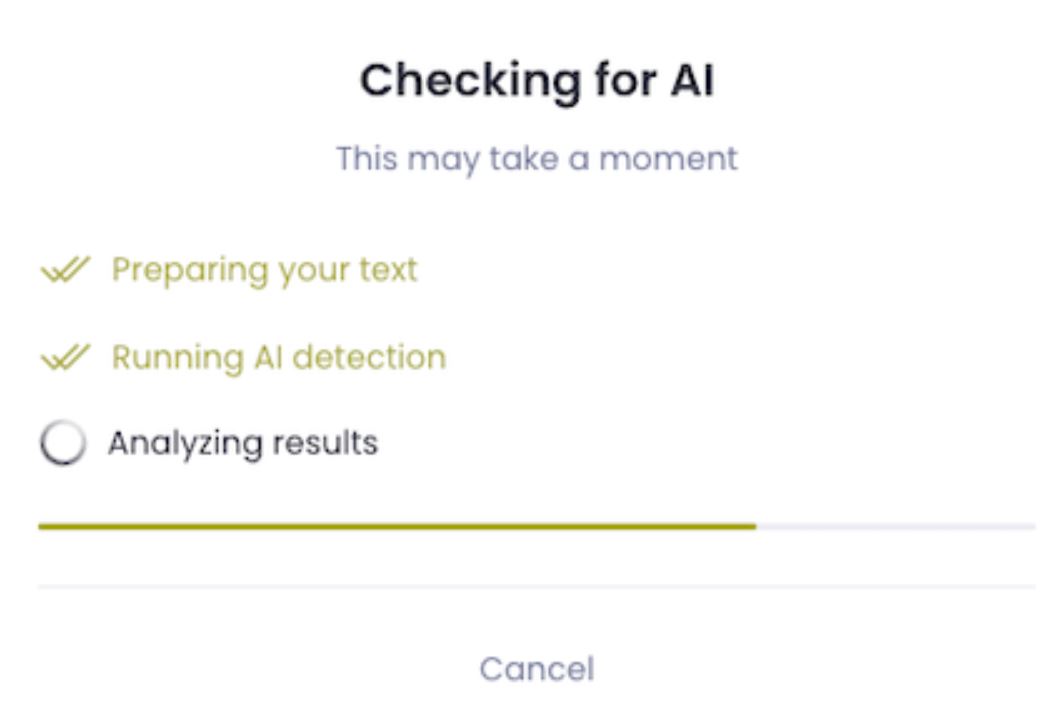
During scans, progress states show what is happening, from preparing the text to running detection and analyzing results.
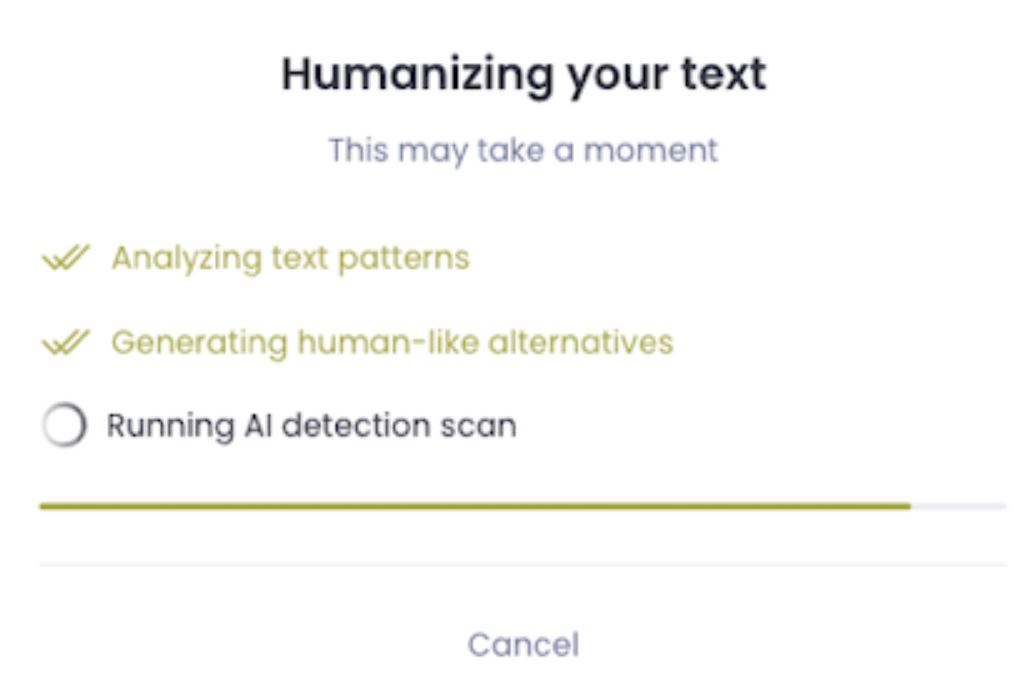
During humanization, the flow explains that the platform is analyzing text patterns, generating human-like alternatives, and running another detection scan.
The process feels like moving through a controlled review.
Final Verdict: Who Should Use Detector.io?
Detector.io is a strong fit for people who need AI detection with context. Students can check work before submission. Educators can review writing with more than one signal. SEO teams can verify AI-assisted drafts before publishing. Agencies and businesses can use it for client-facing or public-facing materials.
It represents a newer approach to AI content verification because it does not stop at detection. It connects comparison, content refinement, and re-testing in one place.
For anyone tired of conflicting detector scores and manual hopping from one AI detector tool to another, Detector.io offers a more complete way to check and improve written content.
Your Questions About Detector.io, Answered
What does Detector.io do?
Detector.io helps you check writing across several AI detection providers, compare their scores in one view, refine flagged passages with its Humanizer, and run another scan on the revised draft.
How is Detector.io different from a single AI detector?
A single detector gives one result. Detector.io compares results from several providers, which makes conflicts and outliers easier to spot.
Does Detector.io include an AI Humanizer?
Yes. Detector.io includes an AI Humanizer that helps revise flagged or unnatural text, with sentence-level controls and protected content options.
Can I re-test content after humanization?
Yes. After revising a draft, you can run another detection check to see how the updated version performs.
Who is Detector.io best for?
Detector.io is useful for students, educators, publishers, SEO teams, agencies, and businesses that need a clearer AI content review workflow.
 Despite a fall in sales in August, eCommerce is here to stay
 The aspirin that soothes the returns headache
 From SEO To Social: How Digital Agencies Optimize Healthcare Marketing
 Job management made easy with new software solution for small hauliers
 Talent in Logistics 2019 Awards Finalists Announced
 Are You Missing Out by Not Using a Gaming Proxy?