

The global market for refurbished smartphones and tablets has experienced significant growth over the past few years. As consumers seek cost-effective alternatives to new devices and businesses prioritize sustainability, the demand for professionally refurbished electronics continues to rise. From used iPhones and iPads to premium Android smartphones, millions of devices are being repaired, restored, and reintroduced into the market every year.
However, modern device refurbishment is far more complex than it was a decade ago. Today’s smartphones feature advanced security mechanisms, serialized components, and sophisticated hardware authentication systems that can create challenges during repairs. Replacing a battery, screen, or charging component often leads to warning messages, functionality limitations, or data mismatches if the repair process is not handled correctly.
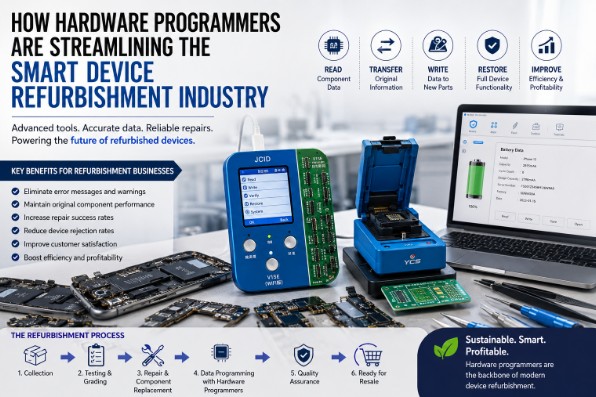
To overcome these challenges, repair professionals increasingly rely on Mobile Repair Programmers. These specialized tools allow technicians to read, transfer, and write critical chip data, helping ensure that replacement components work seamlessly with the device. As a result, hardware programmers have become essential tools for businesses operating within the smart device refurbishment supply chain.
The Expansion of the Refurbished Device Market
The refurbished electronics industry has evolved into a global ecosystem involving manufacturers, carriers, distributors, repair centers, and resellers.
Several factors are driving market growth:
- Rising prices of new smartphones and tablets
- Increased consumer interest in sustainable technology
- Growth of trade-in and buyback programs
- Expanding e-commerce platforms for refurbished devices
- Corporate device upgrade cycles
As more devices enter refurbishment facilities, businesses must process large volumes while maintaining high quality standards. This demand has encouraged the adoption of advanced repair technologies that improve efficiency and reduce device rejection rates.
Why Modern Device Refurbishment Is More Challenging Than Ever
Older smartphones often allowed simple component replacements without affecting overall functionality. Today’s devices operate very differently.
Many manufacturers now pair critical hardware components with the motherboard using encrypted identification data. This process improves security and performance but creates additional challenges for repair technicians.
Battery Authentication Systems
Modern smartphones often verify battery information through onboard data. Replacing a battery without transferring original information may trigger battery health warnings or non-genuine battery notifications.
Screen Calibration Requirements
Display assemblies frequently contain calibration data related to brightness, color accuracy, and touchscreen performance. Losing this information during a repair can affect the user experience.
Biometric Security Components
Face recognition systems and fingerprint sensors rely on secure communication between multiple hardware modules. Component replacement often requires specialized tools to preserve functionality.
Charging and Power Management Circuits
Advanced charging systems contain programmable memory chips that store important device information. Incorrect repairs can lead to charging issues or system errors.
These challenges have increased the importance of professional hardware programming tools within modern refurbishment operations.
The Growing Role of Mobile Repair Programmers
As smartphones become more sophisticated, Mobile Repair Programmers have become indispensable for repair centers and refurbishment businesses.
These tools help technicians communicate directly with chips and integrated circuits found within modern devices. By accessing stored component data, repair professionals can maintain compatibility between replacement parts and the motherboard.
Key functions include:
- Reading original component information
- Writing data to replacement parts
- Transferring battery health records
- Preserving screen calibration settings
- Supporting component authentication
- Improving repair success rates
By reducing errors and maintaining device functionality, programmers help businesses deliver higher-quality refurbished products to customers.
Applications of Hardware Programmers in the Refurbishment Supply Chain
Device Inspection and Diagnostics
The refurbishment process begins with device evaluation. Hardware programmers help technicians identify component-level issues that may not be visible through standard software diagnostics.
Battery Refurbishment Operations
Battery replacement remains one of the most common smartphone repairs. Programmers allow technicians to transfer important battery information, helping devices maintain accurate battery health reporting after repairs.
Display Restoration and Calibration
Premium smartphones often rely on display calibration data to deliver optimal visual performance. Hardware programming tools help preserve this information during screen replacements.
Logic Board Repairs
Advanced refurbishment facilities increasingly perform board-level repairs to recover devices that would otherwise be discarded. Programmer hardware assists technicians in diagnosing and restoring critical circuits.
Final Quality Control
Before refurbished devices are released for resale, programmers can verify proper communication between replacement components and the device motherboard, helping ensure a reliable customer experience.
How Phone Chip Programmers Improve Repair Accuracy
One of the most valuable tools in a professional refurbishment environment is a Phone chip Programmer. These devices provide direct access to component-level information stored within smartphone chips and memory modules.
Using a programmer, technicians can retrieve important device information and transfer it to replacement parts when necessary. This capability helps maintain original device functionality while reducing the risk of compatibility issues.
Common applications include:
- Reading EEPROM data
- Restoring battery information
- Preserving display calibration settings
- Supporting charging circuit repairs
- Diagnosing component-level faults
As repair standards continue to evolve, chip programming has become a fundamental skill for technicians involved in advanced refurbishment work.
Why the JC V1SE Programmer Is Widely Used in Modern Repair Shops
Repair businesses require versatile tools that can support multiple repair scenarios without increasing operational complexity.
The JC V1SE Programmer has become a popular choice among professional technicians because it supports a broad range of repair and data management functions. From battery servicing and display repairs to diagnostic testing, it provides an efficient solution for handling common refurbishment challenges.
Its flexibility allows repair centers to streamline workflows, improve productivity, and maintain consistent repair quality across a variety of smartphone models.
As refurbishment volumes continue to grow, multi-functional programming solutions help businesses process devices more efficiently while minimizing downtime.
EEPROM Programming and Advanced Device Recovery
Some repair situations require deeper access to component memory and system data.
An EEPROM Chip Programmer for iPhone enables technicians to read and write information stored within EEPROM chips used in charging circuits, battery systems, and other critical components.
This capability supports advanced repair procedures such as:
- Battery data restoration
- Charging circuit recovery
- Component pairing management
- Logic board troubleshooting
- Hardware authentication support
For refurbishment facilities focused on maximizing device recovery rates, EEPROM programming has become an increasingly valuable capability.
Benefits of Hardware Programmers for Refurbishment Businesses
Faster Processing Times
Programmers reduce manual troubleshooting and help technicians complete repairs more efficiently.
Improved Repair Consistency
Accurate data transfer minimizes compatibility issues and improves repair outcomes.
Higher Device Recovery Rates
Advanced programming tools allow businesses to restore devices that might otherwise be considered beyond repair.
Reduced Operational Costs
Efficient repair workflows help lower labor costs while maximizing productivity.
Better Customer Satisfaction
Devices that function correctly without warning messages or restricted features provide a superior user experience and reduce warranty claims.
Future Trends in Smart Device Refurbishment
The role of hardware programmers is expected to become even more important as smartphone technology evolves.
Increased Component Serialization
Manufacturers continue to expand hardware authentication systems across additional device components.
More Advanced Security Features
Future devices will likely require increasingly sophisticated repair and programming techniques.
Growth of Sustainable Technology Practices
Governments, businesses, and consumers are embracing circular economy initiatives that encourage device refurbishment and reuse.
Rising Demand for Refurbished Electronics
As new smartphone prices continue to rise, refurbished devices are expected to capture a larger share of the consumer electronics market.
These trends will further strengthen the need for professional repair technologies and advanced programming solutions.
Conclusion
The smart device refurbishment industry is evolving rapidly, driven by growing consumer demand, sustainability initiatives, and increasingly sophisticated smartphone technology. While modern devices present new challenges related to component pairing, data authentication, and hardware calibration, professional repair businesses now have access to powerful solutions that simplify these processes.
Mobile Repair Programmers have become essential tools for maintaining device functionality, improving repair accuracy, and increasing operational efficiency throughout the refurbishment supply chain. Whether technicians are performing battery replacements, screen restorations, logic board repairs, or advanced data recovery procedures, hardware programmers play a critical role in achieving successful outcomes.
As the refurbished electronics market continues to expand, businesses that invest in advanced programming tools, technician training, and efficient repair workflows will be best positioned to thrive in the next generation of smart device refurbishment.
FAQs
- What are Mobile Repair Programmers used for?
Mobile Repair Programmers are specialized tools that allow technicians to read, transfer, and write component data during smartphone and tablet repairs.
- Why are hardware programmers important in device refurbishment?
They help preserve original component data, eliminate compatibility issues, and maintain device functionality after repairs.
- What does a Phone chip Programmer do?
A Phone chip Programmer provides access to chip-level information, allowing technicians to diagnose problems and transfer important device data.
- Why is the JC V1SE Programmer popular among repair professionals?
It supports multiple repair functions, including battery servicing, screen repairs, diagnostics, and component data management.
- What is EEPROM programming in smartphone repair?
EEPROM programming involves reading and writing data stored within memory chips to support advanced repairs, component pairing, and device recovery procedures.
 Want To Start Selling Online? Follow These Tips For Higher Profits
 Winter Storm Spiked Shipment Delays & On-time Performance
 Tive Named to Prestigious FreightTech 25 List of Innovative & Disruptive Companies
 Cardboard Display Boxes: Practical and Eco-Friendly Retail Solutions
 PTV Group to present software solutions for safe, sustainainable, equitable & resilient public transport
 Custom MLS Software: A Game-Changer for the Modern Real Estate Industry