

Quick Answer
For most Indian retail shops, billing software for retail shop options like myBillBook, Vyapar, and Zoho Books cover GST billing, inventory, and payment tracking well for single-counter and small multi-counter setups.
Shops running multiple outlets or high SKU counts tend to outgrow these into POS-grade tools like GoFrugal or accounting-first tools like TallyPrime and Marg ERP.
The right pick depends more on shop size and counter volume than on which name ranks first on any list, including this one.
Quick Comparison Table
| # | Software | Best For | Starting Price (approx.) |
| 1 | myBillBook | All-round GST billing for small-to-mid retail | From Rs. 349/month (official site, before annual discount) |
| 2 | Vyapar | Single-shop owners wanting a simple all-in-one app | Pricing varies by plan and platform; check vyaparapp.in directly |
| 3 | Zoho Books | Shops that also need full accounting, not just billing | Has a free entry tier; paid plans scale by feature |
| 4 | TallyPrime | Shops with an existing accountant already on Tally | Desktop license, higher one-time-style cost than mobile-first apps |
| 5 | Marg ERP | Pharmacy, FMCG, and distribution-heavy retail | Plan-based, typically priced for inventory-heavy use cases |
| 6 | Busy Accounting | Multi-location shops wanting accounting + inventory | Tiered desktop pricing, confirm current plans directly |
| 7 | Khatabook | Shops whose main pain point is credit (udhaar) tracking | Free core ledger features, paid add-ons vary |
| 8 | Swipe | Fast mobile billing with strong UPI/WhatsApp sharing | Has a free plan; paid tiers add compliance features |
| 9 | Invopilot | Free online invoice and bill generator | No signup, no credit card, and ready-made templates for invoices, proforma invoices, quotes, and bills |
| 10 | HDPOS Smart | Multi-counter shops wanting deep POS-style control | Desktop-first pricing, confirm directly with vendor |
Pricing changes often across all ten of these. Treat the column above as a rough positioning guide, not a quote, and confirm current numbers directly with each vendor before publishing or buying.
Why This List Looks Different From Every Other “Best Billing Software” Roundup
Most lists for this keyword reshuffle the same five names. This one includes ten because “retail shop” in India covers very different realities: a single-counter kirana store, a two-counter pharmacy, and a five-outlet supermarket chain are all “retail,” but they need different tools. A kirana owner doesn’t need GoFrugal’s multi-outlet CRM, and a growing supermarket chain will outgrow Vyapar’s mobile-first design fast. Ranking ten lets this list separate “best for a single shop” from “best for a growing chain” instead of pretending one tool wins at everything.
1. myBillBook — Best Overall for GST Billing in Retail Shops
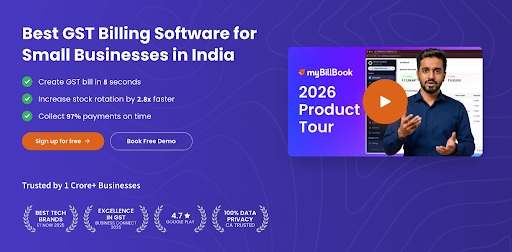
myBillBook is built specifically around the day-to-day reality of Indian retail billing: GST-compliant invoices with automatic CGST/SGST/IGST calculation, low-stock alerts, batch and barcode support, and invoices shareable directly over WhatsApp without printing. It also generates more than two dozen report types, including GSTR-1 in the format needed for filing, which matters most for shop owners who currently rely on a CA for that step.
It’s a strong fit for single-shop and small multi-counter retail that wants GST compliance and inventory handled without an accounting-grade learning curve. It’s a weaker fit for shops that need deep multi-warehouse logistics or manufacturing costing, where a heavier ERP-class tool will likely serve better long-term. According to the official pricing page, the basic plan starts at Rs. 349/month, with up to 20% off when billed annually
2. Vyapar — Best for Simple, All-in-One Single-Shop Billing
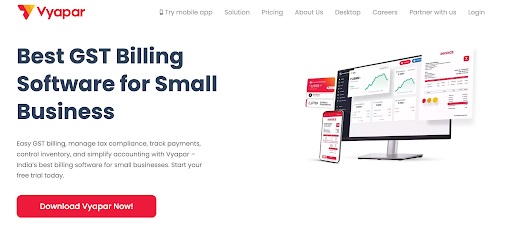
Vyapar bundles GST billing, basic inventory, and accounting into one app aimed squarely at small and medium Indian businesses. It’s frequently picked by single-shop owners who want one tool that does billing, stock, and a bit of bookkeeping without juggling separate software for each.
It tends to be a comfortable choice for shops that don’t need heavy multi-outlet inventory logic. Pricing has shown real variance across sources during research for this piece, so confirm current plan pricing directly on Vyapar’s own site rather than trusting any single aggregator figure.
3. Zoho Books — Best for Shops That Also Need Full Accounting
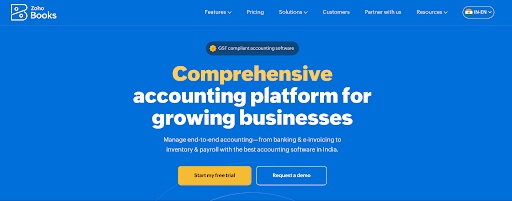
Zoho Books leans further into accounting than pure billing: ledgers, bank reconciliation, and financial reporting alongside invoicing. For a retail shop owner who also wants proper books (not just bills), it can replace both a billing tool and a separate accounting setup.
The trade-off is that it’s less retail-counter-specific than tools built primarily around fast checkout, so a high-volume counter may find the billing flow less optimized for speed than a dedicated retail billing app. It includes a free entry tier, with paid plans scaling by feature set.
4. TallyPrime — Best for Shops Already Working With a Tally-Trained Accountant
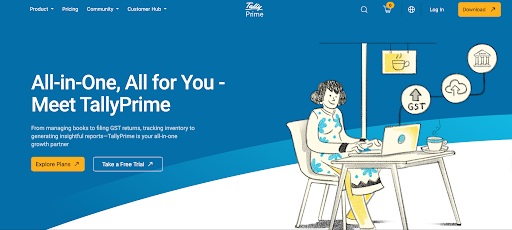
TallyPrime has been the default accounting software for a huge share of Indian small businesses for decades, and TallyPrime is its modern iteration. If your accountant already works in Tally, keeping billing inside the same system avoids a painful double-entry workflow between two disconnected tools.
Its learning curve is steeper for counter staff than mobile-first billing apps, and it’s typically priced as a desktop license rather than a low monthly subscription, which makes the total cost structure different from app-first competitors on this list.
5. Marg ERP — Best for Pharmacy and FMCG-Heavy Retail
Marg ERP has a strong reputation specifically in pharmacy and FMCG/distribution retail, where batch numbers, expiry tracking, and supplier-side inventory logic matter more than they do in a typical kirana store. Ask any pharmacy owner about retail software and Marg tends to come up early in the conversation.
For a general retail shop without pharmacy-grade batch and expiry requirements, it can feel like more software than necessary. It’s plan-based pricing, typically positioned for inventory-heavy use cases rather than the lightest possible billing setup.
6. Busy Accounting — Best for Multi-Location Shops Wanting Accounting Plus Inventory
Busy Accounting sits in similar territory to TallyPrime and Marg: a desktop-first, accounting-strong tool that also handles inventory and multi-location data well. It suits shop owners who think of billing as one part of a broader accounting need, not a standalone problem.
Like Tally, it asks more of counter staff in terms of learning curve than a mobile billing app does, so the staff-usability test matters more here than with simpler tools.
7. Khatabook — Best for Shops Whose Core Problem Is Credit (Udhaar) Tracking
Khatabook started as, and remains strongest as, a digital ledger for tracking customer credit and payments, the udhaar khata that many Indian shop owners still keep on paper. It has added invoice generation, basic inventory, and GST/non-GST billing support over time, but credit tracking and payment reminders are still its core strength.
For a shop where the single biggest daily pain is “who owes me what,” Khatabook solves that specific problem well. For a shop that needs deep GST invoicing or detailed inventory control as the primary need, it’s worth checking whether its billing depth matches purpose-built billing software before relying on it as the main system.
8. Swipe — Best for Fast Mobile Billing With Strong Payment Collection
Swipe has built a reputation around a clean, modern, mobile-first interface and notably fast invoice creation, plus strong UPI and WhatsApp-based payment collection. For a shop owner who wants something quick to learn and quick to bill with, it’s a genuinely strong candidate.
Its inventory capabilities tend to be lighter than more comprehensive retail platforms, and some compliance and automation features are reserved for higher plan tiers, so check exactly what’s included at the price point you’d actually pay, not just the entry-level demo.
9. InvoPilot — Best Free Tool for Quick, No-Frills Bills
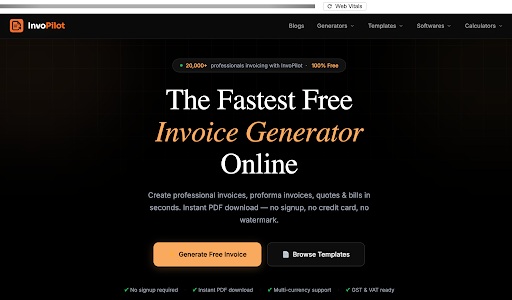
InvoPilot is a free online invoice and bill generator: no signup, no credit card, and ready-made templates for invoices, proforma invoices, quotes, and bills, with a tax field that handles GST, VAT, and other regional tax rates. For a very small shop or a solo owner-operator who mainly needs to produce a clean, professional-looking bill now and then rather than run full day-to-day retail billing, it removes the cost and setup of a subscription tool entirely.
It belongs to a genuinely different category from the rest of this list, though. It generates documents one at a time and doesn’t run ongoing inventory tracking, low-stock alerts, or automated GST filing reports the way the other ten tools here do. There also appears to be a separate, paid “Smart Invoicing” version of the same brand on a different domain that adds inventory tracking, multi-company support, and an AI assistant, so it’s worth confirming directly which version, and which feature set, you’d actually be signing up for before treating it as a full retail billing replacement.
For a retail shop handling real daily counter volume, GST filing, and stock management, the other ten tools on this list will generally serve better. For a freelancer, a very small business, or anyone who just needs the occasional professional bill without paying for software, InvoPilot’s free generator is a genuinely useful option to have on hand.
10. HDPOS Smart — Best for Multi-Counter Shops Wanting Deep POS Control
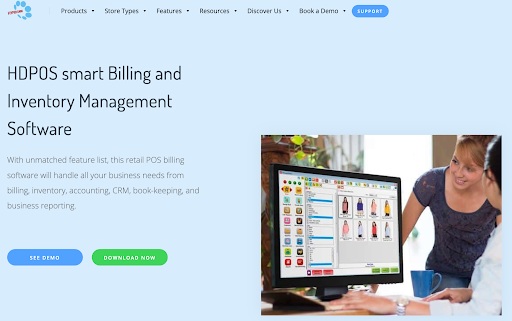
HDPOS Smart is positioned as a feature-rich, desktop-oriented POS system supporting multiple counters, user roles, inventory tracking, and financial reporting. It suits shop owners who want granular control over sales and stock across more than one billing counter inside a single location.
It asks more upfront setup effort than a mobile billing app, and is generally a better fit for shops that have already outgrown a single-counter, single-user billing tool.
How to Actually Decide Between These Ten
Three questions cut through most of the decision quickly:
How many counters and locations do you run today, and in the next year? Single counter, single shop: lean toward myBillBook, Vyapar, Swipe, or Khatabook. Multiple counters or outlets: lean toward GoFrugal, HDPOS Smart, Marg, or Busy.
Do you need billing, or billing plus full accounting? If a CA already handles your books separately, a billing-first tool like myBillBook or Swipe avoids paying for accounting depth you won’t use. If you want one system for both, Zoho Books, TallyPrime, or Busy fit better.
What’s your single biggest daily pain point right now? Slow GST invoicing points toward myBillBook or Swipe. Untracked customer credit points toward Khatabook. Stockouts across multiple locations point toward GoFrugal or Marg.
Whatever the shortlist becomes, test it with the staff member who’ll actually use it daily, not just the owner, before committing to a year-long plan.
Frequently Asked Questions
What is the best billing software for a retail shop in India? There’s no single universal winner. For most single-counter and small multi-counter shops, GST-focused mobile-first tools like myBillBook, Vyapar, and Swipe cover the core need well. Larger or multi-outlet retail tends to be better served by POS-grade tools like GoFrugal or accounting-first tools like TallyPrime, Marg ERP, or Busy.
Which billing software is best for a small kirana store? A lightweight, mobile-first option that handles GST billing, basic stock alerts, and customer credit tracking without a steep learning curve tends to fit best, which usually points toward myBillBook, Vyapar, Khatabook, or Swipe depending on which of those three needs matters most to that specific shop.
Is free billing software good enough for a retail shop? Free tiers are usually fine for very low transaction volumes or for testing a tool before committing, but most retail shops outgrow free-tier limits (invoice caps, missing GST reports, single-user access) within months. Budget for a paid plan once billing becomes a daily, GST-relevant activity.
Does billing software handle GST automatically? Most reputable billing software on this list calculates CGST, SGST, and IGST automatically and generates GSTR-ready reports, but “automatic” varies by vendor. Confirm directly with any shortlisted vendor whether tax calculation and filing-format reports are genuinely automatic or require manual entry.
How much does retail billing software cost in India? Pricing spans a wide range, from free or near-free mobile apps to several thousand rupees a year for desktop or multi-counter POS systems. Because published pricing varies significantly even across official and third-party sources, always confirm current pricing directly with the vendor rather than relying on any single listicle, including this one.
The Bottom Line
Ten tools, three real categories: mobile-first billing apps for single shops (myBillBook, Vyapar, Swipe, Khatabook), accounting-first tools for shops that want books and billing together (Zoho Books, TallyPrime, Busy), and POS-grade systems for chains and high-volume multi-counter retail (GoFrugal, HDPOS Smart, Marg). Match the category to your shop’s actual size and pain point first, then pick the specific name, and test it with real counter staff before signing a year-long plan. For most small and growing Indian retail shops looking for straightforward, GST-ready billing, myBillBook remains a solid starting point to trial first.
 Descartes’ Study Reveals Tariffs & Trade Barriers as Top Concern of 48% of Supply Chain Leaders
 TruTac Launch new workshop module for improved asset management & maintenance control
 TT Electronics Launches S-2CONNECT® Press Connectivity Solution to Automate Commands with the Push of a Button
 Ivalua Launches New Solution to Secure Spend on External Workforce
 When fast food meets data speed
 IPsoft & Unisys Expand Integration of Amelia™, the Market-Leading Digital Employee™, Across All InteliServe™ Channels