

Not long ago, real-time infrastructure was viewed as a specialist IT capability reserved for high-performance environments, while today, it’s becoming a business requirement. Organizations across digital services increasingly rely on live data, resilient connectivity, and event-driven systems to improve service quality, respond faster to disruptions, and make more informed decisions. Whether supporting customer-facing platforms or managing complex supply chain operations, success now depends on how quickly information can move across the business.
What Real-Time Infrastructure Actually Includes
Real-time infrastructure is not a single technology or platform. It’s actually a connected ecosystem that enables organisations to detect, process, and respond to events as they happen. Cloud services, APIs, event-streaming technologies, edge computing, observability platforms and the data pipelines linking enterprise systems all play a role in delivering timely, reliable information.
A useful example can be found in online casinos, where users expect games to load instantly, payments to process securely and gameplay to remain uninterrupted. Trust is built in milliseconds, making responsive infrastructure essential to the overall customer experience. This is particularly evident in any online casino in New Jersey, where licensed operators invest in secure, reliable platforms that meet both player expectations and strict regulatory requirements.
The same principle applies in healthcare for example. All hospitals increasingly rely on real-time systems to monitor patients, coordinate emergency care and ensure clinicians have immediate access to accurate medical records. Delays of even a few seconds can affect decision-making, making resilient, responsive infrastructure absolutely critical to patient care. Although the outcomes are very different, both healthcare providers and online entertainment platforms depend on systems that can process information securely and without unnecessary delay.

Why Batch Processing No Longer Fits Many Operations
The bigger question is why so many organizations are moving away from traditional batch processing.
Scheduled updates still have an important role to play. Financial reconciliation, historical reporting and other non-time-sensitive activities often work perfectly well with periodic processing. However, operational decisions don’t happen on a schedule anymore.
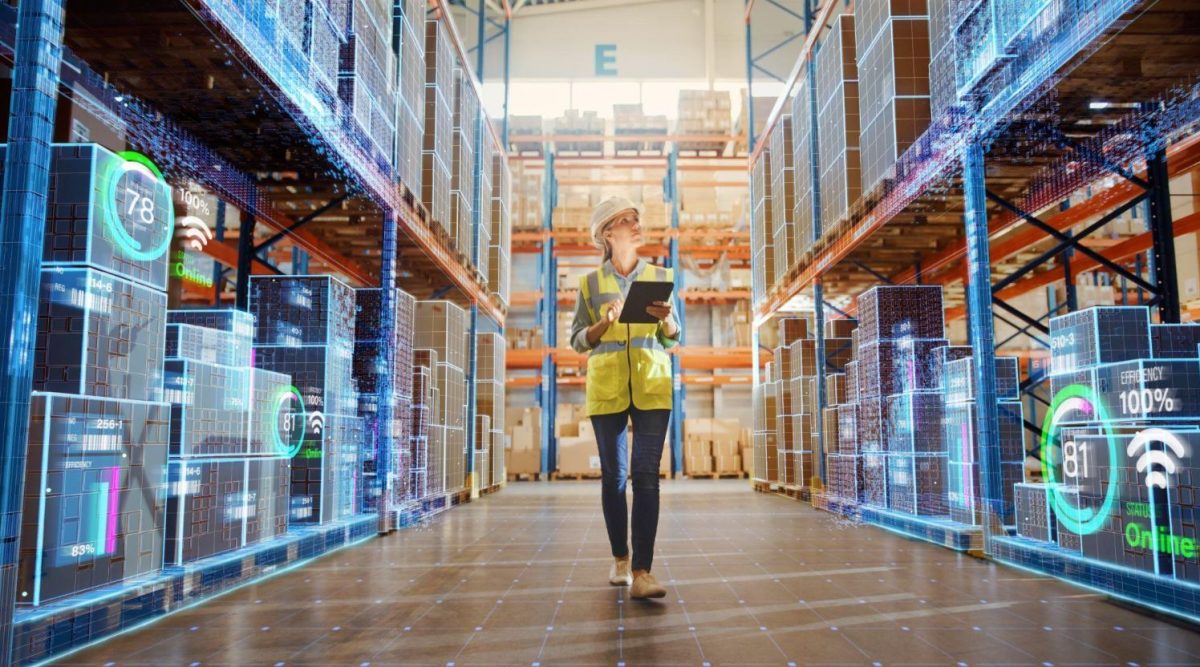
A warehouse manager cannot afford to rely on inventory figures that are several hours old when orders are arriving continuously. Transport teams need current location data to respond to delays, while manufacturers depend on live equipment status to minimize downtime. Customer-facing platforms face similar challenges, where delays in processing transactions or authentication requests can quickly affect the user experience.
What this means is that the conversation is no longer simply about speed, but about ensuring decisions are based on accurate, current information rather than outdated snapshots of the business.
Where Real-Time Capability Delivers Operational Value
The benefits become most apparent when organizations begin connecting operational data across multiple systems.
Supply chain leaders know that live information makes it easier to prioritize warehouse tasks, reallocate labor as conditions change, and respond more quickly to unexpected events. Fleet operators can improve routing decisions using live telematics, while integrated ERP, WMS and TMS platforms provide a clearer view of inventory, fulfilment and transport performance.
Digital services benefit in much the same way. Online platforms can process transactions more efficiently, identify anomalies sooner and maintain service continuity during periods of peak demand. Rather than reacting after problems have already affected customers, organizations gain the opportunity to intervene earlier and reduce the impact of disruption.
More often than not, the biggest gains come from better visibility, quicker intervention and giving teams the confidence to act on reliable information.
Why Edge, Cloud and Legacy Integration Must Work Together
Recognizing the value of real-time capability is critical, but beyond this, delivering it across an existing technology estate is often a far greater challenge.
Most organizations don’t have the luxury of replacing core systems overnight. In practice, modernization happens gradually, with APIs, middleware and event-driven integration extending established ERP, WMS and TMS platforms while avoiding the cost and disruption of large-scale replacement programmes.
Cloud infrastructure underpins much of today’s digital landscape, but cloud-only architectures are not always sufficient. Warehouses, manufacturing facilities, vehicle fleets and other distributed environments may still require local processing when connectivity is unreliable, or latency needs to remain consistently low. Edge computing helps bridge that gap, allowing critical operations to continue while synchronizing with cloud services when appropriate.
This hybrid approach inevitably adds complexity, but it also provides a practical path towards modernisation without abandoning previous technology investments.
The Growing Importance of Resilience and Cyber Governance
As organizations connect more systems, resilience becomes just as important as performance.
Every new API, endpoint and integration creates another point that must be monitored, secured and maintained. Without strong identity management, effective monitoring, regular patching and sensible network segmentation, greater connectivity can also increase operational risk.
Observability has therefore become an essential part of modern infrastructure rather than simply another monitoring tool. By providing continuous insight into latency, service availability, integration health and unusual system behaviour, it allows IT teams to identify emerging issues before they affect customers, partners or regulatory obligations.
For both regulated industries and supply chain operations, stronger visibility supports faster incident response, improved auditability and greater confidence in business-critical systems.
Measuring Success Through Business Outcomes
Not every business process requires millisecond response times. In many cases, near-real-time information delivers the greatest value without introducing unnecessary complexity or cost.
The strongest business cases are built around operational outcomes rather than technical specifications. Reduced downtime, faster exception resolution, improved asset utilization, stronger service-level performance, fewer manual interventions and greater visibility across operations are all measurable improvements that directly support business performance.
Technology should never be implemented simply because it is available. When organizations align infrastructure investment with genuine operational priorities, real-time capability becomes easier to justify as a long-term business asset rather than another IT upgrade.

Building for a Real-Time Future
Real-time infrastructure is becoming the foundation of modern digital services. Whether supporting supply chains, enterprise applications, or regulated online platforms, organisations increasingly rely on timely data, resilient connectivity, and event-driven architecture to operate effectively. The goal is not simply to make every process faster, but to ensure the right information is available when decisions need to be made. As digital operations become more connected and responsive, these capabilities are shifting from a competitive advantage to a basic expectation across almost every sector.
 Sunset Transportation’s John Sutton Named 2025 Rock Stars of the Supply Chain Rising Star
 BlueVoyant on the Recent SonicWall Ransomware Attacks
 spusu enables VoLTE calling for Google Pixel phones
 Invar Integration awarded top safety accreditation
 Powering Greener Logistics: Practical Steps to Decarbonise Fleet Operations
 How Technology Can Streamline the Letters of Administration Process in the UK