

Product timelines slip most often at the handoff points between design and prototype, prototype and test, test and production.
Every handoff introduces delay because information gets re-verified instead of carried forward.
Manufacturers offering on-demand manufacturing close these gaps by keeping design, fabrication, and validation within a continuous feedback loop instead of a chain of disconnected vendors.
Product Development Is No Longer a Linear Process
The traditional sequence assumes each stage produces a final, correct output before the next one begins: finalize the design, build a prototype, test it, then manufacture. The reality is that all stages do not produce perfect products. Testing will always reveal unknown variables. A wall section will buckle under temperature extremes. A fastener boss may crack under torque. Tolerance stacks will only be revealed once the mating parts have been built. When manufacturing feedback occurs long after initial tooling decisions have been made, those issues become change orders versus simply editing the CAD file.
Using multiple stages simultaneously reduces the cost of fixing mistakes. If a machinist identifies potential for a thin-walled section to deflect early enough so that there is time to make a revision to the current CAD file being edited by the designer, it is an inexpensive solution. However, if this same issue is identified only after the mold steel has been cut and a new quote must be obtained, it can take several weeks and result in additional expense.
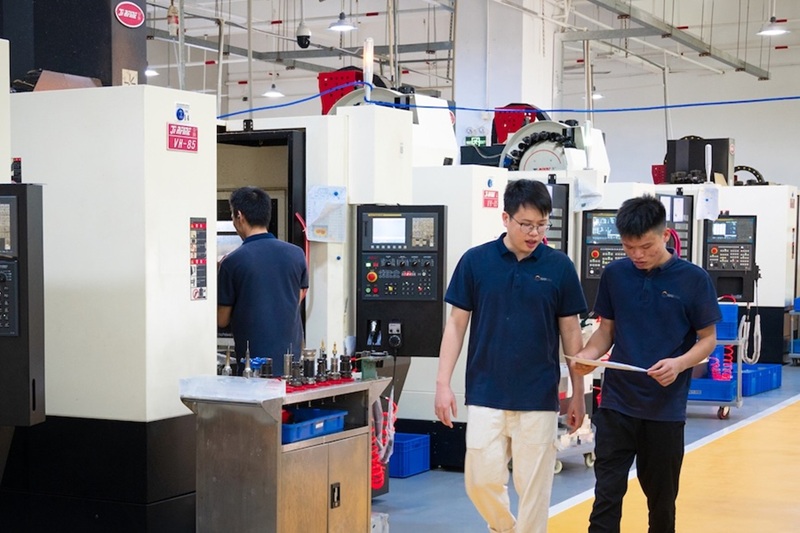
WayKen’s engineering team evaluates a client’s CAD files prior to obtaining a quote, therefore identifying factors such as wall thickness, draft angle, undercuts and hole diameter to depth ratio that may impact manufacturability, allowing the design issues to be corrected or flagged while the file remains editable and prior to the first article having been produced. This means that the manufacturer receives manufacturability feed back on their designs at the lowest cost point which is before commitment and not after.
Faster Iteration Leads to Better Engineering Decisions
Shortening the time between design, building and testing lets a team afford more testing. The ability to use an eight iteration schedule instead of a three iteration schedule allows engineers to produce several different designs in order to evaluate which design performs best as opposed to making assumptions based upon limited data.
The types of validation will determine the type of process used. For example; CNC machining validates both the material, and the fit/dimensions of parts. In contrast, additive manufacturing uses lower-cost methods to validate the part’s form/shape/fit until such a point where higher tolerance becomes necessary. Sheet metal fabrication is also a viable option to verify the enclosure and geometries of brackets at low volume prior to investing in costly tooling. Most companies struggle with the transition between various processes, i.e., parts manufactured at one location, printed at another, and formed/stamped at yet a third; each has its own unique practices regarding specifications/tolerances, certification for materials, etc.
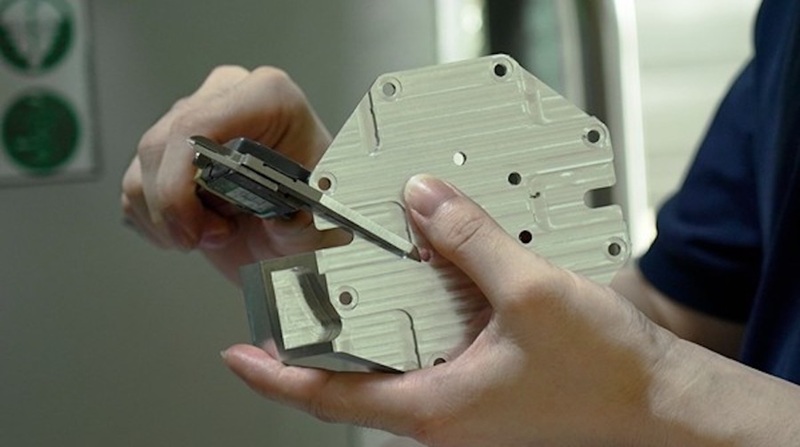
WayKen’s on-demand manufacturing floor integrates CNC machining, 3D printing, vacuum casting, rapid tooling, and sheet metal fabrication, utilizing similar documentation for all engineering and quality activities. As a result, printed parts may go directly to an inspected functional prototype and then onto low-volume production runs without having to redraw anything or negotiate revised tolerance requirements with new suppliers. Rather than any process operating at a faster pace than previously; it is the continued flow of work that reduces cycle time.
Preparing for Production While Development Is Still Ongoing
Schedules often lose most time bridging from a working prototype to one that can reliably go into mass production. A one-off prototype machined with hand fit tolerances and ignoring repeat setup considerations does not confirm that consistent production is possible. Evaluation readiness for production should go alongside functional validation and not wait until the work is done.
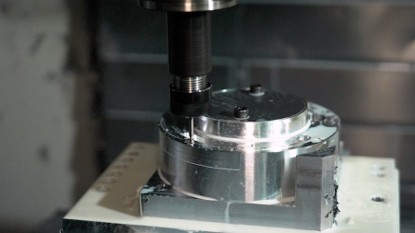
Rapid tooling is useful here. Rather than going straight from CNC prototypes to hard steel molds which can take months and lock in a design before it is proven, teams can first validate molded geometry using bridge tooling made of aluminum. Bridge tooling reproduces actual molding including gate placement and draft angles and material shrinkage much faster than hard tooling.
WayKen builds bridge tooling in aluminum or mild steel and turnaround is measured in weeks rather than months. Engineers can test hundreds to a few thousand molded units while design remains open to revision. Issues such as sink marks or witness marks from ejectors and dimensional drift due to shrinkage get caught and corrected before geometry is finalized and committed to hardened steel. For components of the same assembly, ISO certified precision machining uses the same documentation standard so plastic and metal parts are ready at the same time rather than waiting for one part to be ready before the other.
Conclusion
Shortening product development cycle times relies upon eliminating the “dead time” between development phases rather than reducing the length of any individual phase. By running manufacturing feedback, prototyping and production planning in parallel with each other as opposed to sequentially, it is easy to catch problems before it costs too much to fix them. This structural difference is how products move from design to delivery faster, particularly where ISO certified precision machining keeps every stage under one quality standard.
 Why Startups Focus on Supply Chains & Cash Flow
 Supply Chain Visibility – Connecting Data to Maximise Value
 March 2022 Budget Comment
 Israel’s Airspace Closure Disrupts Supply Chains: How AI Helps Retailers Adapt
 MULTIVAC celebrates 60 years – Customers win an exclusive Packaging Workshop
 What Is Teen Outpatient Treatment and How Does It Work in Scottsdale?