

Channel incentives work best when the payment method matches the recipient. Cash and credit work where there is an existing relationship, while prepaid cards give companies a fast, scalable way to reward individuals outside payroll.
Channel incentives have a simple job: give distributors, dealers, or sales partners a reason to prioritize a product or hit a specific target. Paying them is where the process can become complicated.
A rebate may be issued as an account credit. A salesperson earning a spiff might expect something they can spend personally. Another program may still rely on checks, adding printing, postage, and processing time. The right payment method depends on who is being rewarded, what they did to earn it, and how quickly the incentive needs to reach them.
For procurement, sales, and finance teams, that makes reward delivery part of program design rather than an administrative decision at the end.
What are the benefits of prepaid cards for sales incentives?
Prepaid cards let businesses quickly send individual sellers a fixed-value reward. They separate the reward from the recipient’s normal compensation or business account, which is particularly useful in indirect sales, where the company funding the incentive may have no direct payment relationship with the person earning it. For example, a manufacturer may want to reward salespeople working for a distributor or dealer, even though those individuals are not its employees and do not appear in its payroll system.
Digital delivery also shortens the gap between performance and reward. Once a qualifying sale or target has been verified, the incentive can be issued without waiting for a check to arrive. Non-cash rewards also tend to work harder than cash-equivalent ones, according to the Incentive Research Foundation. Prepaid card platforms give businesses a way to deliver these rewards directly to individuals without processing each incentive as a conventional payroll or accounts-payable payment. Giftogram issues branded corporate prepaid cards using Visa or Mastercard for business incentive programs. Companies can distribute cards in bulk, rewarding eligible recipients without adding each person to payroll or accounts payable.
How should businesses pay channel incentives?
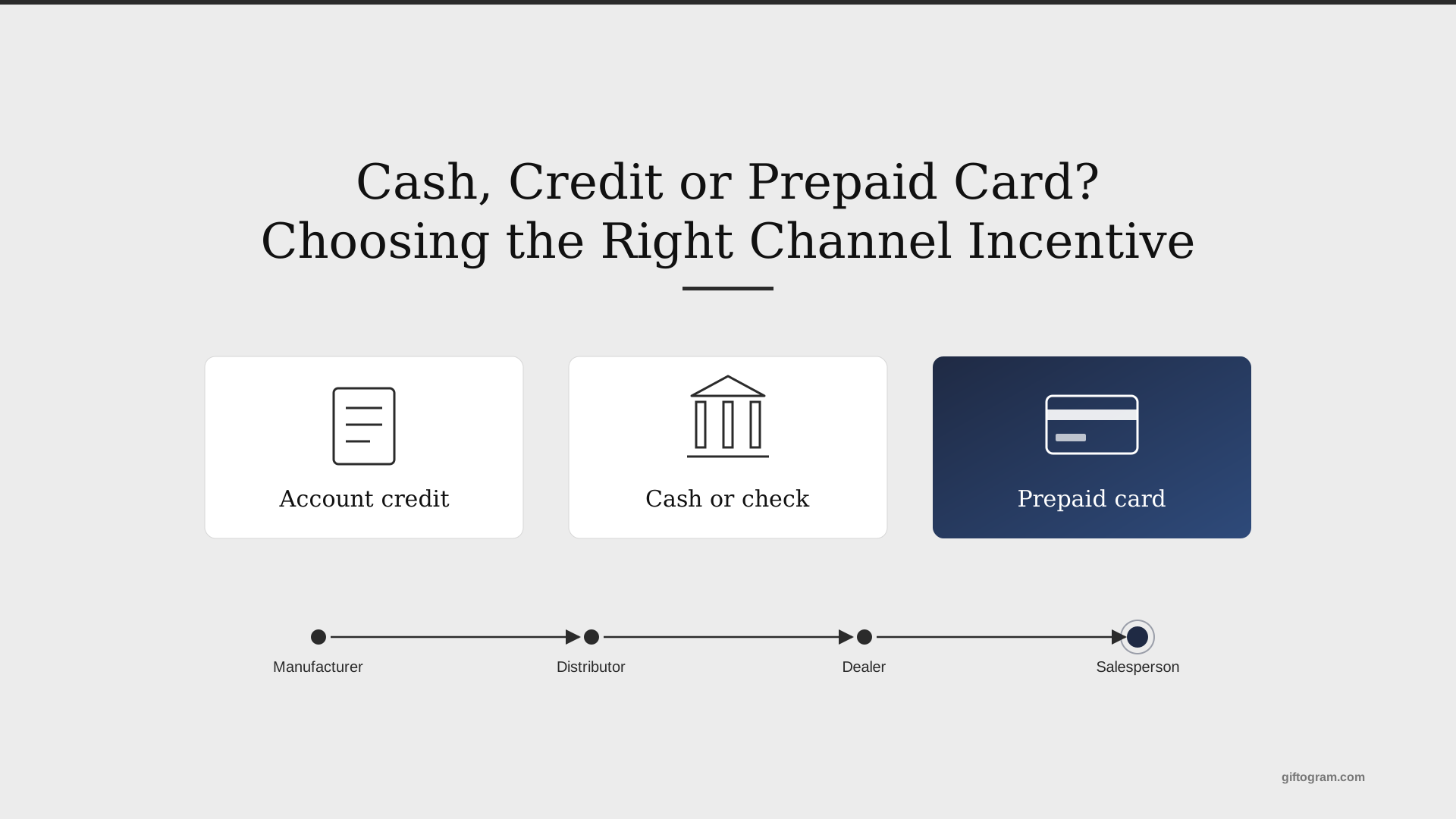
The main options for channel incentives are account credits, checks, cash payments, and prepaid cards. Each solves a different problem. Account credits make sense when the recipient is an existing business customer or distributor that regularly purchases from the company. Instead of sending a separate payment, the incentive reduces what the partner owes on a future invoice. Checks remain an option when physical payment is required or recipient banking information is unavailable, but they introduce printing, postage, and deposit time, and their use keeps falling: the Federal Reserve found US check payments declined 7.2% a year between 2018 and 2021, to 11.2 billion. Direct cash payments can be efficient when verified banking details are already held, particularly for established partners.
Prepaid cards occupy a different position. They can be delivered digitally without adding individual recipients to payroll or accounts payable, making them useful for sales incentives, spiffs, rebates, and other programs where the person earning the reward may not have a direct payment relationship with the company.
How quickly can prepaid card incentives be delivered?
Digital prepaid cards can be delivered the same day once eligibility is confirmed, making them useful when the timing of the reward is part of the incentive. Speed matters most when the reward is intended to reinforce a recent sale or achievement. A digital card removes printing and postage from the fulfillment process. Fast delivery should still follow validation. Sending a card immediately for an unverified sale simply creates a faster way to pay an invalid claim.
When should a business use account credits instead?
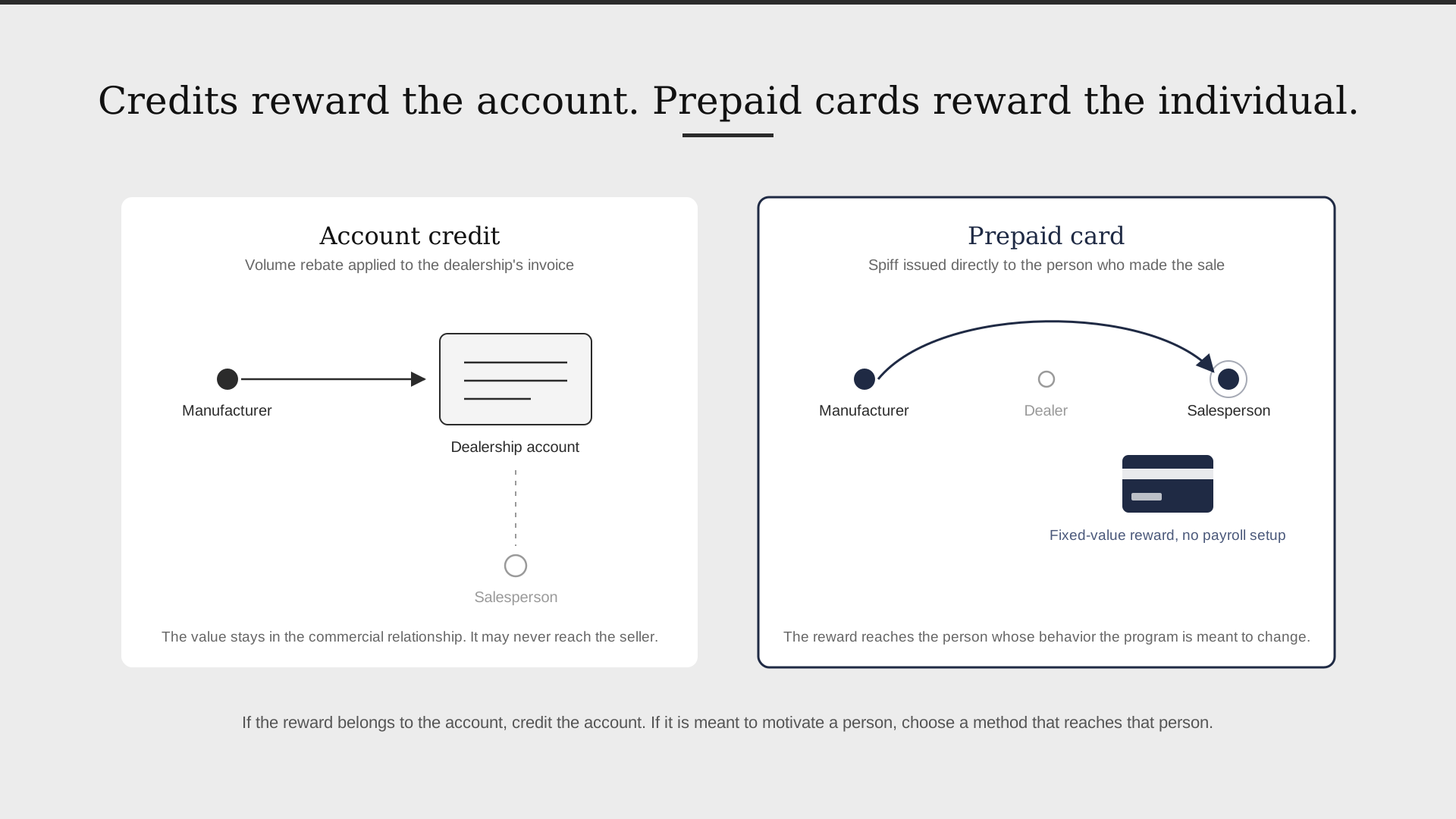
Account credits work particularly well for business-to-business rebates where the company being rewarded is also the customer. A distributor that earns a volume rebate, for example, may prefer a credit against future purchases because the value stays within the commercial relationship. There is no separate reward for an individual to redeem, and finance teams can reconcile the incentive against the customer account.
That makes credits less suitable when the goal is to motivate a specific person. If a manufacturer wants individual dealer sales representatives to prioritize one product over another, a credit issued to the dealership may never reach the people whose behavior the program is intended to influence.
The choice therefore depends partly on the recipient. Credits reward the account. Prepaid cards can reward the individual.
How do prepaid cards work for rebates and spiffs?
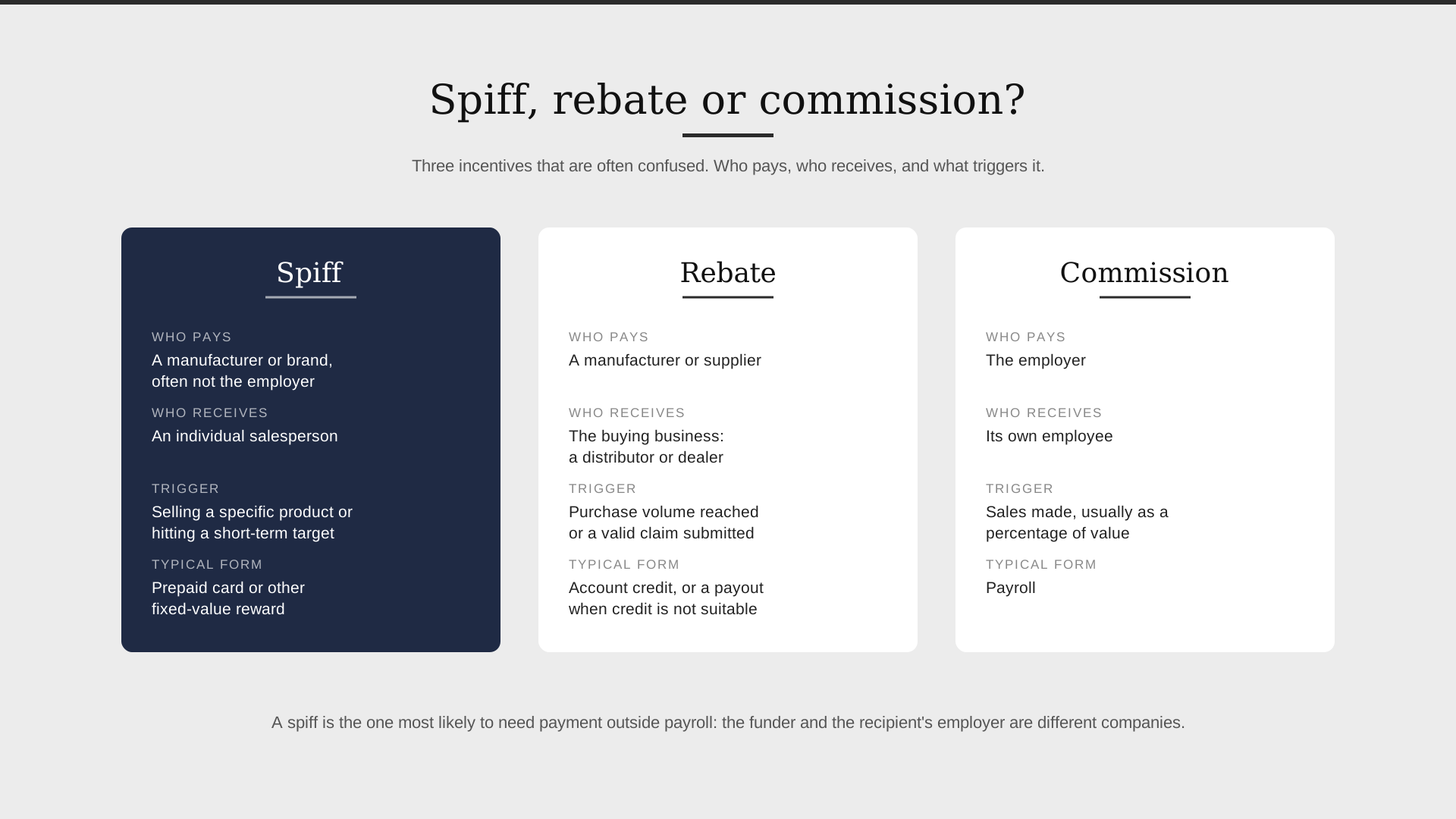
For rebate and spiff programs, prepaid cards let companies issue a defined reward directly to eligible recipients after the qualifying sale, claim, or target has been verified. A spiff is typically a short-term incentive paid for selling a particular product or reaching a defined sales target. Unlike a commission paid by an employer, channel spiffs can come from a manufacturer or brand further up the supply chain. That creates an operational problem: the company funding the incentive may need to pay hundreds or thousands of salespeople it does not employ.
A prepaid-card program can avoid creating each recipient as a conventional payee. Once sales are validated and eligibility is confirmed, cards can be issued in batches or through an automated workflow. For rebate and spiff programs, Giftogram supports bulk distribution of prepaid Visa and Mastercard cards, with branding and digital delivery. This lets program operators issue defined reward values to individual recipients while retaining records of what was sent.
Businesses still need clear eligibility rules, appropriate tax treatment, and controls against duplicate or fraudulent claims. Changing the delivery method does not change those underlying responsibilities.
How do prepaid card distribution services compare for rebate programs?
Compare delivery speed, bulk and API capability, reporting, and total cost, rather than the card alone. The right service depends on how the rebate program operates.
Delivery speed matters when the incentive is intended to influence behavior quickly. Bulk sending and automation become more important as recipient numbers rise. Branding may matter when the reward is part of a manufacturer or supplier relationship, while reporting is important for reconciliation and program oversight.
Fees also need to be compared on a total-cost basis. Depending on the provider and card type, costs may include card issuance, handling, platform access, integrations, or physical delivery.
Giftogram supports digital and physical prepaid card programs, bulk sending, and API-based distribution. This is particularly helpful for companies that need to handle thousands of recipients, and it lets finance teams avoid creating and processing each payout manually.
Can sales incentives and spiffs be automated?
Yes. Platforms with APIs or CRM integrations can automate reward delivery after a qualifying sale is verified; Giftogram supports prepaid-card automation through its API, Zapier, and more than 100 integrations.
Automation starts after the business has a reliable way to verify the event that earns the incentive. For example, an approved sale submitted through a dealer portal could trigger a defined spiff. A distributor reaching a volume threshold could qualify for a rebate. Instead of finance or sales operations processing each payment manually, the qualifying data can feed into the reward workflow.
The harder part is deciding when the incentive has genuinely been earned. Programs need rules for returns, cancellations, duplicate claims, and other exceptions before automating payment. Otherwise, automation makes a weak process run faster.
For high-volume programs, keep validation and payout as separate steps: verify the commercial event first, then release the incentive automatically.
How should businesses choose a channel incentive payment method?
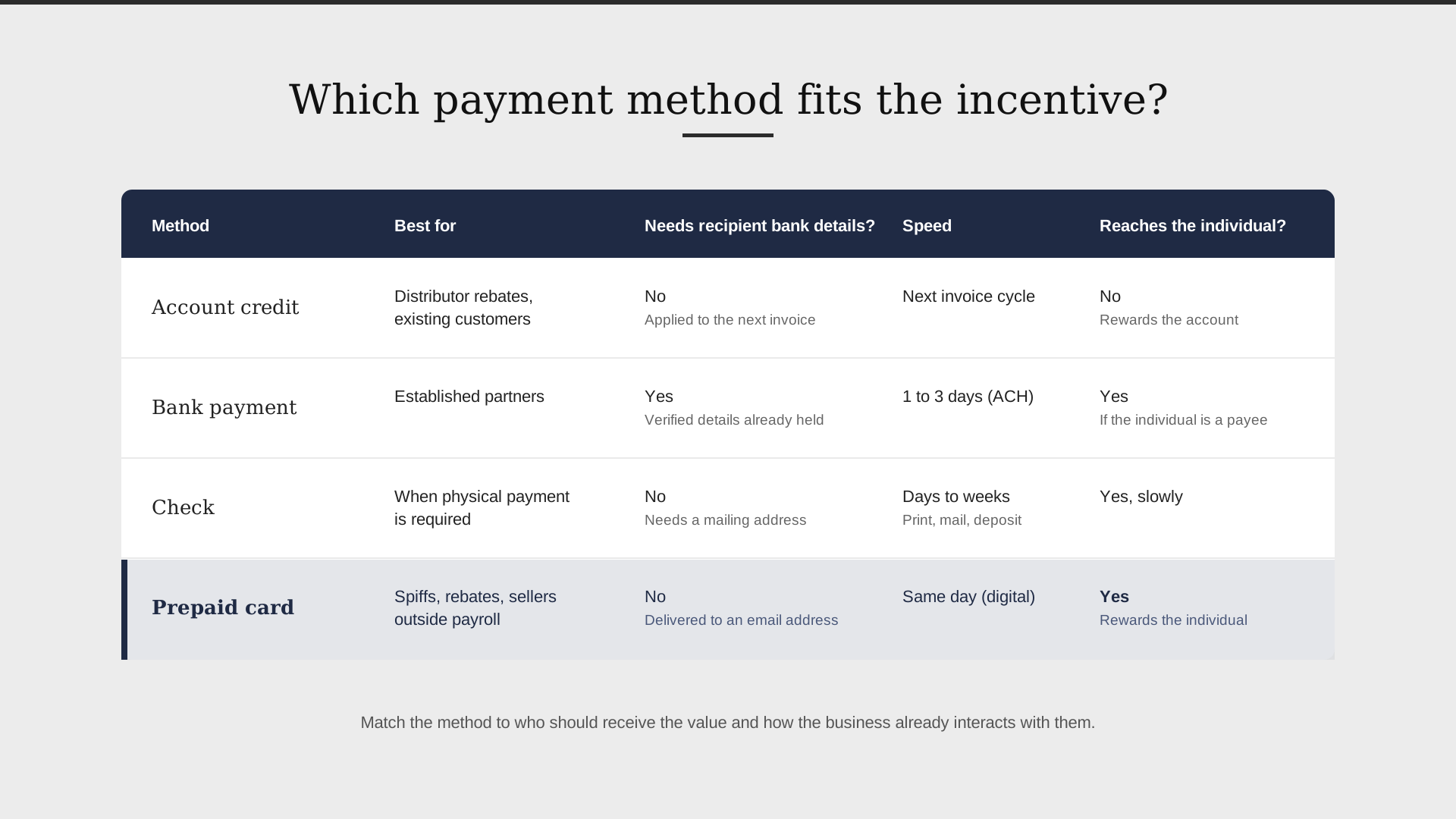
Choose the channel incentive payment method according to who should receive the value and how the business already interacts with them.
There is no single best way to pay every channel incentive. An account credit can be the simplest option for a distributor rebate. A bank payment may suit an established partner whose details are already held. A prepaid card can make more sense when rewarding individual salespeople outside the company’s payroll or accounts-payable system.
The important distinction is who the incentive is intended to motivate. If the reward belongs to the account, credit the account. If it is meant to recognize an individual’s performance, choose a delivery method that actually reaches that person.
Frequently asked questions
How much should a sales incentive or spiff be?
No standard amount, but the reward should be meaningful enough to influence the desired behavior without making the program unnecessarily expensive. The right value depends on the product, sales cycle, recipient, and difficulty of the target.
What are the benefits of prepaid cards for sales incentives?
Prepaid cards separate the reward from the recipient’s normal pay or business account, so you can reward salespeople, including those at distributors or dealers you do not employ, without issuing a check or collecting bank details. Giftogram issues branded prepaid Visa or Mastercard cards in bulk and delivers them digitally, so incentives reach individuals quickly with exportable records.
Can sales incentives and spiffs be automated?
Yes. Once the qualifying commercial event is verified, delivery can be triggered from that data through an API or integration. Giftogram supports API and bulk workflows, so a validated sale or threshold can release a defined prepaid card reward while keeping validation and payment distinct.
How do prepaid card distribution services compare for rebate programs?
Compare delivery speed, bulk and API distribution, branding, reporting, recipient experience, and total cost per reward, not just the card itself. For larger programs, also consider how easily the service fits into existing validation and approval workflows. Always check independent review sites before you decide on a partner.
Are sales incentives and spiffs taxable?
They can be. Tax treatment depends on who receives the incentive, their relationship with the company, and how the reward is structured. Using a prepaid card rather than cash does not automatically remove tax or reporting obligations, so businesses should establish the appropriate treatment when designing the program.
 Milwaukee Tool selects Medius to fully automate accounts payable operations
 Facility Painting Standards for Modern Warehouses
 Fashion brand sees 200% growth after overhauling logistics with Shipster
 AI-Driven Warehouse and Retail Automation Leader GreyOrange Closes on $135M Growth Financing
 Genesys & Limitless Launch New Digital Experience for Consumers
 What’s Really Inside Your Packaging? A Breakdown of Packaging Waste