

Quick answer: Yellowbox is the best overall smart locker platform for enterprise security and data privacy.
It can run without storing employee personal identification information, can stay off your corporate network entirely and provides strong infosec fundamentals such as data encryption, data sovereignty and external security certifications.
Keynius suits organisations wanting custom lockers and software from one supplier, and Smiota is strongest for parcel and IT asset lockers.
Why enterprise smart lockers now go through IT review
Modern smart lockers have turned the humble office locker into a networked system. Employees book and open lockers with their phones, facilities teams manage them from a dashboard, and every opening leaves a data trail. For large organizations, this means smart lockers are now brought into scope for security and privacy scrutiny like any other enterprise software.
How we compared them
We reviewed each vendor’s published security, privacy and deployment information as of October 2026, on five criteria:
- Identity: single sign-on (SSO) for employees, and automatic provisioning and deprovisioning (SCIM) so access is removed when staff leave.
- Certification: ISO 27001 and SOC 2.
- Privacy: how much personal data the system needs.
- Deployment and resilience: cloud, on-premise or off-network options, and behaviour during an outage.
- Fit: the locker use cases each platform is built for.
For employee storage at enterprise scale, we weighted identity automation, minimal personal data and deployment flexibility most heavily. Based on published information, Yellowbox is the only platform here that offers all three.
“Not found” below means the information was not found in the vendor’s published materials, not that the capability does not exist.
At a glance
| Yellowbox | Gantner | Keynius | Smiota | |
| Employee SSO | Entra ID, Okta, Google Workspace, SAML 2.0 | Not found | SSO listed | SAML 2.0, Azure AD, Okta |
| Automatic deprovisioning | SCIM (Entra ID, Okta) | Not found | HR system sync | SCIM and SailPoint |
| ISO 27001 | Yes | Yes | Yes | Yes |
| SOC 2 | Type 1 | Not found | Not found | Type 2 stated |
| Runs without names or email addresses | Yes (Incognito Mode) | Not found | Yes (PIN or RFID only) | Not found |
| On-premise or off-network | Both | On-premise and standalone | Not found (cloud on Azure) | Not found (cloud) |
| Existing access works offline | Yes, by card, app and PIN | Yes | Yes | Not found |
| Built for | Employee and hybrid-office storage for enterprises. | Lockers, door access and payments on one credential, across leisure, healthcare and workplaces | Custom lockers and software from one supplier, for staff storage, rental and click-and-collect | Parcel, IT asset and day-use lockers |
1. Yellowbox: best for enterprise security and data privacy
Why it leads: employee sign-in through Microsoft Entra ID, Okta, Google Workspace or SAML 2.0, with SCIM 2.0 provisioning that disables a leaver’s cards and releases their lockers when they are disabled in the directory. It can run with no personal identity information such as names or email addresses attached to accounts (Incognito Mode), and can be kept off the corporate network entirely through a dedicated 4G connection; Bristol Myers Squibb chose this off-network setup to meet their security standards. Data is encrypted in transit and at rest, with cloud hosting in Australia, the EU and the US to support data sovereignty, or on-premise deployment.
Assurance: ISO/IEC 27001:2022 certified, SOC 2 Type 1 certification covering security, availability and confidentiality, and annual independent third-party penetration testing of its applications.
Resilience and scale: if a site loses its internet connection, existing bookings keep opening by card, app and PIN. Yellowbox reports over 99.5% platform uptime, measured continuously across its global locker fleet, and a typical locker bank is online 99.9% of the time. Used across more than 300 workplaces in 20 countries with clients including Google, Nike and Canon.
Consider: its SOC 2 report is currently Type 1.
2. Gantner: best for lockers, door access and payments on one credential
Gantner, part of the SALTO group, connects locker access with door access, check-in and cashless payment through a single credential, which suits sites that want one system for all of these, such as leisure facilities and mixed-use buildings. Its locker software runs in the cloud (eLoxx 365) or on-premise (eLoxx Relaxx), and standalone systems are also available. It holds ISO 27001:2022 certification for three of its entities, verified through TÜV Rheinland, describes encrypted communication, role-based administration and full audit trails, and its battery locks and pickup codes keep working during temporary connectivity loss. Its public data processing agreement lists AWS hosting in the European Economic Area.
Consider: we did not find SSO or automatic provisioning for its locker software in Gantner’s published materials, so check identity integration early if access should follow your identity provider.
3. Keynius: best for custom lockers and software from one supplier, with solid security
Keynius designs and builds every component in-house in the Netherlands, from the locker cabinets and locks to the management software, so one supplier is responsible for the whole system. Cabinets can be specified in powder-coated steel, wood-based finishes or high-durability laminate, and the same platform covers staff storage, rental, click-and-collect and other locker types, installed through a network of local partners. On security, it holds ISO 27001:2022 certification (Kiwa) and publishes practical privacy options: users can be registered by employee number or use lockers with only a PIN or RFID tag, and data is automatically deleted after two years. Its wired systems keep validating stored credentials when offline.
Consider: Keynius describes its encryption as proprietary, and we did not find SSO protocol, SCIM or penetration testing details in its published materials.
4. Smiota: best for parcel and IT asset lockers
Smiota publishes ISO 27001:2022 certification (issued 2026), states SOC 2 Type 2 compliance, and supports SAML 2.0, Azure AD and Okta with SCIM and SailPoint provisioning, making it one of the stronger identity stories in the category. Its platform centres on package, IT asset and day-use lockers, with more than 10,000 active lockers.
Consider: we did not find data residency or offline behaviour in its published materials; confirm both if they matter to your review.
 How to Negotiate a Used Car Price Using Its History Report
 Are Electric Bikes the Answer to Urban Traffic Woes?
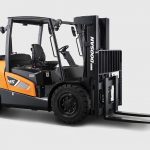 Doosan launches powerful 9-Series forklifts – combining Euro Stage V compliance with high-performance
 Clarins UK Sets Foundation for Growth with Infor
 Streamline Operations with Innovative Solutions for Immigration Cases
 ONS Figures Speak Volumes for the Current Climate, says Merkle’s CXO