

Low-cost components cause high-cost production stoppages because they get the least planning attention, yet a line can’t build anything without them.
When a cheap part runs short or arrives out of spec, the stoppage costs as much as the output the line loses. One missing washer can idle an entire line.
Why can a cheap part stop a whole production line?
A cheap part can stop a whole line because every item on the bill of materials is required. That list covers every part in a product, from the frame down to the smallest clip. If any one is missing, the product can’t be finished.
Fasteners show how this works. A bolted joint depends on washers that match the drawing for thickness, flatness, and hardness. When a washer manufacturer holds those specs and ships on schedule, the part goes unnoticed on the line. If a lot arrives late or out of spec, every joint that uses those washers stops, along with every product built around them.
One example is the 1997 fire at Aisin Seiki, Toyota’s sole supplier of brake proportioning valves. Each valve cost 770 to 1,400 yen, or about $6 to $11 at the time. Toyota ran just-in-time production and had only about two days of valves in stock.
Two days after the fire, Toyota began shutting 20 of its 30 assembly lines. For the next two days, nearly every Toyota group plant stopped. The fire cost Toyota about 70,000 vehicles and 160 billion yen (roughly $1.3 billion) in sales. Toyota officials said overtime and holiday shifts later recovered most of that output.
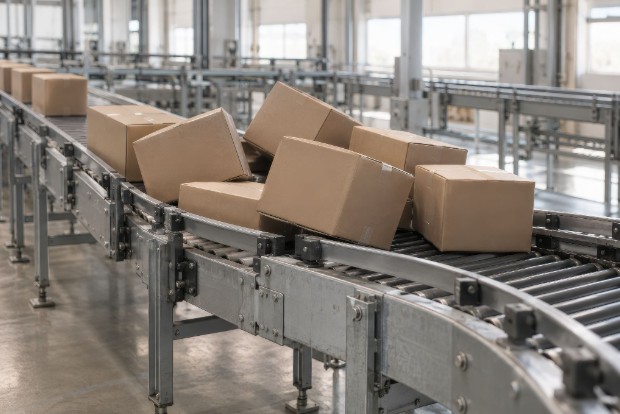
Why does a stoppage cost so much more than the part?
Once a line stops, several costs start building at the same time. In a large automotive plant, one hour of downtime costs about $2.3 million, or more than $600 a second.
| Cost | What it includes |
| Lost output | Units not built while the line stood still |
| Idle labor | Wages paid to operators who have no work |
| Expediting | Premium part prices and air freight |
| Recovery overtime | Extra shifts to catch up on the schedule |
| Customer penalties | Late-delivery charges or lost orders |
| Quality risk | Defects from rushed or unapproved substitute parts |
Lean plants hold little buffer stock between stations, so when one area stops, the areas it feeds stop soon after. A machine breakdown or a cyberattack on plant systems sets off the same chain reaction.
Why are low-cost parts more likely to run short?
Most purchasing systems rank parts by annual spend, so low-cost parts get the least attention and are more likely to run short. The usual ranking method is ABC analysis. A-items have the highest spend and C-items the lowest, usually with the highest volume. Washers, clips, seals, and screws are typical C-parts.
Ranking by spend works well for controlling cost. It doesn’t show which parts can stop production. A C-part the line can’t run without matters as much as any A-part, yet buyers often choose it on unit price alone.
A buyer may move a C-part to a cheaper overseas source without counting the longer lead time. The quote may also leave out the full landed cost, including import duties and taxes. Reorder points often get set once and rarely reviewed, so they fall behind when lead times grow.
Which low-cost components carry the most stoppage risk?
The riskiest low-cost components are the ones you can’t replace quickly. Price tells you very little on its own. Look for parts with any of these traits:
- One approved source. If that supplier has a fire or a quality problem, you have no backup.
- Long lead times. Parts from distant suppliers take longer to replace when stock runs out.
- Custom specifications. A washer made to your drawing can’t be bought from a distributor’s shelf.
- Use across many products. One shortage stops several lines at once.
- Safety or regulatory approval. A substitute may need testing before you can use it.
Out-of-spec parts carry their own risk. A washer that is too thick or not flat can jam a feeder or fail inspection. Then you have to sort or reject the whole lot.
How can you stop cheap parts from causing expensive stoppages?
You can prevent most of these stoppages by ranking cheap parts on shortage risk instead of price. Start with the C-parts that would stop a line:
-
- Add criticality to your ABC ranking. Flag every part that would stop production if it ran out, whatever it costs.
- Hold safety stock for critical C-parts. Size it from your real lead times and demand swings. Extra stock of a cheap part costs little next to an hour of downtime.
- Qualify a second source. For custom parts, approve an alternate supplier before a shortage, when you have time to test it.
- Compare suppliers on total cost. Weigh on-time delivery, defect rates, and lead time alongside unit price.
- Consider kanban or vendor-managed inventory. Kanban uses bins or cards to signal when to reorder. With vendor-managed inventory (VMI), the supplier tracks your stock and refills it.
- Review reorder points when lead times change. A setting that worked last year may leave you short this year.
Conclusion
Low-cost components cause high-cost stoppages because the line needs every part to run, while purchasing systems give cheap parts the least attention. Plants that plan critical C-parts by stoppage risk are far less likely to lose a shift to a part that costs a few dollars. Safety stock and a backup supplier do most of that work.
 What Long-Term Risks Come With Selling Mineral Rights Too Soon?
 MACH Alliance Unites Leading Technology Providers To Build the Agent Ecosystem, the Future of Enterprise AI
 BlackBerry Reports 600,000 Cyberattacks on Critical Infrastructure in Q3 2024
 Yunnan Baiyao Group to Bring Traditional Chinese Medicine to a Global Audience with Manhattan Associates
 JDA Closes 2019 with Strong SaaS Growth
 6 Steps to Stellar Customer Service