

Something is reassuring about driving a car you know well. You understand how it handles, what it costs to maintain, and how it fits into your daily routine. That familiarity is one reason many Honda Accord owners prefer repairing their existing vehicle rather than replacing it.
When an Accord develops serious engine trouble, the decision can become complicated. Should you rebuild the original engine, purchase another car, or look for a replacement motor?
For certain four-cylinder Accord models, understanding the K24 engine family is an important part of making that choice.
When an Accord Starts Showing Trouble
Engine problems rarely arrive at a convenient time. A driver might first notice rough idling, unusual sounds, increasing oil consumption, or a temperature gauge that climbs higher than normal. These symptoms should not be ignored, but they do not automatically justify engine replacement. A cooling system fault, ignition problem, or damaged accessory can sometimes be repaired without removing the engine.
A qualified mechanic should establish the cause before recommending a major repair. Compression and leak-down tests, diagnostic trouble codes, and other inspections may help determine whether the damage is internal.
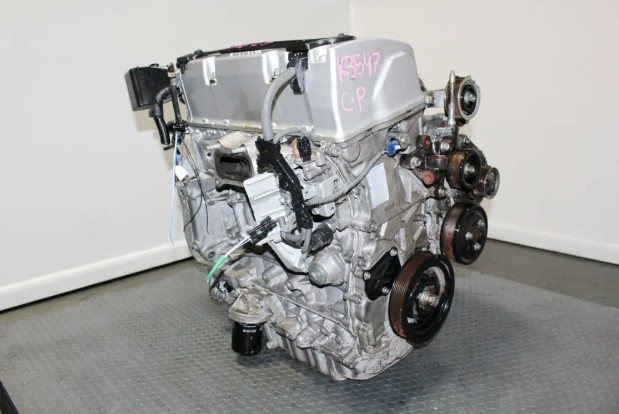
The K24 Is Not Just One Engine
Honda produced multiple versions of the K24 four-cylinder engine, and certain Accord generations used specific variants. Although they belong to the same engine family, those versions are not identical. Someone researching a Used Honda K24 Engine for Sale should look beyond the 2.4-liter displacement. Engine identification, model year, electronic controls, intake configuration, and other specifications can determine whether a replacement is suitable.
Buying an engine simply because it carries the K24 designation can lead to compatibility problems. Confirming the correct variant early helps avoid unnecessary modifications and installation delays.
Three Costs Owners Sometimes Overlook
The advertised price of a used engine is easy to compare. The expenses surrounding the replacement are less obvious.
Labor costs: Removing the damaged engine and installing another assembly requires substantial mechanical work. Labor rates and the complexity of the installation affect the final bill.
Additional components: The mechanic may recommend replacing worn mounts, gaskets, hoses, seals, or maintenance items while the engine is accessible.
Related repairs: If the original engine failed because of overheating or another unresolved issue, that underlying problem must be corrected before the replacement goes into service.
Ask for a written estimate that covers these possibilities instead of relying entirely on an initial price quotation.
A Simple Way to Judge the Car’s Value
An engine replacement should be evaluated in relation to the entire Accord. A car with a healthy transmission, minimal corrosion, and a consistent maintenance history may justify the expense. A vehicle with serious body damage, extensive rust, and multiple outstanding repairs presents a different situation. In that case, replacing the engine could become one part of a much larger financial commitment.
Consider how long you expect to keep the car and whether the projected repair cost fits that plan. The goal is dependable transportation, not simply getting the engine running again.
Replacement Engines and Performance Swaps
Honda’s K-series engines are also popular among automotive enthusiasts, which can make online searches confusing. A driver looking for a Honda K24 Swap Engine for Sale might be planning a custom project rather than an ordinary Accord repair. A performance swap can involve modified engine mounts, wiring, engine management, transmission compatibility, and emissions requirements.
These projects should not be confused with installing a compatible replacement engine in a daily-driven Accord. For owners primarily concerned with restoring dependable transportation, choosing the appropriate original-type configuration is usually the more straightforward approach.
Before the Mechanic Begins Installation
Once a suitable engine has been identified, review the purchase details and installation plan together. The repair shop should verify which components are included with the replacement and whether existing accessories can be reused. It should also assess the cooling system and any parts affected by the previous engine failure.
Ask the supplier for available mileage information, condition details, and written warranty terms. Find out whether the warranty requires specific installation procedures or documentation.
Maintaining clear communication between the supplier and mechanic can prevent disagreements about fitment and responsibility.
The First Miles After Replacement
After installation, pay attention to how the vehicle behaves. Unusual noises, fluid leaks, warning lights, or changes in operating temperature deserve prompt inspection. Follow the mechanic’s maintenance instructions and keep records of the engine purchase, installation, and subsequent service.
Avoid assuming that a replacement engine makes every other component in the vehicle new. The transmission, suspension, cooling equipment, and electrical systems still require normal maintenance.
Conclusion
An Accord with engine damage is not automatically a vehicle that should be abandoned. When its overall condition supports further investment, replacing the motor can be a practical way to extend its useful life.
 Umbraco launches inaugural Impact Report
 Cybersecurity & AI 2024 Predictions
 Key Factors That Influence Chemical Storage Decisions
 A Practical Guide to Responsible E-Waste Recycling for Businesses
 What Makes Users Tap the Like Button on TikTok Fast
 Fulfilment services provider joins the crowd for Paris Retail Week