

A conductor slips on an icy grab iron in a rail yard at 4 a.m. His shoulder tears. He assumes the railroad will handle it like any other job injury. Then he learns the system he expected does not apply to him.
Most railroad workers cannot file a standard workers’ compensation claim. A federal law from 1908 covers them instead. It is called the Federal Employers’ Liability Act, or FELA, and it works very differently from the state system most workers know.
That gap catches families off guard. Medical bills arrive, paychecks stop, and a railroad claim agent shows up with forms to sign. Knowing the rules before that moment makes a real difference.
This article explains where FELA came from, who it covers, how it compares with workers’ comp, and what to do after an injury.
A Short History of FELA
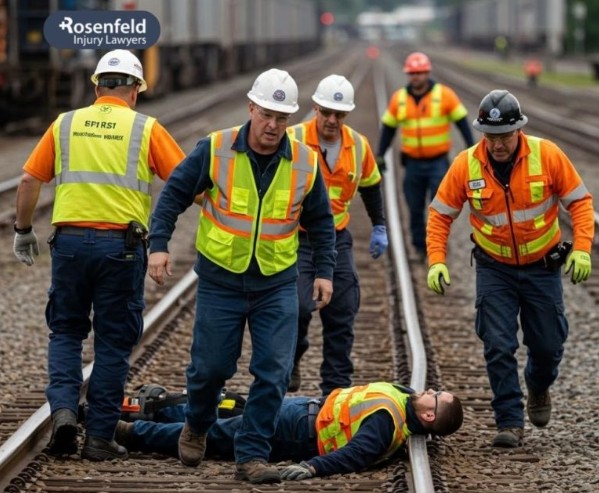
Railroad work in the early 1900s was brutal. Hand couplers crushed fingers. Brakemen walked across moving cars. Thousands of railroad workers died on the job each year, and many more lost limbs.
Injured workers had little recourse. Courts applied the fellow-servant rule, which let a railroad escape blame when a coworker caused the harm. Workers also faced contributory negligence and assumption of risk defenses. A worker who played any part in the accident, or who simply took a dangerous job, often left court with nothing.
Congress tried to fix this in 1906, but the Supreme Court struck that version down because it reached beyond interstate commerce. Lawmakers rewrote it, and the 1908 act held. It removed the fellow-servant defense, replaced all-or-nothing blame with shared fault, and pushed railroads to fix hazards.
The shift was big. Before the act, workers carried nearly all the job’s risk. Afterward, railroads had to answer in court for unsafe conditions.
Who FELA Covers
FELA covers employees of railroads engaged in interstate commerce. That includes track crews, yard crews, shop workers, engineers, conductors, and signal and maintenance staff. It reaches freight lines and many commuter lines. Courts have long read the act in favor of workers, so a person does not need to be on a moving train to qualify. A mechanic hurt in a repair shop can be covered when the work supports the railroad’s interstate traffic.
It does not cover independent contractors. A worker hired for a single job, or employed by a company that is not a railroad, may fall outside the act. Job titles do not settle the question. The actual working relationship does, and that can get complicated for contractors who work beside railroad crews every day.
FELA vs. Workers’ Comp: A Side-by-Side Look
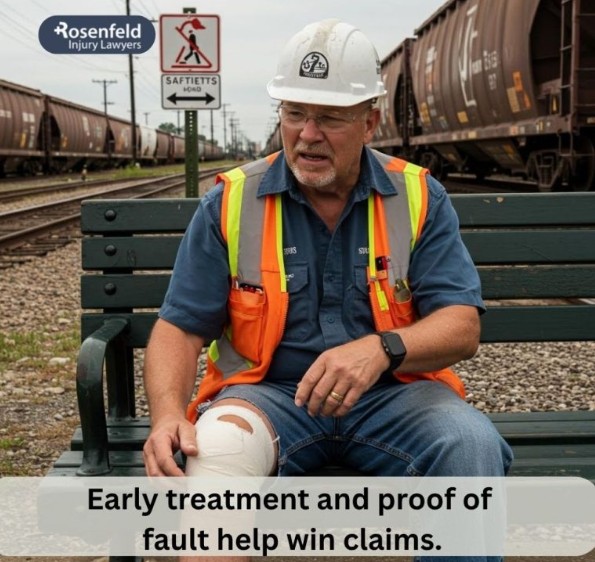
The biggest difference is fault. Workers’ comp pays no matter who caused the accident. FELA does not. A railroad worker must show that the railroad’s negligence played some part, even a small one. In return, FELA can pay far more.
| Feature | FELA | Workers’ Comp |
| Who it covers | Railroad employees in interstate commerce | Most employees under state law |
| Fault | Railroad negligence must be shown | No-fault |
| Worker’s own mistakes | Reduce the award but do not bar it | Usually do not affect benefits |
| Pain and suffering | Recoverable | Not available |
| Lost wages | Full past and future earnings losses | Partial, set by formula |
| Benefit amounts | Based on actual damages | Fixed by statute |
| Where claims go | State or federal court, often with a jury | State agency or commission |
Shared fault matters here. If a jury decides a worker was 20 percent to blame, the award drops by 20 percent. It does not drop to zero. Workers’ comp also caps what an injured worker can claim. A person who can never return to the job still gets benefits set by a schedule, not by what the injury actually cost. State workers’ compensation prioritizes speed and certainty, while FELA prioritizes full accountability.
Common Railroad Injuries
Railroad work means heavy steel, moving equipment, and long hours outdoors. Cold, night shifts, and tight schedules add strain to every task on the railroad. Several injuries recur:
- Falls from equipment:
Slick ladders, grab irons, and railcar steps send workers to the ground from serious heights. - Crush injuries during coupling:
A worker caught between cars can suffer severe, permanent damage in seconds. - Repetitive strain and back injuries:
Years of lifting, climbing, and vibration wear down joints and spines, and repetitive strain injuries often build slowly. - Hearing loss:
Horns, engines, and grinding steel damage hearing over decades. - Toxic exposure:
Diesel exhaust and industrial solvents can cause lung problems and other occupational illnesses.
The Federal Railroad Administration collects injury and illness reports from railroads. Its public safety data is the best place to check current national trends.
Many of these injuries do not come from one dramatic moment. They build over years of ordinary shifts, which is why old medical records and past complaints to a supervisor can matter later.
What the Railroad Must Provide
Under FELA, a railroad must give employees a reasonably safe place to work. That means working tools and equipment, proper training, and enough staff to do the job safely. A crew stretched too thin is a safety problem, not just a scheduling one.
Two older safety laws add to this duty. The Safety Appliance Act requires working couplers, brakes, and handholds on railcars. The Locomotive Inspection Act requires locomotives and their parts to be safe to operate. Under FELA, if a railroad broke a safety statute like these and that violation helped cause the injury, the worker’s own fault cannot reduce the award.
How Long Do You Have to File a FELA Claim?
FELA claims generally must be filed within three years, according to 45 U.S. Code § 56. For a single accident, the clock usually starts on the injury date. For an occupational illness, it starts when the worker knew, or reasonably should have known, about the condition and its cause.
That discovery rule creates risk. Hearing loss and lung disease develop quietly, and a worker may not connect the problem to the job for years. Because the 3-year clock can start before a worker realizes how serious an illness is, talking to a FELA injury lawyer early helps protect the claim.
Missing the deadline usually ends the case, no matter how strong the evidence is. A worker with a slow-building condition, such as hearing loss after twenty years in a locomotive cab, should not wait for a doctor to use the word “permanent.” The FELA statute of limitations has few exceptions.
Steps to Take After a Railroad Injury
What happens in the first days can shape the whole claim. Here is a practical order of operations.
-
- Report the injury:
Tell a supervisor right away and ask them to write it down. - Get medical care:
Treat the injury first, then tell the provider exactly how it happened. - Be careful with the company injury form:
Stick to facts, never guess about cause, and do not sign statements you have not read closely. Railroads may use that paperwork later to argue fault. A rushed line written in pain at the end of a shift can look very different months later. - Keep records:
Save medical bills, pay stubs, photos, and a short diary of symptoms and missed work. - Collect witness names:
Coworkers move shifts and change jobs, so get names and phone numbers early.
- Report the injury:
More plain-language guides on railroad and workplace injury claims are available at www.ilworkinjurylawyer.com.
Final Thoughts
FELA exists because railroad work has always carried unusual danger. The law requires proof of negligence, but it rewards that effort with more compensation than most state systems allow. Know which system covers you, watch the three-year deadline, and document everything from day one. Those habits protect a claim long before anyone files it.
Railroad families deserve the same clarity as any other worker. The system looks different, but the goal is the same: a fair recovery for someone who got hurt doing a hard, necessary job.
This article is general information, not legal advice.
 Helping Connect People to Their Doctors
 Supliful launches first-ever TikTok Shop app for white-label consumer packaged goods
 How Printed Labels Can Transform Packaging for Small Businesses
 Markforged Names John Howard Vice President, Engineering
 How to Automate Your Finances Using Simple Digital Tools
 The Evolution of User-Generated Content: Trends and Predictions