


The digital transformation of healthcare has accelerated in recent years, reshaping how providers deliver care, manage patient data, and operate clinical environments. New technologies are emerging across every level of the industry, from patient-facing mobile apps to large-scale national data infrastructures.
The demand for efficient, secure, and scalable systems continues to rise, driving unprecedented investment in healthcare it solutions that streamline workflows, support clinical decisions, and improve overall care quality.
As health systems grow more connected and data-driven, IT becomes the structural backbone that ensures safety, interoperability, and operational efficiency.
The Role of IT in Modern Healthcare
Healthcare is a complex ecosystem involving hospitals, clinics, pharmacies, laboratories, insurers, telehealth platforms, and government agencies. Each produces enormous volumes of clinical, administrative, and operational data. Without reliable IT systems, this information becomes siloed, inaccurate, or inaccessible at critical moments. IT infrastructure solves these challenges by enabling fast data exchange, maintaining accurate patient records, supporting real-time insights, and ensuring compliance with regulatory requirements. Modern IT environments help reduce errors, prevent delays, and unify fragmented workflows across multiple departments, ultimately enhancing the patient experience.
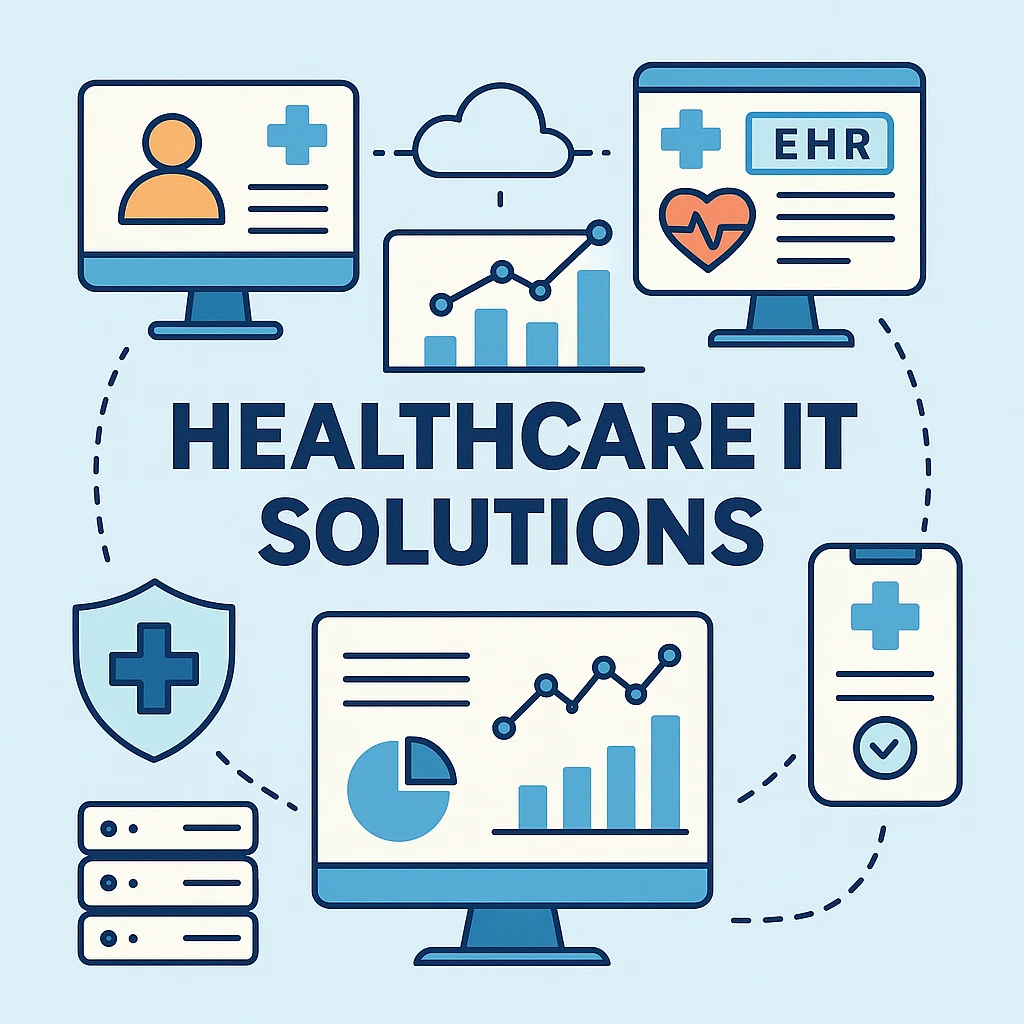
Core Components of Digital Healthcare Infrastructure
Healthcare IT spans a variety of systems, each fulfilling a vital function within the digital ecosystem.
Electronic Health Records (EHRs) remain central, storing patient histories, diagnostics, medications, and care plans. Modern EHRs integrate with other hospital systems and serve as a single source of truth for clinicians.
Hospital Information Systems (HIS) coordinate administrative operations such as scheduling, admissions, billing, and resource allocation.
Telemedicine platforms enable virtual consultations, remote diagnostics, and continuous patient monitoring, improving accessibility and reducing travel barriers.
Medical imaging and diagnostics systems rely on secure, high-performance IT architecture to store and deliver large files such as MRIs, CT scans, and X-rays with precision.
Healthcare analytics platforms process massive datasets to reveal patterns, predict health risks, and help clinicians make informed decisions.
Each solution fits into a broader digital strategy, allowing healthcare institutions to operate more efficiently and offer high-quality services.
Interoperability as a Key Pillar of IT Success
One of the biggest challenges in healthcare is data fragmentation caused by incompatible systems. Without a unified way to exchange information, providers face duplicated tests, incomplete histories, and slower clinical decisions. Interoperability standards such as HL7, FHIR, and DICOM ensure that different systems communicate seamlessly. Modern healthcare it solutions are built with interoperability at their core, allowing hospitals, labs, pharmacies, and government registries to collaborate effectively. With integrated infrastructure, clinicians gain full visibility into a patient’s health journey, improving accuracy and continuity of care.
Security and Compliance Considerations
Healthcare data is among the most sensitive types of personal information. Cyberattacks, unauthorized access, and system vulnerabilities pose severe risks to both patients and institutions. Strong IT systems incorporate encryption, secure authentication, audit trails, identity management, and continuous monitoring to maintain a safe environment. Compliance with regional and international regulations is also essential. Proper IT governance ensures that organizations follow strict rules regarding data privacy, patient rights, and secure data exchange. A robust compliance framework not only protects patients but also reduces legal and financial risks.
AI, Automation, and Decision Support
Artificial intelligence has become one of the most transformative forces in healthcare technology. Machine learning models analyze clinical and historical data to predict risks such as sepsis, cardiac events, or early signs of chronic illnesses. Natural language processing tools extract meaningful insights from unstructured documentation, reducing manual work for clinicians. Automation plays a key role in administrative tasks such as appointment scheduling, claims processing, and medical coding. Clinical decision support systems assist providers by highlighting potential diagnoses, flagging medication conflicts, and recommending evidence-based treatments. These innovations reduce the burden on staff and help increase accuracy and efficiency.
Patient-Centered Technology and the Modern Digital Experience
Patients today expect convenient, transparent, and personalized experiences. This shift has led to rapid adoption of mobile health apps, digital check-ins, remote-monitoring devices, and online appointment systems. Patient portals enable individuals to access test results, treatment plans, prescriptions, and communication channels directly from their devices. Such tools empower patients to engage in their own care and improve adherence to treatment recommendations. Healthcare IT transforms the patient journey, making it more accessible, efficient, and interactive.
About Edenlab
Eedenlab is an industry leader in building high-performance digital ecosystems for healthcare enterprises, government programs, and tech innovators. The company specializes in large-scale interoperability, backend engineering, and FHIR-native system development. With extensive experience in national health data systems, medical registries, and clinical workflow platforms, Edenlab helps organizations create secure and scalable infrastructure. Their solutions focus on speed, data quality, compliance, and seamless integration with existing tools. By combining deep engineering expertise with healthcare-specific knowledge, Edenlab supports organizations in achieving long-term digital transformation through advanced healthcare it solutions tailored to real clinical and operational needs.
Challenges in Implementing Healthcare IT
Despite enormous progress, implementing IT systems in healthcare is not without challenges. Legacy technologies often cannot communicate with modern platforms, creating integration bottlenecks. Data inconsistencies reduce the accuracy of analytics and reporting. Budget constraints and limited technical staff make adoption difficult for smaller organizations. Additionally, clinicians may resist digital change when systems disrupt their workflow. Overcoming these challenges requires strong leadership, meticulous planning, skilled IT teams, and solutions specifically designed for healthcare environments.
The Future of Healthcare Through IT Innovation
The coming years will usher in even more advanced digital capabilities. Real-time data exchange, intelligent automation, precision medicine, remote diagnostic tools, and AI-powered insights will shape a more efficient and personalized healthcare model. National digital health infrastructures will expand, enabling large-scale public health analytics and seamless patient mobility across healthcare systems. IT systems will become more secure, interconnected, and user-friendly, supporting clinicians while empowering patients.
Conclusion
Digital transformation is no longer optional—it is essential for delivering safe, efficient, and modern care. With the help of advanced healthcare it solutions, organizations can unlock the full potential of their clinical and operational data, improve patient outcomes, and create sustainable digital ecosystems. Companies like Edenlab are paving the way for innovative, interoperable, and secure healthcare platforms that support a smarter and more connected future for medicine.
 GDPR & the importance of data protection
 New Study Shows CIOs Now Have Ultimate Control of Organisational Budgets & Strategies
 Hindsight Is 2020: Top 5 Takeaways for Supply Chain Leaders
 6 Key Technologies Driving Innovation in Law Firms
 Poll of IT security pros suggests gaps in UK cyber defence
 How Amazon’s data led insights are pioneering industry-leading personalisation