

Digitizing physical objects sounds straightforward until real-world complexity enters the picture. Engineers, designers, educators, and manufacturers often struggle with irregular geometries, hidden surfaces, and fine details that are difficult or impossible to capture using traditional measurement tools.
Manual methods are slow and prone to error, while contact-based systems risk damaging delicate objects.
At the same time, many users face uncertainty about how to evaluate scanning accuracy, choose the best 3D scanner for their needs, and ensure the resulting data is usable for design, inspection, or fabrication.
Precision 3D scanning has emerged as a solution to these challenges, enabling accurate digital replicas of complex objects while supporting faster workflows and better decision-making across industries.
Why Complex Physical Objects are Difficult to Digitize
Physical objects rarely conform to perfect geometric rules. Organic shapes, textured surfaces, and asymmetrical forms introduce complications that standard measurement tools cannot easily resolve. Traditional calipers or gauges only capture discrete points, leaving gaps in data that must be estimated manually. Coordinate measuring machines improve precision but require controlled environments and physical contact, making them impractical for many use cases.
Complex objects also introduce occlusion problems. Internal cavities, overlapping features, and recessed areas are difficult to access without disassembly. Surface properties further complicate matters, as dark, reflective, or translucent materials can distort measurements. These challenges make comprehensive and accurate digitization a persistent pain point in engineering, manufacturing, and research workflows.
Core Technologies Behind Precision 3D Scanning
Structured Light and Laser Scanning Methods
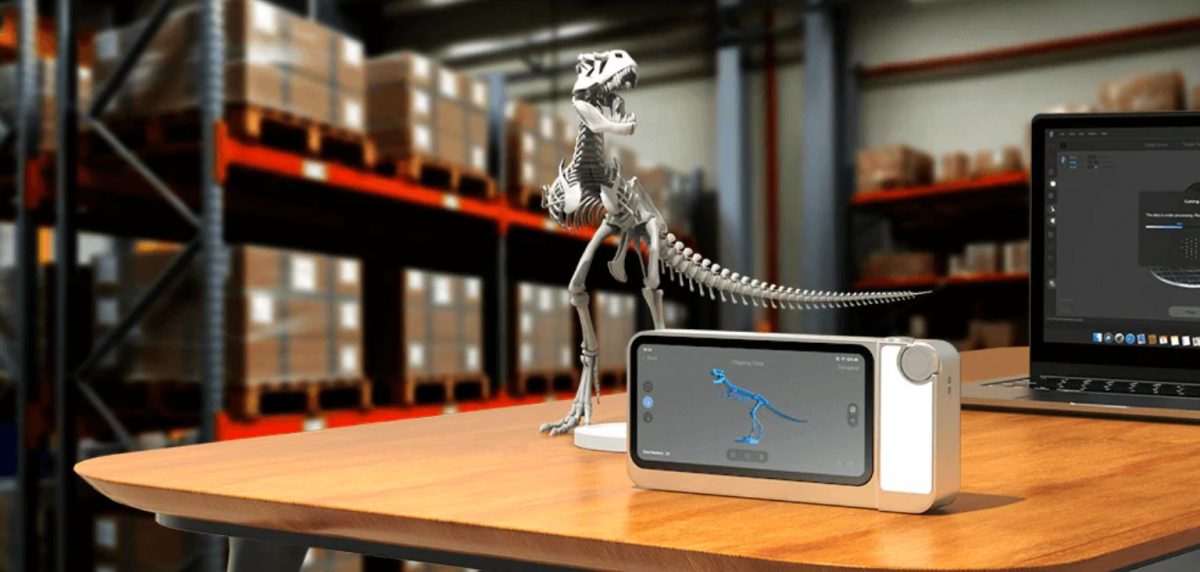
Modern precision 3D scanners primarily rely on structured light or laser-based measurement. Structured light systems project known patterns onto an object and analyze how those patterns deform across the surface. Laser scanners emit focused light lines or points and calculate geometry based on reflected signals. Both approaches enable non-contact measurement and dense data capture, making them well-suited for complex surfaces.
These technologies differ in sensitivity and application. Structured light often excels at capturing fine detail on small to medium objects, while laser scanning can perform more consistently across varied lighting conditions. In practice, many handheld systems combine these principles to balance accuracy, speed, and flexibility.
Tracking, Alignment, and Registration
Capturing a complete digital model requires combining data from multiple viewpoints. Precision scanning systems rely on tracking and registration algorithms to align individual frames into a unified coordinate system. This may involve recognizing surface features, using reference markers, or analyzing motion data as the scanner moves around the object.
Accurate registration is essential when working with complex objects, as even minor alignment errors can propagate into dimensional inaccuracies. Advances in real-time tracking have significantly reduced setup time while improving scan consistency across varied environments.
Software-Driven Model Reconstruction
Raw scan data typically appears as a point cloud containing millions of spatial coordinates. Specialized software processes this data into polygon meshes that represent the object’s surface. Common steps include noise filtering, hole filling, and mesh optimization.
The quality of this software processing directly affects downstream usability. Engineers may require watertight meshes for simulation or CAD conversion, while fabrication workflows demand optimized geometry suitable for 3D printing or machining.
Precision Metrics That Influence Real-World Results
Not all scanners are designed to deliver the same level of performance. Understanding key metrics helps users evaluate whether a system qualifies as the best 3D scanner for a given task.
Accuracy is simply how close the digital model is to the real object. Resolution is about how much detail the scanner can capture without things getting blurry. Scan speed and frame rate affect how quickly and smoothly you can work, which really matters when scanning large objects or working on a deadline. Working distance and capture volume define the size range a scanner can handle easily and effectively.
Balancing these metrics is critical. A scanner optimized for microscopic detail may be impractical for large parts, while high-speed systems may sacrifice resolution. Matching specifications to application requirements is essential for reliable digitization.
Industry Use Cases for Precision 3D Scanning
Reverse Engineering and Product Development
Precision 3D scanning enables the conversion of physical components into editable digital models. This is particularly valuable when original design files are unavailable, such as with legacy parts or discontinued products. Scan data can be translated into CAD geometry, accelerating redesign and reducing manual modeling effort.
In product development, scanning physical prototypes allows teams to validate form and fit quickly, supporting iterative design without restarting from scratch.
Quality Inspection and Dimensional Analysis
Manufacturers increasingly use 3D scanning for inspection and quality control. By comparing scanned models against nominal CAD data, deviations can be detected across entire surfaces rather than at isolated measurement points. This approach improves defect detection and supports statistical process control without interrupting production.
Non-contact inspection is especially valuable for fragile or soft materials that cannot withstand probing.
Digital Fabrication and Additive Manufacturing
3D scanning plays a growing role in digital fabrication workflows. Scanned models can be modified and reproduced through additive manufacturing, enabling custom tooling, replacement parts, and personalized products. Accurate scan data ensures that fabricated components align correctly with existing assemblies.
In educational and research settings, scanning physical objects provides a practical bridge between conceptual design and physical production.
Cultural Heritage and Research Applications
Beyond industrial use, precision scanning supports documentation and preservation of culturally significant objects. Artifacts with intricate geometry can be digitized without physical contact, creating permanent digital records for study, restoration planning, and public access.
Choosing the Right Scanner Category
Rather than focusing on specific brands, selecting the appropriate scanner category is more effective. Handheld precision scanners offer flexibility and portability, making them suitable for scanning complex objects in varied environments. Desktop and turntable systems provide controlled conditions and repeatability for smaller parts. Large-area scanning systems address architectural or infrastructure-scale projects but typically sacrifice fine detail.
Understanding these categories helps users narrow options and identify the best 3D scanner based on object size, required accuracy, and intended output.
Best Practices for Scanning Complex Objects
Successful digitization depends on technique as much as technology. Multiple scanning passes from different angles help reduce occlusions. Adjusting exposure settings improves results on challenging surfaces. Post-processing should align with the final application, whether for visualization, engineering analysis, or fabrication.
Within this shift toward more accessible tools, solutions such as 3DMakerpro, including compact handheld scanners like the Moose, reflect how medium-format scanning is becoming more practical for capturing objects up to approximately 1500 mm in size for industrial design, prototyping, and detailed model creation.
As scanning becomes more accessible, user-friendly systems with robust software are lowering barriers to entry. These advances are redefining expectations around what the best 3D scanner can deliver in everyday workflows.
Conclusion
Precision 3D scanning has become a practical way to turn complex physical objects into accurate digital models. By overcoming long-standing issues with geometry, access, and measurement accuracy, it now supports a wide range of applications across industry, education, and research.
As these tools become easier to use and more capable, knowing how they work and what really matters in performance helps users choose the right solution and get dependable digitization results.
 Transporeon further strengthens its advisory board
 Creating the Smart – and Safe – Workforce in a Collaborative Warehouse
 Demand Solutions Named a Leader in the Gartner Magic Quadrant for Supply Chain Planning Systems of Record
 UK businesses can only deliver AI success if they are agile enough to experiment
 Top Ways Quantum Computing Will Impact Cloud Security
 iDTRONIC’s RFID Polyester Laundry Tag: Reliably Identify Textiles with a Robust Polyester Tag