

The current manufacturing plants require accuracy, efficiency, and uniformity to ensure productivity and product quality. In hundreds of industrial processes, airflow control is a very important part of the chain since it involves the transportation of raw materials, and the preservation of clean environments.
Stable, safe and cost-effective processes are guaranteed by reliable air movement equipment. Centrifugal air blower is one of the numerous technologies employed to achieve this but it is one of the most common and reliable technologies to use when it comes to managing the flow of air in rigorous production environments.
Since most manufacturing facilities are usually hot, dusty, smelly and 24/7 working, the need to supply high pressure of airflow in the environment and durability with less maintenance is essential.
Here a centrifugal air blower would prove particularly useful. It can create high-pressure directional airflow which makes it applicable in various uses in various industries such as car manufacturing, food processing, pharmaceuticals, and heavy industrial production.
The Workings of Centrifugal Blowers
Centrifugal blowers work by moving air in the middle of a revolving impeller and pushing it through centrifugal force. As the air flows outward, its pressure elevates and this enables the blower to provide a constant flow of high-pressure air. This design allows the system to deal with resistance by duct work, filters and machinery without performance degradation.
Centrifugal blowers are superior to axial fans in areas where forceful movement of air is needed under controlled conditions unlike when large volumes of air are needed to be moved at low pressure. They are also better constructed in such a way that they are able to handle dust, debris as well as increased temperatures that are common in manufacturing plants.
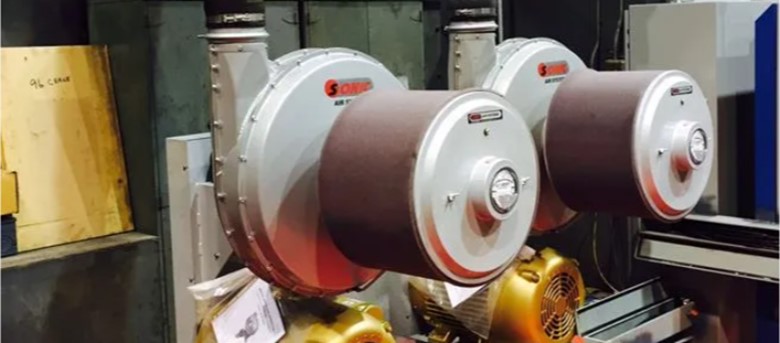
Material Handling and Pneumatic Conveying
Material handling is one of the most widespread applications of centrifugal blowers in the manufacturing sector. A large number of plants utilise the use of pneumatic conveying to help in the transportation of powders, granules and other small parts of the plant between two parts of the plant. The systems also minimize transportation, which is done by hand and minimize the risk of contamination.
The centrifugal blowers are the ones that ensure the regular pressure that is required to propel the materials through the pipes and ducts in an effective manner. In a food processing plant, these blowers can be used to transfer flour, or in a molding plant, plastic pellets, and these blowers guarantee the transfer of materials to its destination within a short time and with high reliability. This will result in the enhancement of workflow and minimization of downtime.
Fume Extraction and Ventilation
Some of the manufacturing processes emit fumes, gases, or odors, which have to be eliminated to ensure a safe working environment. Airborne pollutants like welding, chemical processing and painting processes are usually hazardous when they are not dealt with effectively.
These harmful substances are often removed using centrifugal blowers in ventilating and exhaust systems. They have the benefit of keeping the air flowing in a right way and negative pressure so that contaminants are removed safely in the workspaces. This enhances the quality of air and promotes regulations.
Good ventilation also leads to comfort among the employees which may help in improved concentration and production at the factory floor.
Combustion Air Supply
In the plants that use any of the furnaces, ovens, or boilers, there should be an adequate supply of combustion air, to be utilized safely and efficiently. Restricted airflow may cause incomplete combustion, low efficiency of power, and emissions.
The centrifugal blowers provide the regulated airflow needed in maintaining adequate combustion. They are reliable so that they can be used in a consistent heating operation that will be vital in operations like metal treatment, baking, or chemical production. Stable combustion is energy efficient as well as cost effective in the long run.
Favoring Equipment Reliability and Performance
In addition to the particular uses, centrifugal blowers make the entire manufacturing system more reliable. They can ensure stable conditions of operation of the sensitive equipment by preventing overheat, eliminating the accumulation of contaminants, and ensuring a continuous flow of air.
Their strong construction enables them to work round the clock in very harsh conditions and with minimal maintenance. This is due to its reliability in eliminating unplanned downtime, as well as in increasing the life expectancy of other equipment that is linked to airflow systems. This leads to reduced interruption and maintenance costs in the long run in the facilities.
The need to have reliable airflow solutions will continue to grow more as manufacturing operations get to be more complex and performance-monitored. Centrifugal blowers have been proven to be a viable and efficient option to be used in facilities that require reliability, multi-purpose, and success over a long period of operation.
 How the Resource and Waste Strategy Can Empower Industry
 Retailers are raising the bar with sustainability efforts, but is it enough?
 Best Practices for Managing Cyber Threats to Safeguard Your Business
 How COVID-19 Affected the Global Flow of Money & the Benefits of Globalization
 FourKites Data Shows Food & Beverage, CPG Supply Chains Continue to Stabilize
 Top Energy Software Development Companies for Complex Projects