

The proliferation of no-code analytics tools, AI-assisted analysis platforms, and natural language querying interfaces might suggest SQL’s importance is declining. The actual hiring data says the opposite: SQL appears as a required or preferred skill in a higher percentage of data and analytics job postings than any other single technical tool, and the advanced SQL capabilities required for mid-level and senior roles have become more sophisticated rather than simpler.
Why SQL Persists
SQL is the common language underlying almost every analytics and business intelligence tool in widespread use. Whether you work in Power BI, Tableau, Looker, or a custom analytics platform, SQL or a SQL-like query language runs beneath the interface when you filter, aggregate, or join data. Practitioners who understand what is happening at the query level can do things that those relying only on graphical interfaces cannot.
There is also a structural reason: most business data lives in relational databases, and SQL is the universal access language for it. Data not extracted and structured by someone writing SQL is often inaccessible regardless of how sophisticated the visualization tools downstream are. SQL proficiency determines whether you can work with data in its raw form — which is the form in which most interesting analytical questions are answered.
A 2026 analysis of 500 data science job postings found SQL appearing in nearly every posting touching data, with increasing specificity about advanced capabilities: window functions, CTEs, and platform-specific dialects for cloud data warehouse environments.
What SQL Certification Signals
There is a meaningful difference between writing basic SELECT statements and genuine SQL proficiency — writing complex multi-table joins, window functions, CTEs, and performance-optimized queries against large datasets. The former is learnable in days. The latter requires months of deliberate practice against real datasets.
A SQL Certification covering the full scope — foundational querying through advanced analytical functions, query optimization, and data modeling — validates the deeper proficiency that mid-level and above data roles actually require. It also forces coverage of topics like query performance and schema design that self-study learners frequently skip.
The Complete Analytics Context
A Data Analytics Course covering the complete analytical process — data collection, SQL for access and transformation, statistical analysis, visualization, business communication, and tool proficiency across SQL, Python, and Power BI — provides the full context. SQL certification establishes the technical foundation; the broader analytics curriculum develops the professional practice around it.
The three skills most consistently driving data analyst and scientist salary growth are SQL depth, Python proficiency, and a major BI tool. Building all three produces the profile the market rewards most generously.
Advanced SQL in Practice
The SQL capabilities that distinguish senior data analysts and data scientists from entry-level practitioners are window functions, CTEs, and the ability to write performant queries against large datasets. Window functions allow calculations across related rows without collapsing data into aggregations — enabling running totals, period-over-period comparisons, and ranking calculations that would be impossible or extremely inefficient with basic SQL. CTEs make complex queries readable and maintainable by breaking them into named, reusable components. Query performance optimization — understanding query execution plans, using indexes effectively, and restructuring queries to minimize data movement — is what separates analysts who can query small clean datasets from those who can work effectively with production data at scale.
Building these advanced capabilities through structured SQL certification rather than waiting for them to develop organically through work experience significantly accelerates the timeline to the mid-level and senior data roles where they are expected as prerequisites rather than bonuses.
SQL Beyond Analytics
SQL proficiency extends its value beyond data analysis into data engineering, analytics engineering, and backend software development contexts. Data engineers building ETL pipelines rely on SQL for transformation logic. Analytics engineers working with dbt write SQL at the core of their modeling work. Backend developers query application databases using SQL in virtually every technology stack. The investment in SQL depth therefore produces career optionality across multiple roles rather than constraining a professional to a single function. For professionals uncertain about which data career path they want to pursue, SQL is the one skill that creates useful optionality across all of them simultaneously. SQL proficiency, more than any other single technical skill, is what determines whether a data professional can work with data in its raw production form — which is where the most valuable analytical questions are answered and where the most significant career differentiation is built.
 Three reasons why machine learning & artificial intelligence projects fail – & how to avoid them
 4 Benefits of Managed IT Services: Are They Right for Your Business?
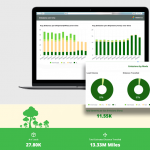 FourKites® Introduces Supply Chain Sustainability Dashboard
 Inflation soars as retailers scramble ahead of Xmas
 GitHub’s passkey rollout
 Three trends that will change the manufacturing industry in 2020