

In oilfield operations, equipment does not move directly from the field back into service. Between those two points, it often passes through inspection, repair, storage, and transportation. Every handoff is meant to answer a simple question: is this asset ready for the next stage?
Many oilfield tools and tubular components rely on threaded connections. Before those assets can be inspected, repaired, or prepared for reuse, the connections usually need to be separated.
A connection that is opened cleanly is easier to inspect, protect, and move through the repair process. One that picks up avoidable damage, contamination, or unclear condition records may require extra review before the next team is willing to accept it. What appears to be a workshop detail can therefore affect repair turnaround and field readiness.
So breakout is more than a mechanical task for oilfield supply chains. It is one of the points where asset condition remains clear and ready as it moves forward.
Controlled breakout process reduces uncertainty in Oilfield Equipment Turnaround
Once a component enters the workshop, the first question is not only whether the connection can be opened. It is whether it can be opened without making the next inspection harder.
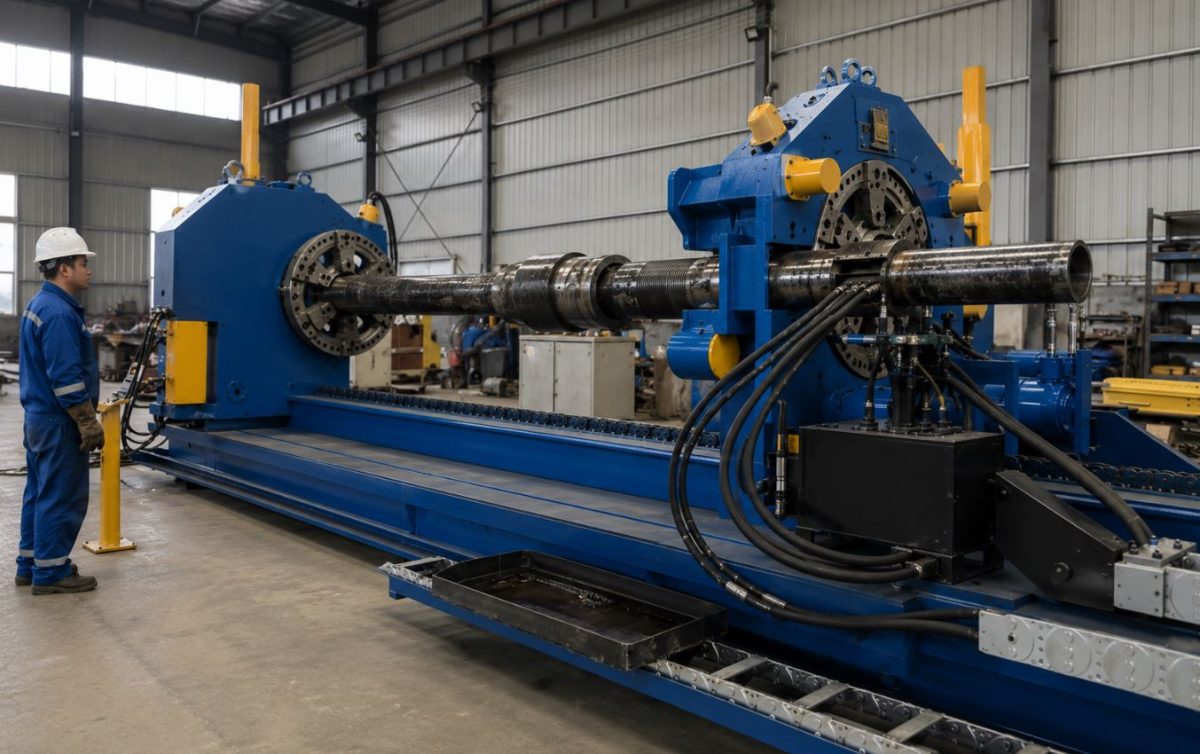
In high-force disassembly work, many oilfield threaded connections are tight, heavy, and difficult to handle by hand. If the tool shifts, the component is poorly supported, or force is applied unevenly, the connection may still open. But the problem is what may be left behind. Threads can be marked. Shoulders can be affected. A part that should move to inspection may need extra review first.
Controlled breakout reduces this uncertainty. Stable gripping keeps the tool from moving during separation. Proper support helps heavier components stay aligned. Smooth hydraulic action reduces the need for improvised force. These controls do not remove all risk, but they reduce avoidable handling damage at a sensitive point in the repair chain.
Some specialized disassembly equipment can meet these control needs. An oilfield breakout unit from Galip, for example, is built around controlled clamping and hydraulic support for heavy threaded components. To make the breakout process more visible, it also provides automatic reporting for service centers and production shops.
The supply chain value is that the part can move forward with fewer questions, less reinspection, and a clearer condition trail.
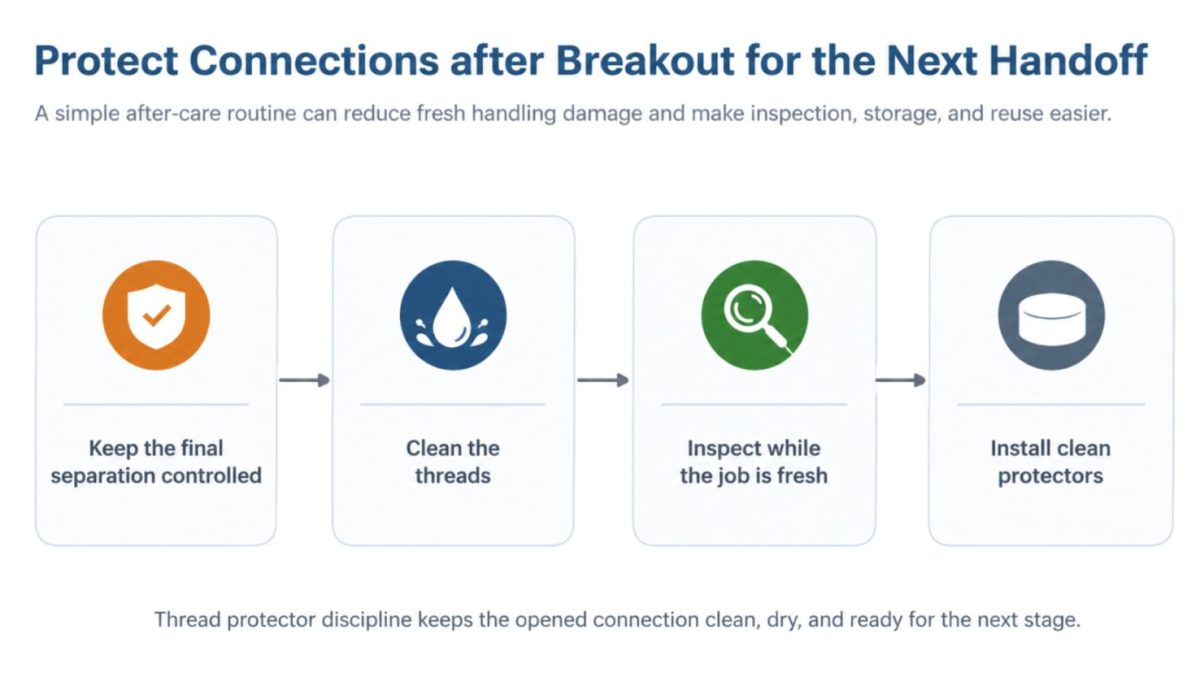
Protect Connections after Breakout for the Next Handoff
A rough final separation can add marks that were not part of the original service condition. If the pin exits off-center, drops weight onto remaining threads, or is pulled away roughly, the inspection team may be looking at fresh handling damage instead of service wear.
Cleaning and drying affect the same judgment. Debris, fluid, or moisture left in the threads can make a connection harder to inspect and less suitable for storage and reuse.
Inspect the connection while the job is still fresh, because it becomes harder to tell whether a problem came from breakout, handling, or storage after the part leaves the station. Unusual release behavior, wobble, contamination, unexpected resistance, or visible marks should be noted before transportation.
When it comes to the handoff, protection is an important part. A dirty or broken protector can carry grit or moisture back onto a clean connection. A poorly matched protector can leave the thread less secure during movement. Thread protector discipline should be considered part of the quality-control routine. It keeps an open connection clean, dry, and ready for the next stage.
Workshop Standards Reduce Handoff Friction
In a repair chain, friction often appears when different teams do not share the same idea of what “ready” means. An operator may consider the joint opened. An inspector may still need to know whether any marks were created during breakout. A storage team may care less about the force used and more about whether the exposed threads are clean and protected enough to hold the part safely.
This is where controlled breakout and after-care should be set as a consistent workshop standard. Controlled clamping, proper support, and smooth hydraulic action set a clearer baseline for how the connection was opened. Cleaning, inspection notes, and thread protector discipline then help preserve and explain that condition before the part moves on.
Clear standards turn handling quality into something the next team can recognize, not what they have to guess. The next team may still inspect the part, but it is less likely to repeat basic checks simply because the handoff was unclear.
Better workshop control helps the part move through repair, storage, and reuse with fewer avoidable questions.
Protect Asset Readiness Through Better Workshop Control
A part does not have to fail before it loses value in the repair chain. A small thread mark, a dirty protector, or an unclear note can be enough to slow the next decision. The part may still be usable, but the next team needs more time before they can trust it.
The way a connection is opened, inspected, and protected matters at each handoff. Breakout determines how the connection enters the repair process. After-care helps preserve that condition as the part moves to the next team.
For oilfield supply chains, the goal is not only to move parts faster. It is to move them forward in a condition that other parts can accept with confidence. Better breakout practices and after-care standards help protect asset readiness before small doubts become larger delays.
 How US Fleet Companies Can Address Dangerous Driving Behaviors
 Practical Tips for Setting up an Online Learning Space
 Record Number of Customer-Led Sessions to be Delivered at AVEVA World In San Francisco
 The 10x Order Test: What Breaks When an Ecommerce Store Gets Ten Times More Sales Overnight?
 Twin Disc selects Syncron to power its service parts pricing optimisation
 Descartes Unveils Next Step in Supply Chain AI with Agent Control Plane