

Automotive production depends on more than assembly lines, robotics, and vehicle components arriving on schedule. The facilities supporting production also need reliable equipment for inspections, repairs, and infrastructure maintenance.
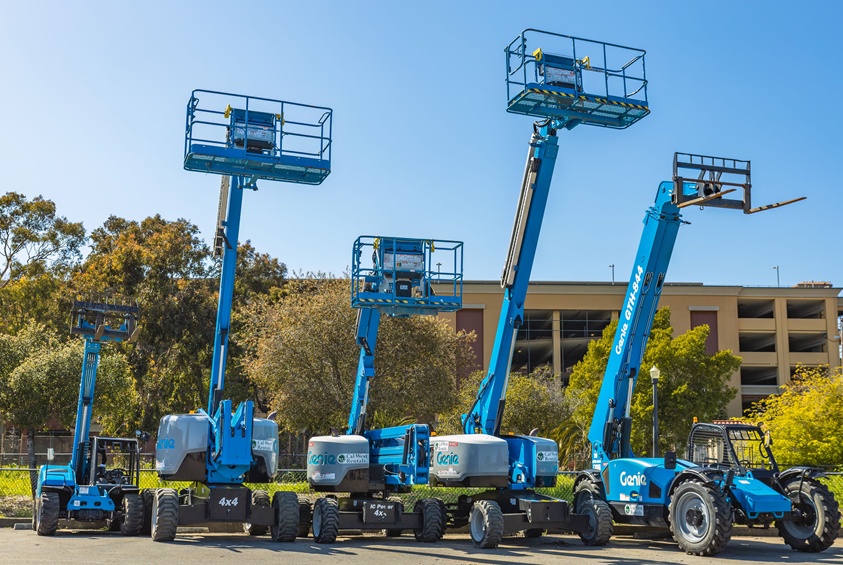
Aerial lifts help technicians reach overhead lighting, ventilation systems, cable trays, and elevated machinery. When a lift develops a fault, however, restoring it to service can take longer than the repair itself.
Identifying the correct replacement component, confirming compatibility, and arranging delivery can create a procurement bottleneck that disrupts planned maintenance and adds avoidable costs.
Why a Lift Failure Can Disrupt Automotive Maintenance
Automotive plants operate around carefully coordinated maintenance windows. Technicians may need to inspect overhead services during a scheduled production break, repair lighting above a work area, or access ventilation equipment without interfering with surrounding activities.
A faulty scissor lift or boom lift can complicate that plan. If no suitable alternative is available, the task may need to be rescheduled while maintenance staff investigate the failure and arrange a replacement part.
The impact depends on the machine’s role. A backup lift used occasionally may create little disruption, while a machine needed for time-sensitive maintenance could delay several dependent tasks. The challenge is understanding which assets are operationally important before a breakdown occurs.
For automotive facilities, equipment criticality should therefore reflect more than purchase price or age. Maintenance teams should consider where each lift is used, which activities depend on it, whether another suitable machine is available, and how quickly a replacement component can realistically be obtained.
The Parts Identification Problem
A replacement order can stall before procurement even begins. A technician may report a faulty controller, switch, hydraulic component, or joystick assembly, but the description alone might not identify the correct part.
Equipment configurations can vary by model, serial number, production year, and installed system. Components that appear similar may have different specifications or compatibility requirements. An incorrect order creates additional work: the part must be checked, returned if necessary, and replaced with the correct item.
Incorrect part selection can create additional costs and extend equipment downtime, particularly when replacement components have long lead times. Before placing an order, maintenance teams need reliable information to match replacement components to the correct equipment model and configuration. A JLG parts catalog can help technicians identify relevant parts and assembly references, making it easier for procurement teams to verify requirements before purchasing. This extra care can reduce incorrect orders, avoidable returns, and delays that keep essential equipment out of service.
Procurement teams should receive the equipment model, serial number, part reference where available, and any relevant technical details before placing an order. Technicians should validate compatibility rather than relying on appearance alone.
That simple discipline reduces uncertainty at the start of the process, when mistakes can otherwise become expensive delays.
Spare Parts Planning Should Reflect Production Priorities
Keeping every possible component in stock is rarely practical. Some parts are expensive, infrequently required, or difficult to store. Yet waiting until a machine fails before checking availability can expose a facility to unnecessary downtime.
The better approach is to classify replacement components according to operational risk. Consider how frequently a part fails, how long it takes to obtain, whether another machine can cover the work, and what happens if the equipment remains unavailable.
A component associated with a heavily used lift and a long supplier lead time may justify a reserve. A readily available part for a rarely used machine may not.
The Forbes guide to maintenance, repair, and operations inventory strategy discusses why inventory visibility and coordination between procurement and operations matter. Automotive maintenance teams can apply the same principles by linking spare-parts decisions to actual equipment requirements rather than stocking items simply because they have been purchased before.
Supplier Lead Times Can Undermine a Maintenance Window
Planned maintenance depends on having the right resources available when work is scheduled. If a lift is already unavailable or an inspection identifies a component that needs replacement, a long delivery estimate can force the team to revise its plan.
The problem becomes harder when purchasing starts without confirmed specifications, supplier availability, or a clear approval route. Even an urgent request can lose valuable time while teams exchange missing information.
Procurement staff can reduce this risk by maintaining current supplier contacts, recording realistic delivery estimates, and identifying approved sourcing options for critical components. For frequently required parts, historical order data can reveal which suppliers consistently meet their commitments.
Price should remain part of the decision, but it should not be the only consideration. Compatibility, documentation, delivery reliability, and return conditions all affect the total cost of sourcing a replacement.
Maintenance Records Should Make the Next Repair Easier
Every breakdown provides information that can improve future decisions. Yet that information is useful only when it is recorded consistently and can be retrieved when needed.
A maintenance record should connect each lift to its model and serial number, service history, installed components, and relevant repair documentation. Recording failure types, replacement dates, and procurement lead times also helps teams identify recurring problems.
For example, repeated failures involving similar electrical components may warrant closer investigation. If the same part regularly takes several weeks to arrive, the team can assess whether a reserve is justified or whether another approved sourcing arrangement would reduce exposure.
Digital records can help maintenance planners and purchasing staff work from the same information, particularly when responsibility passes between shifts. The objective is not to introduce unnecessary administration. It is to prevent technicians from repeatedly solving the same identification and sourcing problems.
Safe Repairs Require Verified Components
Restoring a lift to service quickly must never take priority over safe operation. Components affecting platform controls, steering, hydraulics, braking, and lifting functions must meet the equipment’s requirements.
An unsuitable replacement can create a hazard even if the machine appears to function initially. Repairs should follow manufacturer instructions and be performed by appropriately qualified personnel. Equipment with identified safety defects must remain out of service until the necessary repairs and checks are complete.
The Occupational Safety and Health Administration’s aerial lift guidance explains the importance of inspections, maintenance, and safe operating practices. Keeping accurate records of installed components and completed repairs also supports traceability when equipment is inspected or serviced again.
For automotive facilities, this makes technical verification part of procurement control, not merely a final maintenance step.
Connect Procurement Decisions to Equipment Availability
Aerial lift parts may represent a small portion of an automotive facility’s overall spending, but poor sourcing practices can create disproportionate inconvenience. Incorrect orders, missing specifications, unplanned purchases, and avoidable delivery delays all make maintenance harder to coordinate.
A stronger process connects equipment records, failure history, supplier performance, and inventory decisions. It also establishes clear responsibility for technical validation and purchasing approval before an urgent requirement arises.
The goal is not to eliminate every breakdown or stock every component. It is to recognize which failures create meaningful operational risk and prepare accordingly.
Automotive maintenance depends on equipment that is ready when technicians need it. When an aerial lift becomes unavailable, accurate parts identification and dependable sourcing can determine how quickly the team restores it to service.
By improving equipment records, prioritizing critical spares, checking compatibility, and planning around supplier lead times, facilities can reduce preventable procurement delays. The most effective response to a breakdown often begins well before the machine fails—with a clear understanding of the asset, the components it needs, and the process for obtaining them.
 Understanding the Importance of Family Law for Modern Families
 PalletTrader and PopCapacity Forge Strategic Partnership to Streamline Pallet Procurement
 How Predictive Maintenance Is Reshaping Industries
 Rami Levy increase productivity by 25 percent and eradicate order processing errors with Zetes
 Augustin Group reaches zero error rate in order picking with Zetes
 Customers of Gerhard Schubert GmbH print functional end parts with Ultimaker