

The construction industry is at a critical turning point. New regulations designed to improve building safety, sustainability, and accountability will demand significantly improved materials traceability from design through to deconstruction. While regulation is driving this change, it is the additional potential benefits to the industry that are compelling.
Digital product passports will ensure building and construction products and components are identifiable from design, production, construction, and maintenance, right through to deconstruction and recycling. This ‘golden thread’ of information offers the industry far more than regulatory compliance: end-to-end traceability provides the foundation for improved operational efficiency, significant waste reduction, enhanced cost control, and a new level of supply chain collaboration.
As Rob Ellinor, Global Building & Construction Sector Manager, Domino Printing Sciences explains.
Escalating construction compliance
New EU regulations including the Construction Products Regulation (CPR) are set to place new demands on manufacturers and suppliers of construction products. The direction of travel is clear: manufacturers will need to provide structured, digital product information that can be accessed and shared consistently throughout the lifecycle of a building.
In the UK, the need for improved traceability is already understood. The ‘golden thread’ of data is used to describe a digital record of a building’s crucial safety and design information. While currently only legally mandated for higher-risk buildings (HRBs), there is growing awareness across building companies of the value of a single source of truth across projects of all sizes.
To date, the limitation to achieving this golden thread has been a lack of standardisation and single, agreed operating framework. The result has been siloed operations that have constrained effective, end-to-end supply chain collaboration, which is required to improve operational effectiveness and maximise the value of deep product data. The shift towards a more regulated environment will, however, accelerate change and encourage the widespread adoption of standards required to achieve a more consistent and transparent construction process.
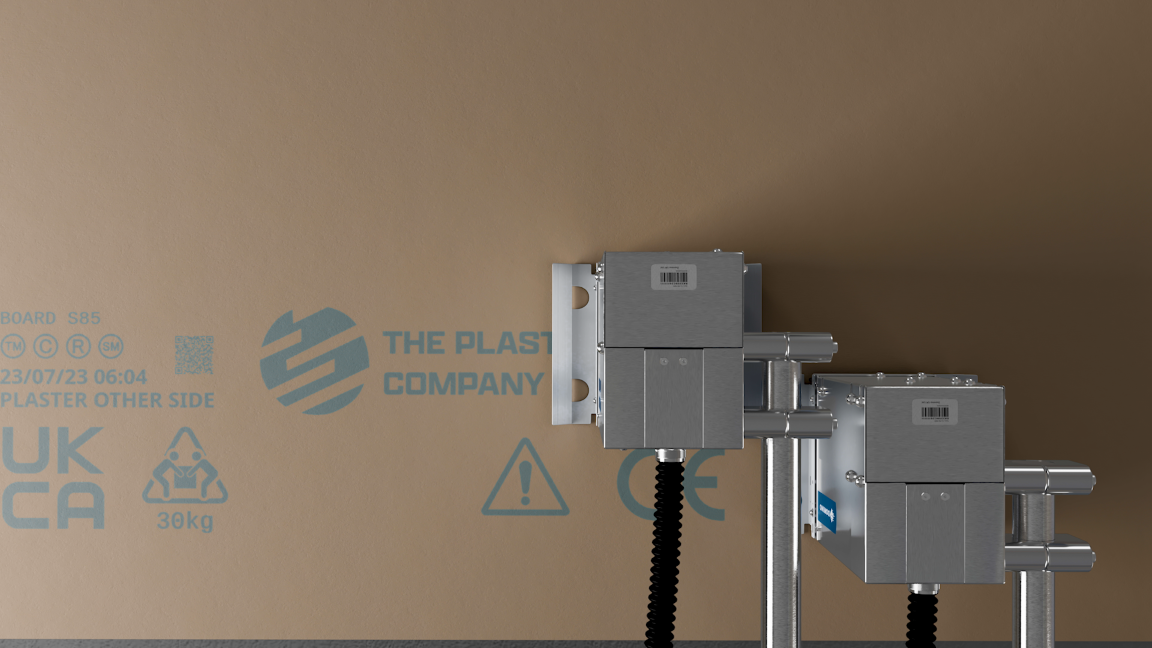
Data standards support construction compliance
As seen in other industries, most notably pharmaceutical, standardisation and the adoption of a globally recognised, accessible language, such as that provided by 2D codes powered by GS1, is the foundation for effective data sharing and traceability. It enables consistent, trusted, and usable information to be seamlessly transferred from one end of the supply chain to the other, allowing organisations at every stage to leverage real-time information to improve efficiency and control.
The depth of information that can be included within a digital product passport is compelling. While demands vary dependent upon product type, essentially the regulations will require the provision of a globally unique product identifier; a digital data carrier (e.g. QR, NFC, RFID); product performance and safety information; compliance and certification documentation; environmental performance data; and material composition.
Leveraging a standardised language to provide this deep data supports far more effective information flow between systems and people, from the factory through to the building site. It will allow construction organisations to create a digital record, or ‘twin’ of a building, with evidence of what products were used, and where. This digital twin can also be used to demonstrate that the building meets the required standards, with the addition of unique identifiers allowing products to be tracked down to batch level for mass produced items, and individual level for higher risk items such as fire doors.
Extracting value from data beyond compliance
Regulatory compliance should just be the beginning of significant operational change and additional benefits over and above remaining compliant. Improved product information can support greater automation and real-time process management that can significantly improve day-to-day operational performance. For construction companies, product deliveries can be scanned as they arrive on site, removing the inaccuracies and delays associated with manual paperwork.
Real-time scanning of items as they are installed can help to ensure the correct parts are used across a building project. Additional information can include products that need to be paired to ensure correct installation, further improving quality and avoiding the risk of expensive delays or inspection failures. Indeed, site inspectors with detailed insight in advance into the specific high-risk areas that require assessment, can achieve more focused and faster inspections and sign off.
Replacing manual paperwork with real-time information from product identifiers can also allow construction companies to move away from the ‘just in case’ stock ordering that has been traditionally adopted to avoid delays. In addition to cutting cost, the avoidance of over-ordering materials will also minimise waste, further supporting construction companies’ sustainability goals. Identifiable surplus materials can be returned or re-used rather than disposed of, further reducing waste and cost.
Leveraging data to improve operational performance
Detailed item-level information can also enable construction companies to improve stock rotation. For perishable items, such as plaster, controls can be implemented to avoid products going out of date and being wasted – adding both cost and, potentially, the need for complex disposal processes. Critically, it also reinforces safety protocols for products such as cement which can be hazardous to workers and undermine building integrity.
For building product manufacturers, utilising global standards such as GS1 Digital Link, enables more data to be tracked and linked to products, supporting targeted recall, if required. Faulty batches can be identified and located rapidly, ensuring only affected products are recalled, minimising the potential business cost. Furthermore, complete traceability will also avoid the problems associated with identifying buildings affected by problems, as occurred after the Grenfell building fire in London.
This depth of data, when accessed via a product identifier, can also support far more effective anti-counterfeit activity, enabling construction sites to verify genuine materials and confidently use authentic, safe products and, through the use of resolvers, enables different stakeholders to access different data sets or web pages at different point in the value chain.
Leveraging compliance to achieve competitive advantage
The addition of detailed, unique identifiers will allow organisations throughout the building and construction industry to ensure compliance with new and upcoming regulations. But more importantly, it will also change the way organisations interact and collaborate up and down the supply chain. The additional depth of information that can be provided on products at both batch and individual level provides an opportunity for materials manufacturers to become embedded within the end-to-end supply chain, offering additional value to construction companies that is a tangible commercial differentiator.
The provision of product information through adopting global standards, such as 2D codes powered by GS1, will become not only a compliance requirement but a commercial necessity. Today there is a compelling opportunity to look beyond the perception that compliance is an overhead and recognise that building and construction manufacturers can deliver significant value throughout a connected and collaborative supply chain.
 Supply chains: getting a competitive advantage through tech
 Selkent Construction Fixings Rolls Out Fleet Software
 Step-by-step guide to registering at Golden Crown Casino
 Online Safety Tips for Homeschooling Families
 How Commercial Metal Buildings Solve the Hidden Costs Dragging Down Warehouse Operations
 How to create a successful fashion marketplace