

There was once a time when inspections relied mostly on humans for execution, and post-production testing was all that existed. Thankfully, these legacy solutions had their place and are far from dead. However, as the demand for mass-producing goods efficiently accelerates, methods of yesteryear are no longer adequate. Modern industrial quality control and assurance solutions support real-time data numbers, automation, and analytics intended to predict when defects occur.
Manufacturing companies that deploy this technology discover ways of manufacturing more proactively as opposed to purely reactively. No longer does it suffice to learn about defects post-production when it’s too late. Said systems instead offer capabilities that, pretty much, stop all defects from halting production. This reduces waste and thwarts expensive rip and repair processes. Ultimately, the systems used can result in a tighter hold on production and allow for the same quality products coming out of varying plants.
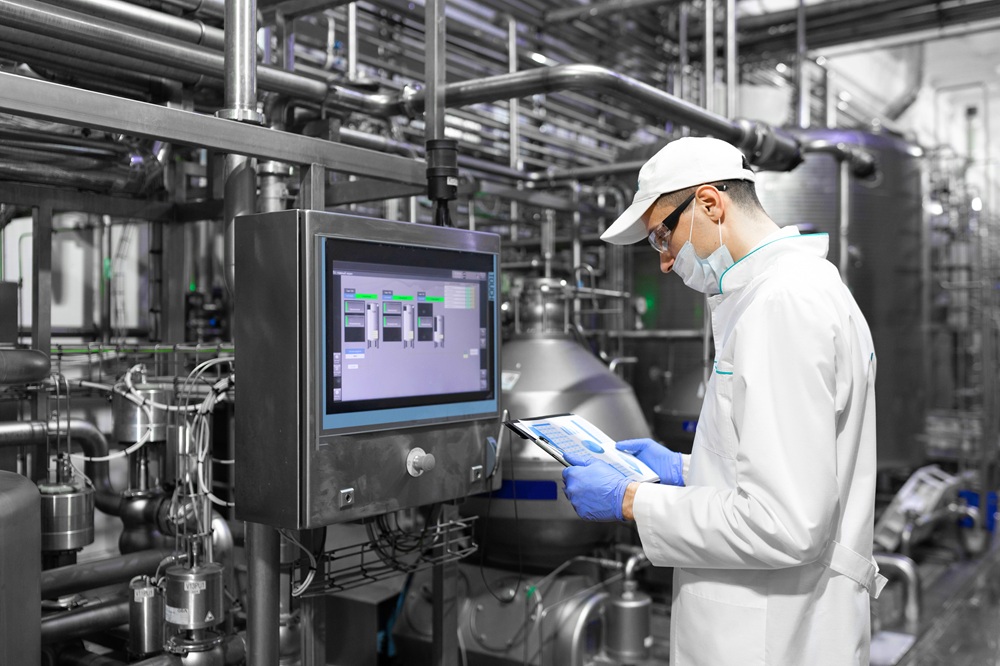
How Industrial Quality Control and Assurance are Being Used to Prime Quality Inspection in Manufacturing Processes
Streamlined product quality inspection is more than halted inspection– it’s about infusing the entire quality system involved in turning out a top-notch production. This includes quality checks of suppliers, process essentials, and maintaining the regular checks necessary to adhere to global standards.
Digital manufacturing software ensures all supervisors have what they need to establish quality checks of suppliers, or monitor them if the bulk of operations has been outsourced. Other, token tools in the modern quality floor include systems leveraging data in production for a number of insightful pieces of information that engineers and floor operators can tap. Quality isn’t just about a lean shop anymore– since producers on each floor have international standards to adhere to, ensuring the pertinent traceable documentation is accounted for is a given. This prevalent shift is evident, alongside top-quality inspection software and portents of blight stops. This is an area in which the digital supply chain flexes its market.
The Role of a Torque Traceability System for Smart Factories
In industries where leverage is required ( i.e., automotive, aerospace, and farm equipment), a company can’t afford a torque traceability system.
These systems are used to verify that the torque data is accurate. It also offers traceability, which is crucial for the audit trail. It is especially important in industries where safety threats are a possibility. Most records are also rather close; should they be related to specific industries’ manufacturing protocol that requires minimal trace data, as records can be done retroactively and done at any time? Imports are even closer to our production purposes than the largest and most cost-effective factory in a better scenario.
Taking Official Torque and Angle Standards to the Next Level
Torque standards are a key area of focus for any manufacturer with assembly processes, particularly when critical fastening is required for final product assembly. Modern tightening systems utilize a combination of transducers, controllers, and software to monitor real-time torque and angle data (among other parameters) during the fastening process.
The range of functionality and capability that these systems offer manufacturers is vast, and many solutions offer 100% error proofing to guarantee that the correct fastening process is executed, ensuring that the risks of both under- and over-tightening (and, consequently, catastrophic part failure) are mitigated from the production process.
What a Fully-Integrated Data-Driven Approach to Quality Looks Like in Practice for Tomorrow
The manufacturing landscape as a future whole will be connected and data-driven, meaning that quality will be a full scope of data output, monitored and acted upon from engineering design to manufacturing to full product validation to closed-loop corrective actions in after-market customer notifications. By utilizing today’s most advanced industrial quality control solutions, manufacturers can get a head start and work towards an improved operation, with decreased defect rates and maintained audit-able records to adhere to and navigate strict standards set forth by a bevy of modern regulatory bodies.
 6 overlooked benefits of 3D printing for your supply chain
 Manhattan Associates Reports Record Revenue & Earnings for Third Quarter
 Amazon and Google Leap Up the Rankings for U.S. IoT Projects
 Shop safely this holiday season with 25% off LastPass
 LiftEx returns to Liverpool in 2025
 Patching Frequency for Zero-Day Vulnerabilities is Deteriorating