

An inexpensive product can become an expensive order before it reaches the customer. Storage, picking, packaging, delivery, and the occasional return all draw from the same margin, yet their costs often sit on separate invoices.
As order volume changes, those disconnected charges make it difficult to see where fulfillment costs actually accumulate.
That picture becomes more complicated when savings in one area create expenses elsewhere. A lower handling charge or shipping rate doesn’t necessarily mean the complete order costs less to fulfill.
The logistics strategies for e-commerce businesses covered here address those connected expenses, with their usefulness depending on the operation behind each order.
The Short Answer on Cutting Fulfillment Costs
Fulfillment costs sit in four connected areas: where stock is stored, how much handling each order requires, what packaging and postage cost, and what happens when merchandise comes back. Shipping is usually the largest single expense, so shorter distances and smaller parcels tend to offer the fastest payback.
The seven strategies are distributed inventory, third-party logistics outsourcing, warehouse management systems, right-sized packaging, multi-carrier rate shopping, zone skipping, and value-recovering returns. Each targets one of those cost centers, although its value depends on order volume and the expenses it introduces.
Most stores don’t need all seven at once. The strategies aren’t a checklist to complete: each needs to remove more expense than it introduces, without shifting the cost into another department. Total cost per order provides the common basis for comparison, starting with where inventory sits.

Where Your Inventory Lives Shapes Every Shipping Bill
The distance between a shelf and a customer’s doorstep affects postage before packing begins. Location decisions therefore need an order-level comparison: the delivery expense avoided versus the extra storage, inventory, and handling expense created.
1. Spreading Stock Across Regional Fulfillment Centers
Distributed inventory places stock in regional fulfillment centers rather than sending every order from one building. Positioning popular products near established customer clusters reduces the distance those parcels travel and shifts eligible shipments into lower shipping zones.
The trade-off is carrying costs. Each location needs stock, and an item can sell out at one site while sitting untouched at another. Splitting slow-moving products across every warehouse ties up inventory without necessarily improving delivery economics.
A practical threshold is whether regional shipping savings exceed added storage, replenishment, and inventory costs. Fast sellers with predictable regional demand belong in the comparison first; the entire catalog doesn’t need to move at once.
2. When Handing Fulfillment to a 3PL Pays Off
Third-party logistics (3PL) outsourcing replaces some warehouse rent, staffing, and equipment commitments with contracted charges. Seasonal stores can compare that arrangement against paying for unused space and labor between peaks.
The market spans large national fulfillment networks, dedicated distribution operators including Simple Distribution, and specialist fulfillment providers. The useful comparison is total cost per order, including receiving, pallet or bin storage, pick-and-pack, and account management, rather than the advertised handling rate.
However, outsourcing doesn’t eliminate fixed costs automatically: minimum charges and committed storage still matter. The break-even point arrives when the complete outsourced bill, including transport, falls below the equivalent in-house cost at the store’s actual volume.
Cutting Waste Inside the Warehouse and the Box
After location, costs accumulate through repeated touches and unnecessary package volume. Labor minutes reveal one problem; the gap between product size and packed parcel size reveals another.
3. Warehouse Systems That Cut Picking Labor
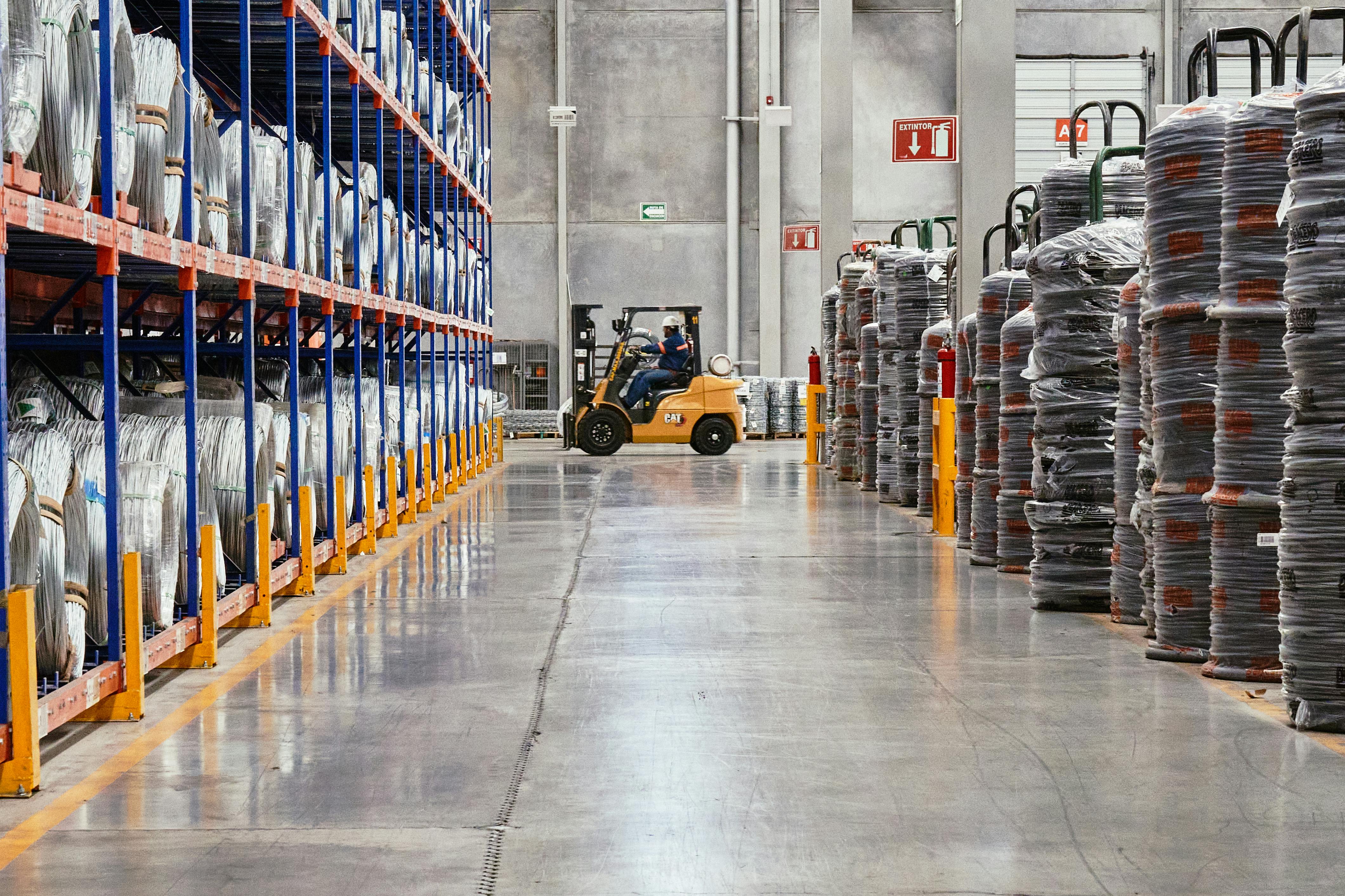
A warehouse management system (WMS) directs inventory locations and picking tasks. Batch picking groups orders with shared items, while zone picking assigns work within defined warehouse areas. Slotting places frequent sellers where staff can retrieve them without repeatedly crossing the building.
Systems designed for scalable warehouse management should support these workflows as order volume grows, rather than simply replace a spreadsheet with a screen.
Selection should start with the operation’s bottleneck. Long walking routes call for better task grouping and slotting; wrong-item shipments call for item verification at picking and packing. Software that doesn’t change either workflow adds a subscription without addressing the underlying labor cost.
4. Right-Sized Packaging That Beats Dimensional Weight
For services using dimensional weight, carriers compare a parcel’s actual weight with a size-based calculation and bill using the greater figure. A lightweight item in an oversized carton can therefore attract a charge driven by empty space.
A manageable set of box sizes gives packers useful choices without creating excessive packaging inventory. Soft, nonfragile goods can travel in appropriately protective poly mailers, while fragile products still need cushioning and clearance.
Cartonization matches order contents to suitable packaging; on-demand equipment can produce a closer-fitting carton where volume supports the investment. The decision rule is total packed cost: packaging, void fill, postage, and damage-related expense.
A smaller box isn’t cheaper if inadequate protection creates a replacement shipment.
Shipping and Returns Without the Margin Leak
With location and packaging addressed, carrier selection determines the outbound bill, while reverse logistics determines how much value survives a return.
5. Multi-Carrier Rate Shopping and Negotiated Rates
Multi-carrier shipping compares eligible services for each parcel rather than assigning every order to one carrier. The comparison needs the destination, packed dimensions, weight, delivery requirement, and applicable surcharges. A low base rate doesn’t establish the lowest final charge.
Negotiated carrier rates become meaningful when a store has a shipment profile to present: recurring volume, parcel characteristics, and destination patterns. There’s no universal order threshold because the available terms depend on that profile.
Rate shopping should compare equivalent delivery commitments. Selecting a cheaper service that misses the promised arrival window isn’t a like-for-like saving, particularly when replacement shipments or refunds follow.
6. Zone Skipping for High-Volume Shipping Lanes
Zone skipping uses freight consolidation to move parcels bound for one region together, then injects them into a parcel network closer to their destinations. The financial comparison combines the freight movement, transfer handling, and final parcel charges.
It works when a destination region produces enough steady volume to support consolidation without holding orders beyond their delivery commitments. Scattered demand doesn’t provide the same foundation.
The break-even test is straightforward: the consolidated route must cost less than sending those parcels individually from origin. That calculation must include any extra sorting and handling, not just the lower destination-zone postage.
7. Returns Processes That Recover Value
A return creates separate costs for reverse shipping, inspection, and restocking. Processing every item identically wastes effort when a sealed product, a repairable product, and unsellable merchandise require different destinations.
An approach to streamlining fulfilment and returns connects outbound order records with return reasons and item condition, so inspection starts with useful information. Clear grading rules then route goods to sellable stock, refurbishment, or liquidation.
Recovery also needs an economic limit. An item shouldn’t receive repair work that costs more than its recoverable value. Tracking the value recovered after handling expenses distinguishes a productive returns process from one that merely clears the receiving area.
Picking Where to Start With Your Own Fulfillment Costs
For low-volume stores, packaging changes and shipment-level rate comparisons offer starting points without adding another warehouse or major equipment. Growing stores with geographically dispersed demand have a stronger reason to compare 3PL outsourcing and regional inventory placement.
At higher volumes, warehouse systems and zone skipping deserve closer attention because repeated handling and concentrated shipping lanes change the economics. Returns recovery belongs alongside them wherever returned merchandise represents recoverable stock.
Across these choices, the number worth tracking is total cost per order.
 JLT Mobile Computers offers free guide on how to choose & buy the right barcode scanners to maximize productivity
 Why Demand Forecasting Accuracy Is the Biggest Untapped Lever in Retail Supply Chains
 Neustar highlights rise in ransom-related DDoS attacks & greater use of existing attack vectors
 Ignoring corporate sustainability responsibilities is not an option for logistics companies
 AI in Logistics
 9 Ways the Right Battery Improves Your Van Experience