

For most carriers, the dispatch board is the nerve center of the business. Every load, driver assignment, and status update flows through it.
A transportation management system is meant to act as that control point. Whether it improves dispatch speed, real-time visibility, and margin control depends less on the feature list and more on how well it fits daily workflows.
This guide offers a practical, vendor-agnostic way to evaluate a carrier TMS. The goal is to judge end-to-end workflows, integration depth, and compliance controls, not just tick boxes on a spec sheet.
What a Carrier TMS Does Today
A transportation management system is specialized software for planning, executing, and optimizing shipments. That can include finding rates, booking loads, assigning drivers, tracking delivery, and closing out settlements.
Carrier-side systems differ from shipper and broker tools. They focus more on dispatch, asset use, driver settlements, and compliance than on procurement. If you want a broader primer, this TMS explainer covers the core concepts.
How a TMS Improves Dispatch
Dispatch is where speed and accuracy pay off. A transportation management system can help reduce the manual steps between an available load and a confirmed driver.
Some tools offer assisted assignments. Instead of making a dispatcher scan every driver and lane manually, they can surface likely matches based on hours, location, equipment, customer rules, and route fit.
Telematics and ELD integration matter here too. When a TMS connects to those systems, dispatchers can see location, hours-of-service status, and route changes without waiting for check calls.
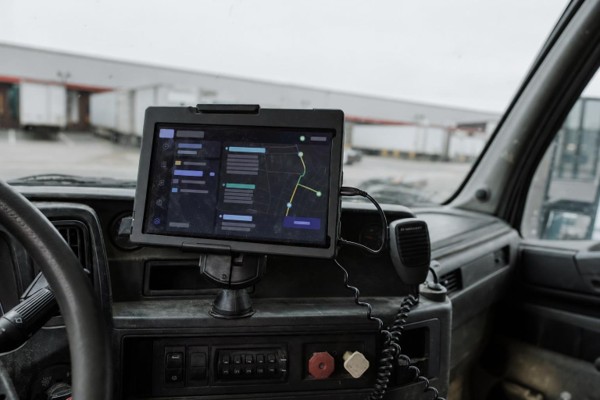
Driver mobile tools are another test point. A useful app should support two-way messaging, document capture, mileage updates, stop logging, and compliance alerts without adding extra work for the driver.
How a TMS Improves Visibility
Visibility is more than a map with dots. It is the ability to see exceptions early and act before a load goes late.
Near-real-time GPS and automated status updates can reduce check calls. Strong visibility tools also recalculate ETAs when tractor position, stop status, or route conditions change.
A transportation management system should show not only that a load is at risk, but also why. For example, a dispatcher may need to see whether the issue is late pickup, missing paperwork, a driver hours limit, or a stop change.
When you evaluate a tool, verify how ETAs recalculate and how exceptions surface. Ask to see the alert logic and the exception views a dispatcher would actually use on a busy day.
How a TMS Supports Profitability
Margin control is a process, not a promise. A transportation management system primer can help align terminology before teams compare profitability claims. Treat every profitability feature as something to test, not a guaranteed result.
Load scoring is one area to probe. Some platforms centralize inbound loads and score them against configurable profitability rules before they become dispatches.
Backhaul and deadhead reduction is another. Certain tools search for return loads, rank them by fit and margin, and may help automate outreach.
These features describe how the software works. They do not promise a specific outcome. Ask each vendor to show the logic with your own lane data.
Evaluation Checklist and Scorecard
Group your criteria so no category gets overlooked. Score each vendor the same way, then compare.
- Dispatch workflow: assignment steps, load conversion, and rebooking speed.
- Driver experience: mobile updates, document sharing, and two-way messaging tested live.
- Visibility and ETAs: recalculation cadence, exception alerts, and centralized tracking.
- Accounting and settlements: driver pay, invoicing, and audit trails.
- Compliance and fraud controls: embedded safety checks, insurance checks, and dispatch blocks.
- Analytics: dashboards you can build before go-live.
Run a day-in-the-life demo script for each system. Ask for an API or ELD sandbox so integration claims can be proven, not just described.
Build compliance into the review. Some tools embed FMCSA safety scores and insurance data in the dispatch workflow with configurable warn or block thresholds. They may also sync fraud alerts from services like Highway. Confirm vendor readiness for FMCSA changes affecting BMC-85 trust filings in 2026, since missed trust or insurance requirements can disrupt operating authority.
If any platform is on your shortlist, score it against the same checklist. Published materials should cover dispatch, driver workflows, compliance checks, accounting, and analytics, which makes them useful for comparing how a carrier-focused system handles the full load lifecycle.
Example in Practice
It helps to see how one carrier-focused system maps to these criteria. For example, a carrier platform may centralize dispatch, driver mobile tools, accounting, analytics, and broker-compliance workflows across the load lifecycle. For a named example in practice, see PCS TMS, which the vendor says many carriers can implement in 30 to 90 days. Timing still depends on data quality, integrations, and training.
Implementation and Change Management
Treat timelines as vendor-stated ranges rather than universal rules. For that system or any similar carrier platform, your data quality, ELD connections, accounting setup, and driver training plan will shape the rollout.
Start with pilot lanes before a full launch. Use the pilot to test dispatch handoffs, driver app adoption, document capture, billing, and exception management.
Check data migration carefully. Confirm that historical loads, driver records, customer records, equipment data, and settlement details move cleanly.
Metrics to Track After Go-Live
Decide what success looks like before launch. Build the dashboards inside the TMS so the numbers are ready on day one.
- Deadhead percentage
- On-time percentage
- Tender-to-dispatch time
- Days sales outstanding
- Driver message response time
Frequently Asked Questions
How does a carrier TMS differ from a broker TMS?
A carrier TMS centers on dispatch, driver settlements, asset use, and compliance for trucks you operate. A broker-focused system leans more toward carrier selection, capacity sourcing, and vetting.
How do I verify ELD and telematics integration?
Ask for a sandbox and run a live test with your own devices. Confirm that location updates, hours-of-service data, alerts, and status changes appear in the dispatcher workflow.
What should be included in a TMS pilot?
Include pilot lanes, driver app testing, document capture, billing, exception alerts, and settlement checks. Use the pilot to verify the daily workflow before expanding the rollout.
 Leveraging Swapzone for Arbitrage Opportunities in Crypto
 Energy security is most exciting area of IoT technology development, according to Wi-SUN Alliance smart utilities survey
 Beware of SCAMS as cost of living bites finances
 Shared Labs, Shared Success: Creating Innovation Ecosystems That Attract Global Investment
 Smarter school lunches: new app helps schools cut food waste while ensuring safer menu choices for pupils
 Gartner Says Generative AI for Procurement Has Entered the Trough of Disillusionment