
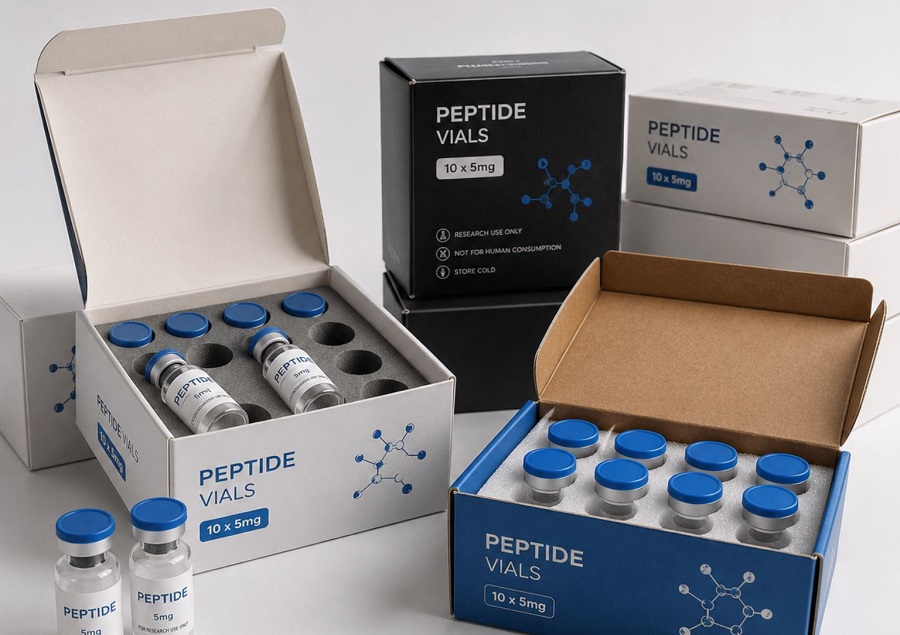
The vials of peptides are very fragile and small. It doesn’t take much for a vial to be broken by just being knocked around or even a minor impact. Therefore, shipping these in a way that will protect them is paramount. Custom peptide vial boxes offer protection from any type of damage that could happen to the vial prior to an issue occurring.
In addition, peptides are sensitive to light and temperature. If packaged poorly, it is likely that the products inside the vials will become damaged. When properly packaged in a custom box, both the glass as well as the peptide are protected and kept intact throughout all stages of delivery – from the warehouse through to delivery at your customer’s doorstep.
What Makes Peptide Vials So Fragile
Thin glass peptide vial boxes will typically break while being shipped due to the high amount of jarring that occurs from trucks, airplanes, and delivery vehicles. The package is very likely to be broken in transit without some sort of protection for the vials.
Additionally, peptides may degrade (lose their potency) when exposed to excessive heat, and can also become weakened by light exposure. So the packaging needs to perform two major functions – protect against breakage, as well as block out light and regulate temperatures.
How Custom Boxes Reduce Breakage
Custom-made peptide vial boxes have been designed with the intention of holding each vial in its position. A majority of these peptide boxes will have either foam inserts or molded tray inserts to prevent the vials from shifting.
The purpose of preventing the vials from shifting is that the fewer number of movements that occur for a vial within a shipping container, the lower the potential for damage to the vial. It is also important for there to be a tight fit between the container and the vial.
If a vial has enough room to move, it may come into contact with the side of the shipping container. When creating custom boxes to protect individual peptides, companies will create their containers so as to precisely fit each individual vial.
In doing this, they provide maximum safety for the peptides while being shipped.
The Role of Sturdy Materials
The quality of the materials used in a box can be every bit as important as how it was designed. A lot of peptide vial boxes are made with very heavy-duty or thick, rigid cardboard. Rigid cardboard will withstand crushing and bending. In other words, rigid cardboard maintains its original shape regardless of the amount of pressure that is placed upon it.
Some packaging companies will use double-layered walls to further protect their product. Double-layered walls add an additional level of safety and therefore provide stronger protection from damage. When there is less damage caused by shipping, you have more happy customers.
And when there are fewer unhappy customers (damage), then your company has to process fewer returns.
Protecting Peptides From Light and Heat
Light may degrade some very delicate peptides. To protect these sensitive peptide products, many manufacturers will provide a protective coating that blocks the penetration of light. Additionally, to further protect their peptide products, some manufacturers will print the outer box in darker ink shades as well.
Both methods help to ensure stability during shipment (transport). Temperature changes while being shipped can cause instability as well. Insulation in the design of shipping containers can help reduce temperature fluctuations. A few companies take it one step farther by providing space inside the container for an “ice pack” or “cooling gel”.
These added protections help to maintain the integrity of the peptide products during warm weather shipments.
Why Insert Trays Matter So Much
The inserts used for packaging peptides are among the most significant aspects of the packaging itself. Inserts are designed to keep each individual vial separate from all of the others by creating small spaces for each vial.
This helps prevent the vials from rubbing against each other or being knocked around when they are handled. Inserts help create an orderly way to store and transport peptides. Various materials that can be used to produce inserts for custom peptide packaging to match your unique needs and provide varying degrees of shock absorption depending on which type is chosen.
Using a high-quality insert will provide greater shock protection than using a lower-quality insert.
Custom Sizing Prevents Unnecessary Movement
Boxes that have a lot of excess space will, in fact, create problems. Excess space provides room for vial containers to bounce and move as they travel. By making each box custom-sized, you completely eliminate the potential for excessive container bouncing or sliding during transportation.
By reducing the amount of unused interior space inside each box, you will reduce the amount of motion your products will experience while being shipped. Additionally, by providing less excess space, you will require fewer packaging materials. The end result is safer and more cost-efficient delivery of your product.
Branding That Builds Trust
Custom packaging for peptide vials provides both protection for the peptides and the opportunity to create a positive perception of your company through the presentation of the custom vial. The use of professional-looking custom packaging solutions for vials provides an image that you care about the quality of your peptides.
This is one way to create a positive impression at the onset of a relationship with your customer. Labeling on peptide products should be clear as well. Customers will want to know what they have purchased, how much there is, and how they need to store their purchase.
By providing clear and simple information via labeling, you establish credibility and reinforce confidence in your company and product.
Reducing Returns and Customer Complaints
Strongly designed and built peptide boxes will greatly reduce customer dissatisfaction and damage claims. Good packaging is essential for protecting your company’s good name. The negative impact of damaged goods is long-lasting.
When an item arrives at a customer’s home in a damaged state, they are less likely to be satisfied. Conversely, when packaging is done safely and professionally, it can build confidence with the customer.
 Renovotec’s co-ordinated response to COVID-19
 How the UK Government can deliver on their flu jab promise
 VISIONTRACK STRENGTHENS MANAGEMENT TEAM TO SUPPORT BUSINESS GROWTH AND PRODUCT DEVELOPMENT
 Softeon Hosts Two Innovative Warehousing Solutions Sessions During MODEX
 Softeon Launches Global Expansion into Australia & New Zealand, Led by Industry Veteran Scott Gillies
 How Much Are Vapes?