

A backup supplier becomes useful when it can deliver an accepted part within the time available. A quotation and a contact in a purchasing system do not establish that readiness. The alternative manufacturer may still need material, fixtures, approved drawings, finishing arrangements, and evidence that its parts work in the buyer’s assembly.
For custom CNC components, qualifying a second source is therefore a small production-transfer project. It connects the technical definition of the part with a tested manufacturing route and an activation plan. Doing that work before a disruption gives procurement a more realistic option when the primary source becomes unavailable.
Identify the Parts That Need an Alternative
Start with the consequence of losing supply. A low-cost locating component can stop an expensive assembly line, while a costly item may already have an accessible substitute. Consider replacement difficulty, current inventory, replenishment time, and the time needed to qualify another source.
Map dependencies beyond the machine shop. Two suppliers may purchase the same unusual stock or use the same heat-treatment provider. Different addresses alone do not establish independent supply. NIST’s guidance on manufacturing supply chain risk management emphasizes visibility into deeper supplier tiers, where less obvious dependencies can sit.
Use this assessment to choose where qualification effort matters most. An alternative source for a critical component deserves a defined owner, budget, and completion date rather than a place on a general supplier wish list.
Build a Transfer Package That Explains the Part
The primary supplier may know details that never reached the drawing. Operators may use a particular datum for inspection, protect a mating surface during finishing, or recognize an assembly issue from experience. These practices need review before another manufacturer can reproduce the intended result.
Collect the current model and drawing, material specification, finishing requirements, critical characteristics, and acceptance criteria. Include approved deviations and clarify whether they apply only to particular batches. A reference sample can explain appearance or assembly, but it should support a controlled specification rather than silently replace one.
Before requesting samples, discuss this package with a CNC machining supplier. Ask which requirements remain unclear and which steps need development. That review can reveal missing information while there is still time to correct it without the pressure of an urgent production shortage.
Keep the supplier’s proposed process distinct from the product specification. An alternative machining route may be acceptable if it meets all required outcomes and any mandated process conditions.
Qualify the Manufacturing Route Behind the Sample
Examine the candidate’s ability to handle the actual component. A machine list provides limited evidence about workholding, tool access, measurement, or control of a difficult feature.
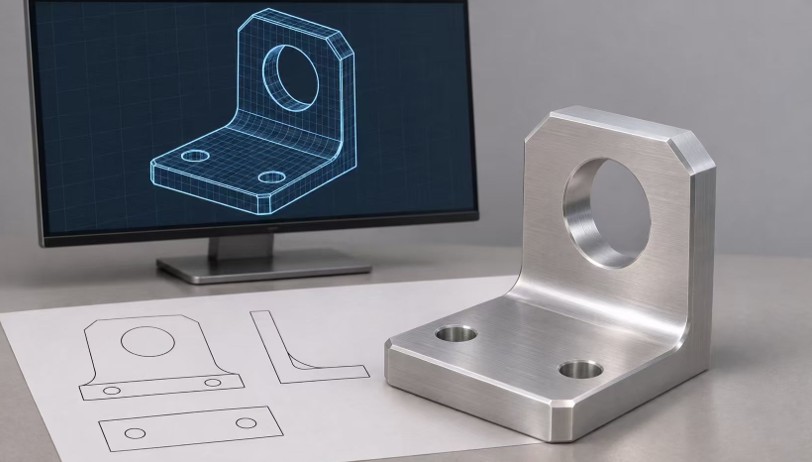
Consider a mounting plate that positions a replaceable assembly with locating pins. Overall dimensions can look correct while the hole pattern fails to locate the assembly consistently. The qualification should address the relationship between those holes and the relevant mounting surface.
Ask how the supplier will hold and locate the plate, inspect the functional features, and control operations that could introduce variation. Confirm which processes are subcontracted and how requirements reach those providers. Finishing, heat treatment, and final inspection should be represented in the proposed route when applicable.
The candidate need not duplicate every tool or machine used by the incumbent. The important question is whether its intended process can repeatedly satisfy the approved requirements, including any restrictions on process changes.
Use a Pilot Batch to Test Repeatability
A successful first sample establishes that one component met the checked requirements. It leaves questions about repeated loading, tool wear, and variation through the intended production sequence.
Agree on a pilot batch appropriate to the part’s risk and expected demand. Define the characteristics to inspect, the measurement methods, and the records needed before manufacturing starts. Avoid choosing an arbitrary sample quantity and assuming it proves capability for every feature.
Check the parts in their delivered condition. If a plate receives a coating, inspect the relevant final dimensions and test its assembly after that operation. Evaluate interchangeability with the mating components and use conditions the product actually requires.
Keep discrepancies visible. An accepted deviation should identify the affected parts and approval; a permanent design change should update the controlled documentation. Rework that helps a pilot pass must also be evaluated for its effect on future batches.
Establish the Comparison Method Before Judging Results
Conflicting inspection results can delay qualification even when both suppliers believe they followed the drawing. Different datum setups, measurement locations, or part temperatures can affect a close comparison.
Engineering and quality teams should agree on how critical features will be evaluated. Where necessary, align measurement procedures and account for measurement uncertainty. Use suitable calibrated equipment and investigate disagreements before treating them as proof of supplier performance.
Apply the same acceptance requirements to both sources. Comparing a detailed report from the candidate with an informal historical check at the incumbent may create a misleading impression of relative quality.
Record the approved source, part revision, process limitations, and qualification evidence in a form purchasing can retrieve. Approval should be tied to the conditions actually evaluated, not interpreted as unlimited permission to make every related component.
Turn Approval Into an Activation Plan
Qualification and availability are separate questions. A technically approved supplier may still require time to obtain material, schedule a machine, or prepare a fixture when an order arrives.
Agree on how the alternative source would respond to a shortage. Confirm who authorizes the order, how the current drawing revision is supplied, and which activities must be completed before shipment. Distinguish normal replenishment lead time from any proposed emergency arrangement.
Discuss capacity using a realistic demand scenario. A small trial order does not establish that the supplier can immediately absorb the primary source’s entire workload. Where surge support matters, ask what resources would be available and what commitment can actually be made.
Also settle access to reusable fixtures, inspection aids, and other necessary tooling. If any item would remain at the primary source, identify how the alternative process would operate without it.
Keep the Alternative Source Current
An approval can become less useful when drawings change or a supplier’s resources move. A dormant backup may retain an old model while the production design has advanced through several revisions.
Include the alternative source in relevant change notifications. Decide when a design, material, subcontractor, or process change requires renewed evaluation. Periodic production orders or readiness reviews can test whether the source remains usable; choose their frequency according to component risk and business needs.
Track performance that helps the next decision: accepted delivery, response to discrepancies, revision accuracy, and the time required to resume supply. Assign someone to act when readiness falls short.
A second source is most valuable when the buyer knows what has been approved and what would happen next. Clear specifications, a representative pilot, and a workable activation plan turn a supplier name into an operational option. That preparation gives the business a better chance of maintaining production without improvising its acceptance requirements during a shortage.
 Managing Commercial Transport and Vehicle Risk
 White House Representative Stephen Viña Warns of Rising China Cyber Threat
 Les Grands Chais de France (LGCF) future-proofs its international supply chain network with Körber
 SAP & NTT to Cooperate on Delivering Trusted Sovereign Cloud & SAP Business AI Capabilities
 Impact of New Technologies (AR/VR) on the Development of Online Gambling in Canada
 5 Things To Know About Heavy Equipment Transport