

We live in a time of ever-present convenience and instant gratification, which means we’ve become used to digital services working almost instantly.
Make a payment and you expect confirmation straight away; order something online and you expect the stock information to be accurate. The same is true when we stream content, track a delivery, or use an interactive entertainment platform.
The expectation of instancy has changed what businesses need from the technology behind those services.
Speed is a crucial element, but so is consistency, since platforms have to handle multiple systems working together and handle sudden increases in demand without making any of the behind-the-scenes complexity obvious to the person using them.
The Customer Experience Depends on What Happens Behind the Screen
Most users don’t think about APIs or cloud infrastructure when they open an app; they simply focus on whether it works or not. And when it doesn’t work, it can negatively impact both the user and the platform. For instance, a payment confirmation arriving late can make a user wonder whether a transaction went through and have them frantically following up with their bank to see if they were charged or not (an experience they’re likely to associate with that platform in future). Or an inventory system that hasn’t updated might allow a retailer to sell something that is no longer available, leading to a frustrated user. On an entertainment platform, even a short delay can interrupt an otherwise smooth session.
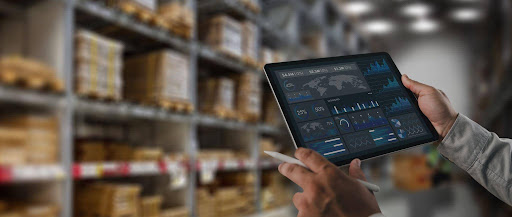
You can see the pressure particularly clearly in interactive entertainment, where delays are immediately obvious to the person using the service. A regulated Pennsylvania online casino, for instance, may need to handle account activity, payments and gameplay continuously while maintaining security and meeting regulatory requirements. Supply chain organizations face a similar challenge, whether that means updating inventory, reassigning warehouse tasks or feeding new transport information through to the people who need it.
When Yesterday’s Data Creates Today’s Problem
Batch processing is another area where hiccups can happen. Even though historical reporting and some financial reconciliation tasks don’t need to happen the instant new information arrives, it can be difficult when updated information is needed to make decisions in real-time. Consider a warehouse where stock records are several hours behind what is actually on the shelves; someone working from that data may make a perfectly reasonable decision based on an inaccurate picture, which can lead to a bad pick, an unnecessary replenishment order or a customer being promised stock that isn’t really there.
Transport operations face a similar issue, since location and telematics data are most useful when teams receive them soon enough to react. In cases like these, finding out about a disruption after the delivery window has already been missed doesn’t offer much operational value. This is why real-time capability increasingly matters less because it sounds fast and more because it gives people enough time to do something useful with the information.

More Connections Mean More Points of Failure
Modern digital platforms rarely operate as one self-contained system, with information moving between applications, cloud services, payment providers, devices and external partners. In supply chains, ERP, WMS and TMS platforms may all need to exchange information with warehouse equipment, vehicles or supplier systems.
Because existing technology may still perform important jobs and represent years of investment, replacing everything at once to add a new functionality simply isn’t realistic. Businesses will often add APIs, middleware and event-driven tools around what they already have, which is a more practical approach… though it does create more dependencies. If one integration slows down or stops passing information, the effect can travel through several parts of the operation before anyone spots the original issue.
This is where monitoring becomes more important. Knowing that a server is technically online isn’t enough if data is arriving late or an integration is failing; people need to be able to see whether information is flowing properly and where performance is starting to deteriorate.

Security Is Part of Keeping the Service Running
A digital service with customers using it around the clock has very little room for long recovery periods or invisible maintenance windows, and the same is true for warehouses, logistics networks and international operations that continue across shifts and time zones. Cloud infrastructure can provide extra capacity when demand increases, while edge computing allows some processing to happen closer to where data is generated. That can be particularly useful in factories, vehicles and remote facilities where connectivity isn’t always guaranteed. Neither approach removes the possibility of failure, though, which raises certain questions. Can another part of the system take over? Can teams identify the affected service quickly? Does a local operation continue if its connection to a central platform disappears for a few minutes? The answers will say far more about how dependable a service really is than an uptime figure viewed on its own.
More connected systems also mean more places that need to be protected. APIs, user accounts, devices and third-party integrations can all create vulnerabilities when identity controls, monitoring or patching fall behind, especially now that cybersecurity and service continuity are becoming harder to separate. A platform isn’t particularly dependable if it performs well under normal conditions but will become unavailable the moment one component is compromised.
Observability can help here too. Unusual traffic, repeated authentication failures or unexpected changes in device behavior can provide an early sign that something isn’t right, giving teams a chance to respond before the problem develops into a wider outage.
There’s an additional benefit for regulated or traceability-heavy industries. Detailed system records can support audit trails and incident investigations, making it easier to understand what happened, when it happened and which parts of the operation were affected.
Not Everything Has to Be Instant
There’s also a risk of taking the real-time idea too far. Building every process for the lowest possible latency can add cost and complexity without producing much operational benefit. After all, a warehouse manager doesn’t need every metric refreshed hundreds of times per second; they just need the relevant information soon enough for whatever decision they’re making.
The most sensible starting point for deciding when real-time information is necessary is usually the problem itself. Where does delayed information actually create risk? For one business, the priority may be reducing downtime. For another, it could be quicker exception handling or a more accurate view of inventory. The technology should follow that operational need rather than becoming the objective in its own right.
When Reliability Becomes Part of the Product
People using a digital service aren’t going to think about event processing, integrations or infrastructure. They’ll notice when a payment hangs, an order status is wrong or a platform suddenly stops responding. And as expectations continue to rise, that makes dependable performance part of the product itself. A service that works consistently will seem reliable, while one that repeatedly fails will become frustrating (and even lose customers) very quickly.
That is ultimately what makes real-time technology valuable: making sure the service works as expected when someone needs it.
 Retail sales sees 0.8% boost as consumers look to avoid worst of supply chain disruption & rising inflation
 Freight Brokers Need More Than Just Automation; They Need Optionality
 Arctera Advances Cyber Resilience by Integrating Identity Protection with Backup Exec
 Cryptocurrency and Digital Wallets: Navigating the Future of Payments
 Ephesoft to enhance loan processing in New Zealand for Toyota Finance New Zealand
 Experts in Their Fields: Ardex Automates Material Flow and Logistics with inconso and SAP EWM