

SEO teams love their dashboards.
The problem is that most of those dashboards are showing yesterday’s reality, or worse, last week’s.
Search results change constantly, with new pages entering the top 10, featured snippets getting swapped out, People Also Ask boxes shuffling, and AI Overviews pushing organic listings further down.
When your ranking data lags behind those shifts, every decision built on top of it carries hidden risk.
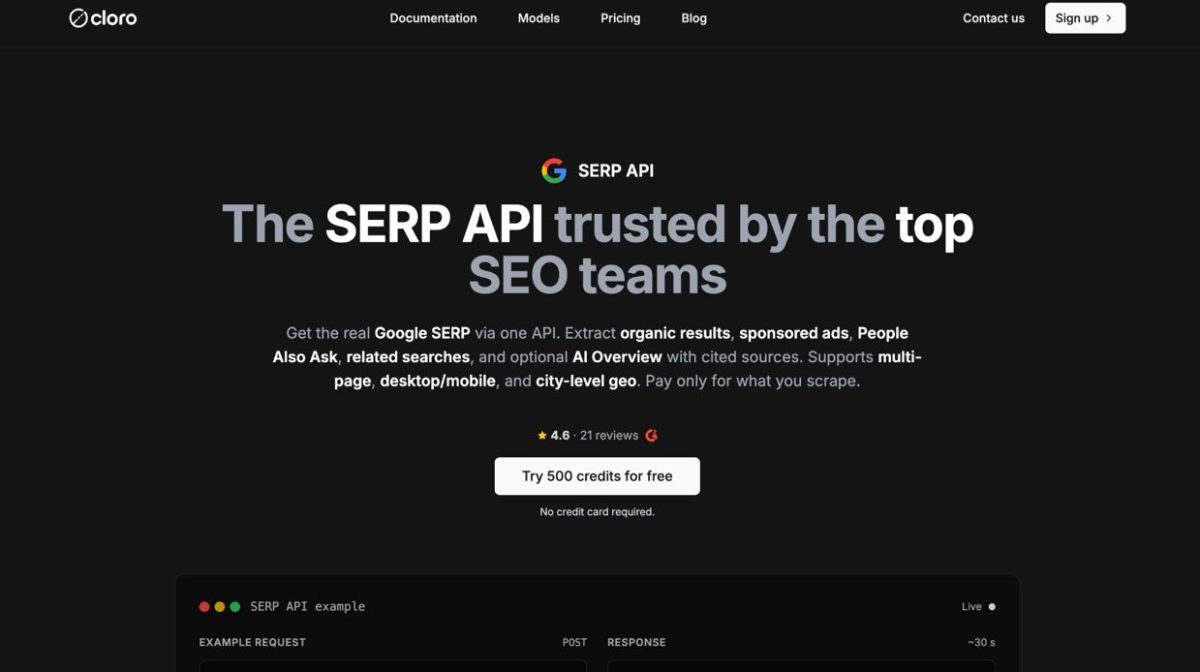
Most modern SEO platforms now rely on a SERP API for real-time search data to close that gap, since pulling live results at the moment a query matters is the only realistic way to keep pace with how often Google reshapes its results.
Why the Lag Matters More Than It Looks
The lag isn’t always obvious.
A weekly rank tracker might tell you that you’re sitting at position 4 for a money keyword.
By the time you log in on Monday, a competitor could have published a fresh guide, picked up a couple of links, and pushed you to position 7.
Google might have also started showing a video carousel that knocks the entire top 10 below the fold.
None of that nuance shows up in stale data.
Local Search Breaks Single-Snapshot Tracking
Local search makes the gap even sharper.
SERPs vary by city, by device, by language, and by the searcher’s history.
A keyword that ranks #2 in Manhattan can sit at #11 in Brooklyn for the same query.
If your tracker pulls a single snapshot from one location once a day, you’re flying blind in every other market you operate in.
Multi-location coverage isn’t a nice-to-have for any business with a physical footprint or a regional focus.
It’s the difference between knowing what your customers see and guessing at it.
Competitor Monitoring Turns Into Guesswork
Competitor monitoring suffers the most from outdated data.
When you’re trying to figure out why a rival is suddenly outranking you, the answer usually lives in what their page looked like, how it was linked, and which SERP features they captured at the moment Google’s algorithm noticed the change.
Reconstruct that from a dataset that’s 48 hours old, and you’re guessing.
Most “competitive analysis” reports end up being archaeology instead of intelligence.
The teams that catch competitor moves early are the ones running fresh pulls on the keywords that actually drive revenue, not the ones reading aggregate weekly trends.
SERP Features Don’t Wait for Your Next Crawl
There’s also the issue of SERP feature volatility.
Google tests layouts constantly, sometimes within the same hour for the same query.
A featured snippet you owned on Tuesday can vanish on Wednesday, replaced by an AI Overview that cites three other domains.
If you don’t catch that shift within hours, you’ve already lost traffic without knowing why.
Stale data turns those moments into mysteries instead of fixable problems.
By the time the change shows up in your next scheduled report, the page has already bled clicks for days.
The Data Collection Layer Matters More Than the Dashboard
This is where the data collection layer matters more than the dashboard layer.
Tools that rely on cached results or shared crawl pools are cheap to run, but they trade freshness for cost.
Pulling live results at the moment a query matters, with device, location, and language all accounted for, takes infrastructure most teams don’t want to build in-house.
Providers like cloro.dev handle the proxy rotation, CAPTCHA solving, parsing, and geo-targeting that make live scraping reliable at scale.
That stack is unglamorous work, and it’s also the part that breaks first when you try to roll your own scraper for any serious volume.
Patterns That Separate Useful Data From Noise
A few patterns separate teams that benefit from live SERP data from teams that just collect more of it.
- Trigger-based pulls instead of fixed schedules, so you re-check a keyword when traffic drops or a competitor publishes something new, not just at 3 AM every night.
- Multi-location sampling for any keyword with local intent, since three to five geo points beat one national snapshot every time.
- Full SERP capture, including ads, snippets, PAA, AI Overviews, and image packs, not just the ten blue links.
- Historical diffing so you can see what changed between two pulls, not just what’s there now.
Each of those moves the work from “we have data” toward “we have answers.”
The Compounding Cost of Working From Old Data
The cost of skipping this is rarely a single bad decision.
It’s the compounding effect of small misreads across a quarter.
A content brief gets written for a SERP that no longer exists.
A backlink campaign is aimed at a competitor who’s already lost their ranking.
A client report misses the real reason traffic dipped, and the next month’s strategy gets built on that wrong conclusion.
Every one of those is fixable in isolation.
Stacked together, they’re the difference between an SEO program that compounds and one that runs in place.
Real-Time Is the New Baseline
Real-time SERP data isn’t a luxury for enterprise SEO anymore.
It’s the baseline.
Competitors are moving faster, Google ships algorithm changes weekly, and the gap between what your tracker says and what users actually see only gets wider as more SERP real estate goes to dynamic features.
Teams that close that gap stop reacting to last week’s rankings and start acting on what’s happening right now.
The ones that don’t keep filing reports that look right on paper and quietly miss the moves that actually mattered.
 Container shortage leading to more supply chain headaches
 Top 5 IT Supply Chain Trends in 2024
 How Invoice Templates Drive Supply Chain Automation
 Infor Introduces Control Center to Make Data-Driven Supply Chain a Reality
 Aryaka Acquires Cloud-Based SASE Platform Secucloud GmbH
 Streamline Shipping Group marks delivery milestone with one millionth shipment