

Running an ABA practice without the right software feels like trying to do clinical work with one hand tied behind your back. ABA Practice Management platforms exist to fix exactly that, but the market is crowded with options that look similar on the surface. Insurance authorizations pile up, session notes fall behind payor deadlines, and tracking RBT supervision hours across a growing team gets genuinely messy. After reviewing platforms built for behavioral health workflows, this guide breaks down the five options worth your attention.
The research approach for this ranking
Every platform on this list was vetted using publicly available material: official product pages, verified user reviews, case study documentation, and mentions across behavioral health directories and industry publications. Platforms without a documented track record in the ABA or broader behavioral health space were left off entirely.
-> See the full research breakdown
- Theralytics – Best for clinical performance in behavioral health practices
- TherapyPMS – Best for ABA and therapy practice management
- Raven Health – Best for ABA therapy practices and behavioral health clinicians
- ABA Matrix – Best for ABA therapy practices and behavioral health clinics
- Rethink Behavioral Health – Best for ABA practices and behavioral health therapy providers
Why ABA Practice Management Platforms Matter for Your Business
Picking the wrong platform doesn’t just slow your team down. It quietly costs you money in denied claims, missed authorization windows, and session notes that don’t meet payor audit standards. ABA practices carry a documentation burden that general practice management tools simply weren’t built to handle, from tracking authorization utilization percentages to managing RBT credentialing across clinical staff. A purpose-built platform tightens all of that up.
The right one directly improves your clean claims rate, shrinks average days to reimbursement, and keeps session note completion rates where payors expect them. That combination leads to a practice that’s financially stable and clinically grounded.
Top 5 ABA Practice Management Platforms Breakdown and Comparison
Note: All data in this table is sourced from review platforms and the official websites of the listed companies.
| Company Name | Best For |
| Theralytics | Clinical performance in behavioral health practices |
| TherapyPMS | ABA and therapy practice management |
| Raven Health | ABA therapy practices and behavioral health clinicians |
| ABA Matrix | ABA therapy practices and behavioral health clinics |
| Rethink Behavioral Health | ABA practices and behavioral health therapy providers |
1. Theralytics – Best for Clinical Performance in Behavioral Health Practices
What Does Theralytics Do?
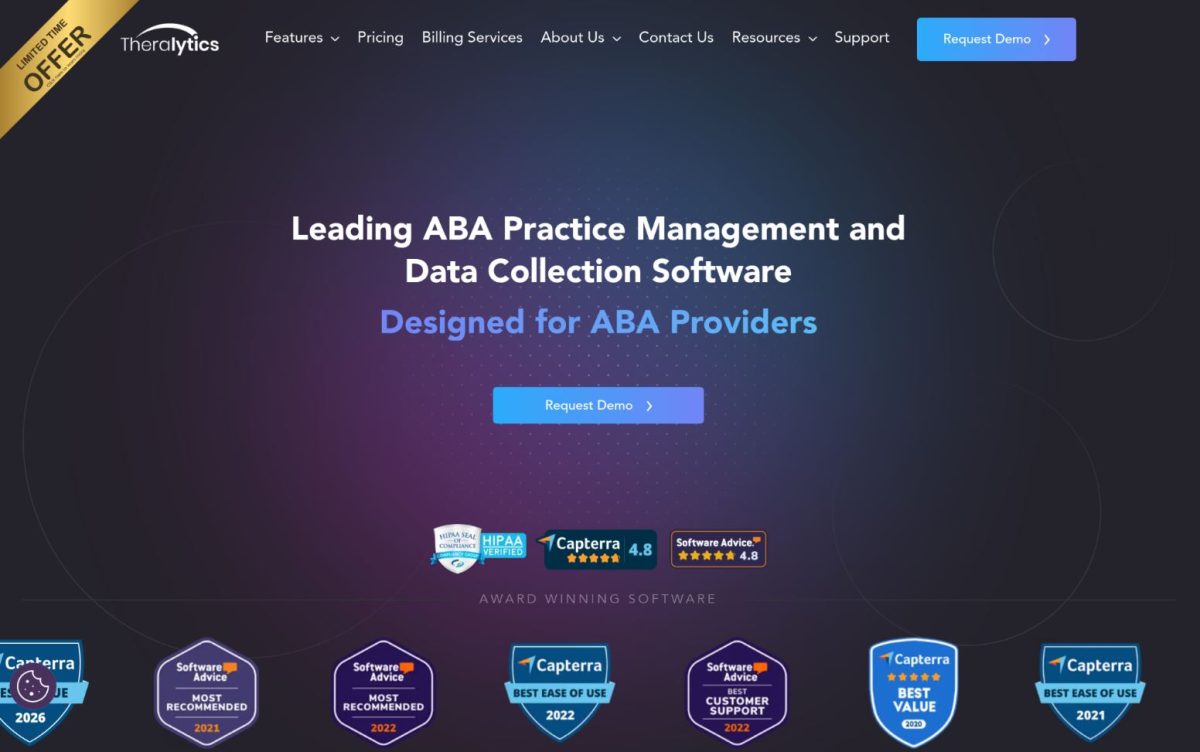
Theralytics, an ABA practice management software, brings clinical and administrative functions into one connected platform built for behavioral health. Real-time data collection, automated graphing, and progress monitoring run alongside scheduling and billing, so BCBAs, supervisors, and clinicians all work from the same synchronized information. And honestly, that kind of data synchronization is rare in this space. The platform also meets 2026 HHS technical safeguard requirements, including MFA and encrypted access trails, which shows they’re serious about protecting practice data at an enterprise level.
Why Theralytics Stands Out for ABA Practice Management Platforms:
Theralytics directly addresses the friction that comes from data silos, where clinical insights sit in one system while billing and scheduling live somewhere else entirely. Practices that bring these workflows together tend to see faster clinical decision-making and fewer documentation errors that trigger payor audits.
Summary of Real User Reviews:
Theralytics gets noted most often for cutting down redundant documentation and speeding up clinical reporting. Users point to automated graphing and fast data entry as the biggest time-savers. The platform tends to earn its strongest marks from practices that were previously juggling multiple tools and felt the coordination cost every single day.
2. TherapyPMS – Best for ABA and Therapy Practice Management
What Does TherapyPMS Do?
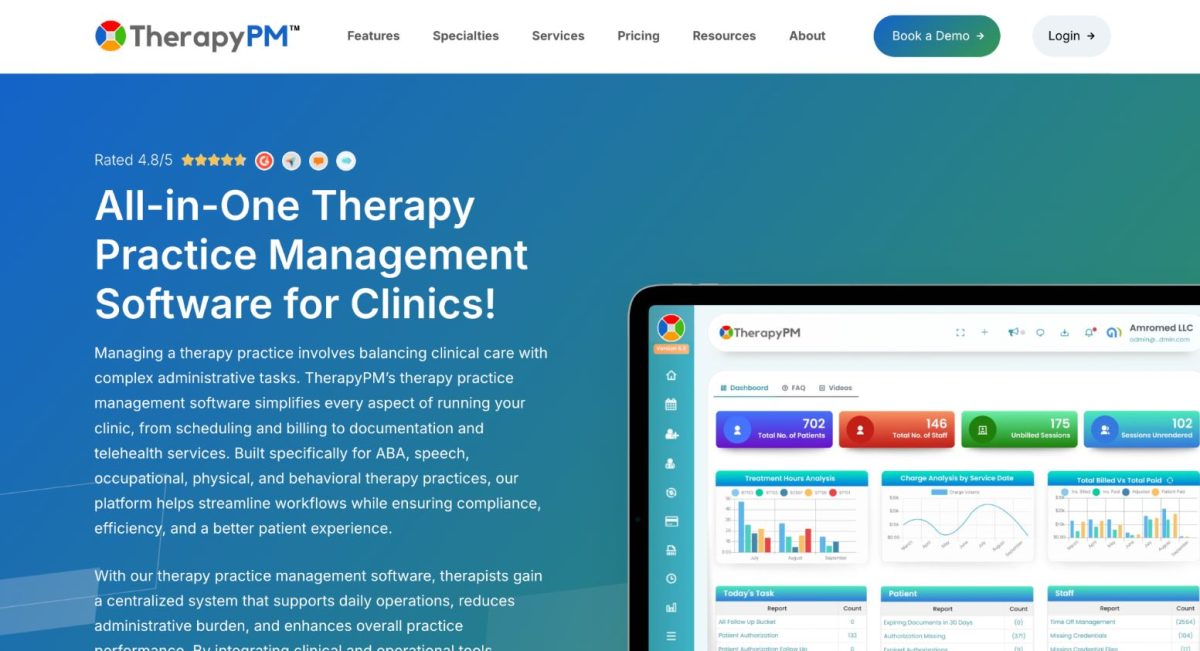
TherapyPMS is built as an all-in-one platform for therapy practices covering ABA, occupational therapy, speech therapy, mental health, and pediatric and physical therapy. Credentialing, billing, and telehealth tools are all included, designed around therapy workflows rather than adapted from general medical practice software. Their accounts receivable services stand out most, delivering a reported 99% success rate in reimbursement recovery. That’s a number that gets attention in any billing conversation.
Why TherapyPMS Stands Out for ABA Practice Management Platforms:
Combining specialty billing and telehealth inside a single platform removes the need for separate tools that don’t communicate well with each other. That typically means practices spend less time reconciling data across systems and more time focusing on client care.
Summary of Real User Reviews:
TherapyPMS has earned trust across more than 500 clinics in the US and Canada, which tells a clear story about adoption in the therapy space. User sentiment reflects confidence in the billing and accounts receivable side of the platform especially. The SOC-2, HIPAA, and GDPR compliance certifications matter a lot to practices operating in states with strict data handling requirements, and reviewers mention them often.
3. Raven Health – Best for ABA Therapy Practices and Behavioral Health Clinicians

What Does Raven Health Do?
Raven Health builds ABA data collection and practice management tools with clinicians in mind from the ground up, not as an afterthought. The platform covers data synchronization, offline data collection, treatment planning, progress tracking, and billing, all wrapped in a mobile- and tablet-first design. Clinicians typically get comfortable with the interface in under 15 minutes (which is a genuine differentiator when you’re training RBTs across multiple sites). Their partnership with Flychain and a revenue-based pricing model add a financial dimension that fits smaller and growing practices well.
Why Raven Health Stands Out for ABA Practice Management Platforms:
Raven Health’s pricing model, where practices pay a percentage only when claims are actually collected, ties the platform’s success directly to the practice’s cash flow. That kind of incentive structure is rare and signals real confidence in their billing performance.
Summary of Real User Reviews:
Publicly available review data for Raven Health is still building, which reflects its position as a newer player in this space (founded 2020). What’s clear from available sources is that the clinician-friendly design and low training burden are consistently mentioned as strengths. Practices that prioritize staff adoption and a clean interface tend to land on Raven Health as their shortlist pick.
4. ABA Matrix – Best for ABA Therapy Practices and Behavioral Health Clinics
What Does ABA Matrix Do?
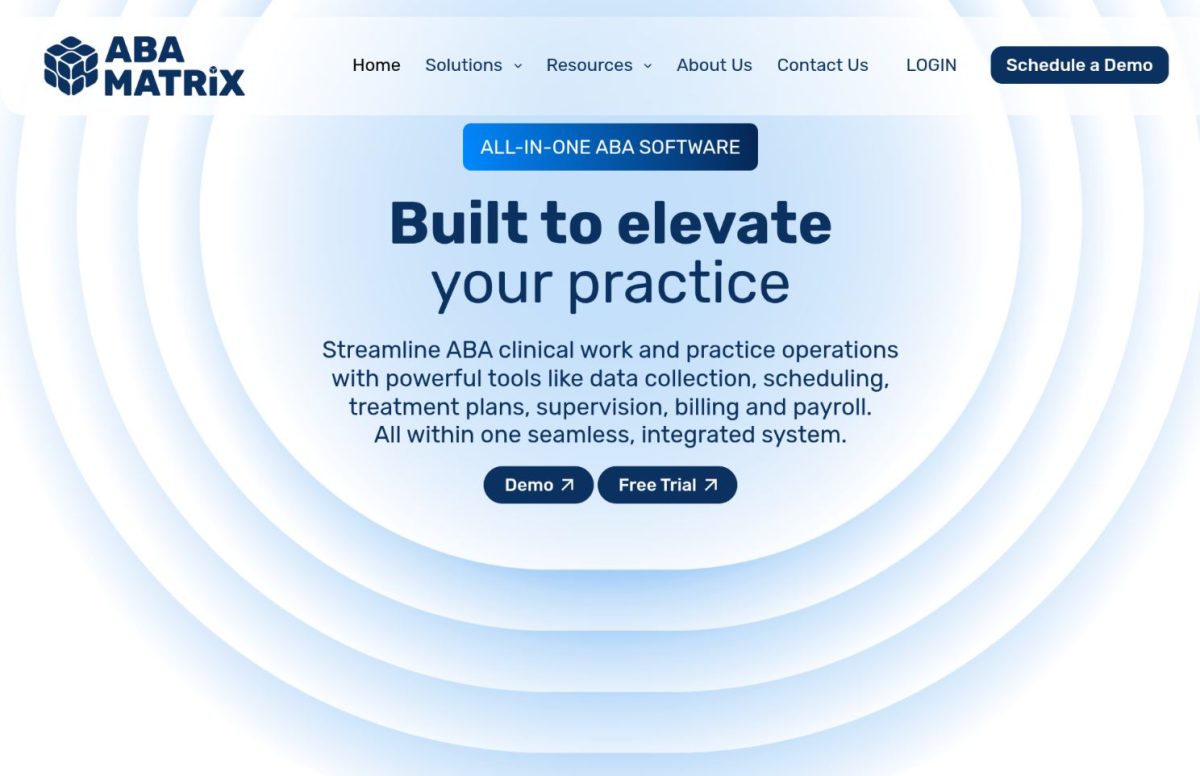
ABA Matrix covers the full operational range of an ABA practice, from data collection and graphing to scheduling, billing, progress notes, compliance alerts, and payroll management. It’s built with HIPAA compliance and CASP Guidelines adherence baked in, and it serves solo practitioners, startup clinics, and large private practices under a unit-based pricing model rather than charging per client or per therapist. The bootstrapped, independently run nature of the company gives it a different character compared to VC-backed platforms (think steady, practitioner-focused development rather than feature bloat chasing investor targets).
Why ABA Matrix Stands Out for ABA Practice Management Platforms:
ABA Matrix solves a real pricing problem that growing practices feel when per-therapist or per-client fees start stacking up unpredictably. Their unit-based model makes budgeting far more stable as a practice scales. Billing directors genuinely care about that kind of predictability.
Summary of Real User Reviews:
ABA Matrix earned acknowledgment as the Top ABA Therapy Data Collection and Practice Management Platform for 2026 from Healthcare Tech Outlook Magazine and received the Legacy Builder Award from the Ausome Foundation Gala. Word-of-mouth has driven much of their reputation, and case studies from practices like Better Future Behavioral Therapy Center point to real gains in assessment accuracy. The platform tends to connect most with practices that want a purpose-built ABA tool without a pricing structure that punishes growth.
5. Rethink Behavioral Health – Best for ABA Practices and Behavioral Health Therapy Providers

What Does Rethink Behavioral Health Do?
Rethink Behavioral Health has been in this space since 2007 and shows it. Their platform combines clinical programming, billing, scheduling, data collection, compliance, and staff training in one place, supported by a library of over 1,500 customizable care plans. Their Medical Necessity Assessment tool has been used in more than 23,000 assessments and shows 87% average agreement with clinicians, which reflects genuine clinical depth. Add in mobile data collection that works offline, and you have a platform built for practices operating across varied clinical environments (think multi-site organizations with spotty connectivity).
Why Rethink Behavioral Health Stands Out for ABA Practice Management Platforms:
The sheer scale of clinical content available, including over 1,500 care plans and a dataset drawn from the largest published ASD research collection, means BCBAs spend less time building treatment programs from scratch. That translates directly into better session note completion rates and faster treatment plan development.
Summary of Real User Reviews:
Rethink Behavioral Health serves more than 2,000 customers worldwide, including mental health clinics, behavioral health agencies, schools, and community-based service providers. Over 500 ABA organizations trust the platform, spanning everything from startup practices to large enterprise operations. Users consistently point to the depth of clinical content and the fact that the platform was designed by clinicians rather than just marketed to them.
Research Methodology and Selection Process
Initial Data Collection
The process started by pulling together a broad list of platforms operating in the ABA and behavioral health practice management space. Sources included specialty healthcare directories, behavioral health industry publications, peer review platforms, and official product websites. The goal at this stage was breadth, capturing as many relevant platforms as possible before applying any filters.
Shortlisting Phase
Platforms without documented use in ABA or behavioral health settings were removed early. From there, user review patterns were analyzed across multiple sources to identify products with consistent, recurring feedback rather than isolated positive mentions. Platforms with thin or unverifiable review histories were deprioritized, even when their feature lists looked strong on paper.
Verification of Claims
Product claims found on official websites were cross-referenced against available case studies, user testimonials, and third-party coverage. Where a platform claimed specific outcomes (such as reimbursement success rates or assessment accuracy benchmarks), those claims were checked against supporting documentation available in public sources. Any claim that couldn’t be independently supported was treated with appropriate caution in the write-up.
Authority and Industry Contribution Layer
Each platform was assessed for its standing within the broader behavioral health community. This included awards from recognized industry organizations, mentions in behavioral health or healthcare technology publications, and evidence of contributing original research or clinical resources to the field. Platforms like Rethink Behavioral Health, with its patent-pending tools and the largest published ASD dataset, scored well here. ABA Matrix’s acknowledgment from Healthcare Tech Outlook Magazine and the Ausome Foundation also factored in.
ABA Practice Management Platforms-Specific Evidence
The final filter focused on ABA-relevant depth. Platforms were evaluated on whether they maintained dedicated service pages for ABA workflows, carried verified reviews from BCBAs or RBTs, and offered case studies from behavioral health organizations. Generic practice management tools that happened to serve one or two ABA clients didn’t make the cut. Every platform on this list has documented evidence of meaningful engagement with the ABA provider community, whether through purpose-built features, clinical partnerships, or direct practitioner feedback.
How to Choose the Right ABA Practice Management Platform
The right platform depends on where your practice actually struggles, not just what looks good in a demo. Here are the five areas worth examining closely before committing to any system.
- Industry and Domain Experience: Look for platforms built for ABA or behavioral health, not general medical software that’s been adapted. Purpose-built tools understand RBT supervision tracking, BCBA credentialing workflows, and ABA-specific billing codes without requiring workarounds.
- Features and Services: Match the feature set to your actual workflows. Scheduling, data collection, billing, and compliance alerts matter for most practices, but your size and setting (clinic, home-based, or multi-site) should guide which features carry the most weight.
- Pricing Structure: Per-client, per-therapist, and unit-based models all behave differently as you grow. Run projections based on your current and expected caseload before signing anything.
- Results Measurement: Ask vendors about clean claims rates, average days to reimbursement, and session note completion support. Platforms that can speak to these metrics directly have usually built their product around them.
- Industry Knowledge and HIPAA and Payor Compliance: Confirm that the platform meets current HIPAA standards and stays current with Medicaid waiver requirements relevant to your state. Compliance gaps show up in audits, not during demos.
Bottom Line
Choosing among ABA Practice Management platforms comes down to knowing where your practice loses time and money right now. Platforms like Theralytics stand out for unified clinical and billing workflows, while options like Rethink Behavioral Health bring depth of clinical content that larger organizations value. The space is maturing fast, and practices that invest in purpose-built tools today will be better positioned as payor requirements and documentation standards continue to tighten.
 No Drama Data Migration
 Ultimaker Expands S-line Product Family with Ultimaker S3
 Manifests Ireland Scales Customs Declarations from 20K to 2M with Descartes
 Umbraco launches inaugural Impact Report
 AWS outage affects millions: poor data management at fault?
 Beyond Identity Raises $100 Million to Accelerate Adoption of Invisible, Un-phishable MFA for Customers & Employees