

QR payments are popular because they solve a simple problem: many merchants need a low-friction way to accept digital payment without adding much hardware.
Technology is not magic. It still depends on banks, wallets, payment processors, networks, and local regulation. But the QR code itself provides a flexible bridge between the physical point of sale and the digital payment flow.
Static QR Codes for Simple Payments
The simplest model is a static QR code that points to a merchant account or payment address. The merchant prints the code and displays it near the till, on a table, or on an invoice. The customer scans, enters the amount, and pays.
This works best in low-risk environments where transaction values are modest and the merchant can confirm payment before handing over goods. It is inexpensive to set up and easy to understand.
The limitation is manual entry. Customers can type the wrong amount, and staff may need to check each payment notification carefully. For some businesses, that is acceptable. For others, it creates too much room for error.
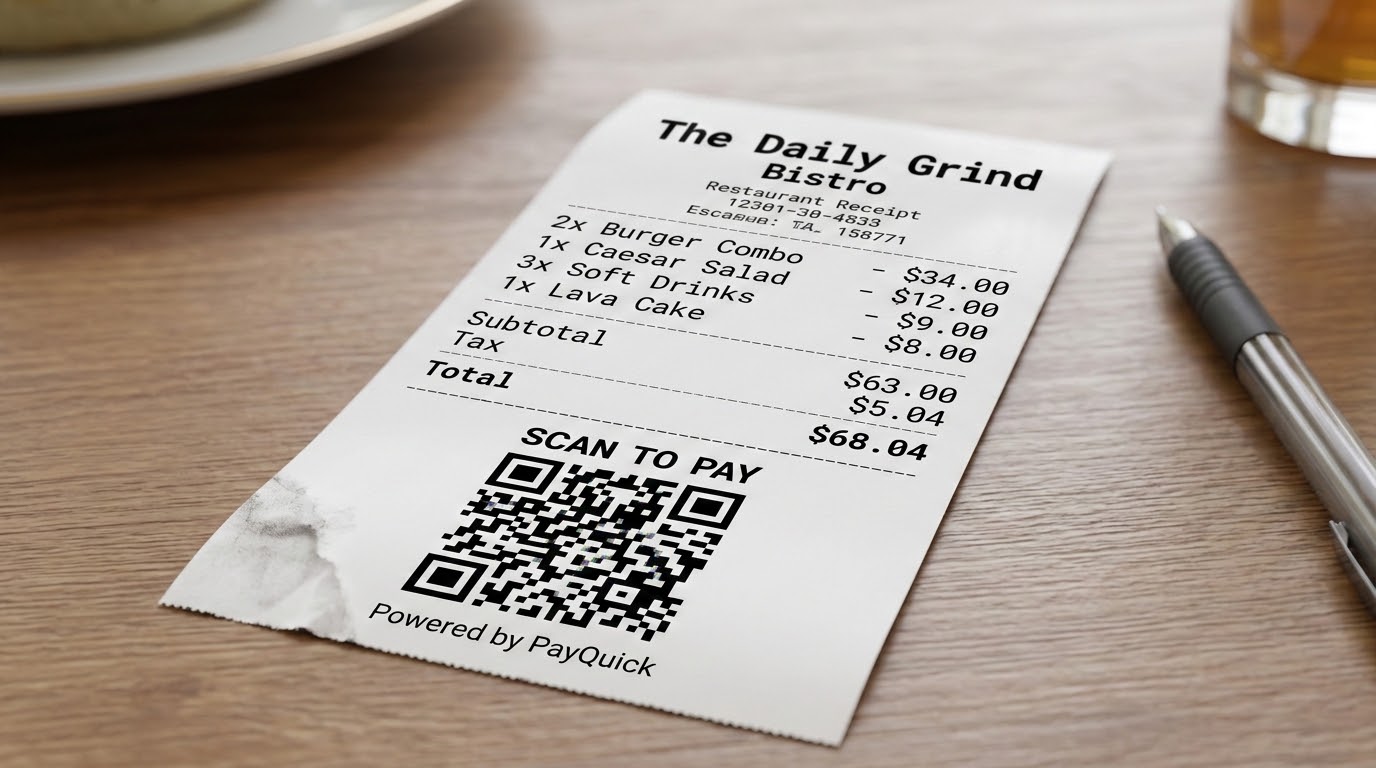
Dynamic QR Codes for Each Transaction
Dynamic QR payment flows create a fresh code for each transaction. The amount, merchant reference, order number, or checkout session can be included automatically. The customer scans and confirms rather than typing details manually.
This reduces mistakes and improves reconciliation. A cafe can match a payment to a specific order. A clinic can match a payment to an invoice. A retailer can connect the transaction to its point-of-sale system.
Dynamic codes are more complex than static signs, but they are often a better fit when transaction volume grows or when accurate records matter.
Invoices, Receipts, and Remote Payment
QR codes are also useful away from the counter. An invoice can include a payment code that opens the exact amount due. A delivery note can include a balance link. A printed quote can include a deposit payment option.
This makes payment easier for customers who are reading a document on paper but paying digitally. It can also reduce the back-and-forth of bank details, reference numbers, and manual confirmation.
After payment, a QR code can link to a digital receipt, warranty information, loyalty registration, or account portal. That turns the payment moment into a cleaner post-purchase experience.

Loyalty and Offers at Checkout
Payment is not the only action that can sit behind a code. A merchant can use QR codes to connect payment, receipts, loyalty, and feedback.
A restaurant might show a code after payment that lets the customer join a loyalty program. A charity might use a donation code that also offers Gift Aid or tax receipt details where applicable. A retailer might use receipt codes for returns, support, or repeat-order discounts.
These flows work best when they are optional and short. Customers are willing to scan when the benefit is immediate. They are less willing to complete a long registration form after paying.
Security Needs to Be Visible
QR payment fraud is possible, especially when printed codes are left unattended in public places. A fraudulent sticker placed over a legitimate code can redirect payments or steal information.
Merchants should place payment codes where staff can see them, check printed codes regularly, avoid damaged or loose signage, and make the destination recognizable to customers. For higher-value payments, dynamic codes shown on a trusted screen are safer than permanent public stickers.
Customers also need cues. The payment page should show the correct merchant name, amount, and secure connection before they confirm.
Businesses creating payment-related codes should use dependable tools and test every destination carefully. For non-integrated use cases such as invoice links, donation pages, wallet links, or receipt destinations, QRStuff QR code generator can help generate scannable codes that connect offline materials to online payment flows.
Where QR Payments Fit Best
QR payments are strongest when they reduce hardware needs, shorten queues, simplify invoices, or serve customers who already prefer wallet-based payment. They are less suitable when the customer base expects only cards or cash, when connectivity is unreliable, or when the payment flow adds more steps than it removes.
The best approach is usually additive. Keep the existing payment options customers rely on, then add QR-based flows where they make the experience faster or easier.
QR codes became important in payments because they are cheap, familiar, and flexible. They do not replace the financial infrastructure behind a transaction. They make that infrastructure easier to reach from the real world.
 How On-Demand Access Prevents Misuse of Admin Rights
 GTT Partners with Palo Alto Networks to power its SASE Platform
 Treasury Minister Visits Sage to See Technology’s Impact on SMB Growth & Digital Transformation
 Will Trump’s Move To Pull Out of UPU Lead To New Post War Period?
 LzLabs forms Alliance with KPMG to smooth UK organizations’ mainframe journey to the cloud
 Should Supply Chains Adopt Stablecoins to Ease the Burden of Traditional Banking?