

Patient acquisition is one of the biggest problems hospitals and healthcare organizations face. Now, patients expect more efficient insurance policies, individualized treatment plans, clear billing, and quicker services. It takes more than just clinical expertise to meet these demands; it also involves the smart use of data.
That’s where healthcare analytics comes into play. Healthcare analytics refers to the systems and procedures used to gather, arrange, and analyze data from operational and clinical sources. This incorporates information from billing systems, medical devices, electronic health records (EHRs), and patient management platforms.
Below are the top 7 ways healthcare analytics is transforming patient acquisition and helping healthcare organizations grow sustainably.
How Do Healthcare Settings Use Data Analytics?
Every facet of patient care and operational management in the healthcare industry can benefit from data analytics. The analyses examine ways to improve clinical care delivery, enhance illness prevention, and assess the efficacy of different treatment strategies.
Key applications of data analytics in healthcare consist of:
- Maintaining patient records to deliver personalized treatment.
- Providing precise diagnoses and treatment recommendations to physicians.
- Identifying which patients are at risk of illness or hospital readmission.
- Minimizing wait times, controlling employee schedules, and making the best use of available resources.
- Monitoring patient outcomes and ensuring healthcare requirements are fulfilled.
The healthcare analytics market is expected to expand at a compound annual growth rate (CAGR) of 15.3% to $96.90 billion by 2030. This growth is a sign of growing understanding of the importance of data in changing the way healthcare is provided.
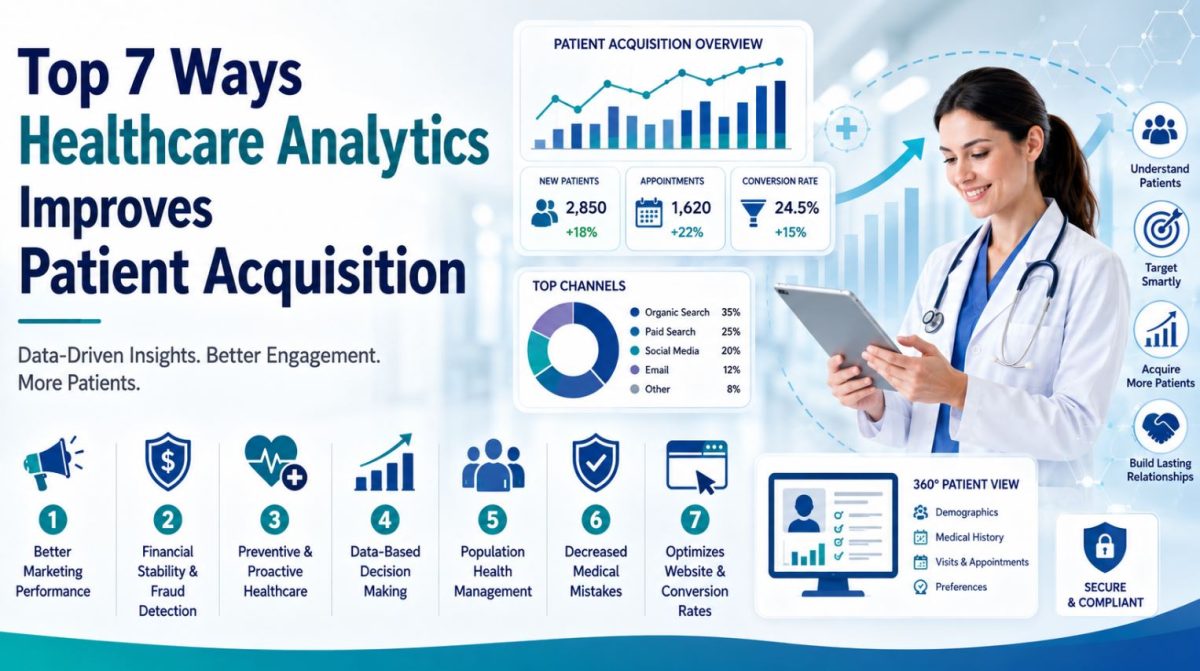
7 Ways How Healthcare Analytics Improves Patient Acquisition
Below are seven of the most impactful ways healthcare analytics is transforming patient acquisition strategies today.
1. Improves Digital Marketing Performance
Digital platforms like social media, email campaigns, search engines, and paid advertising play a major role in modern patient acquisition. Healthcare analytics analyzes the efficacy of each channel by monitoring important performance metrics such as website traffic, click-through rates, appointment reservations, and return on investment (ROI).
By analyzing these metrics, healthcare marketers can identify which efforts provide leads and which need to be optimized. Many healthcare providers also use advanced analytics platforms such as LightTrail to get a deeper understanding of marketing performance, patient engagement, and conversion patterns across various digital channels to confidently improve their acquisition efforts.
2. Financial Stability and Fraud Detection
Healthcare fraud affects patients by raising insurance rates and increasing operating costs. Analytics systems and algorithms identify questionable provider conduct, duplicate claims, and odd billing trends. Early detection of fraudulent behavior preserves system integrity and safeguards financial resources.
Insurance companies can reduce losses and keep policyholder premiums stable. This helps create a sustainable and equitable healthcare environment. In the end, patients gain from a safe and fraud-resistant system since it guarantees affordability and trust.
3. Preventive and Proactive Healthcare
Healthcare professionals can identify which people are most likely to develop chronic diseases by looking at lifestyle patterns, risk factors, and past medical data. This makes it possible to implement early treatments like tests, lifestyle advice, and customized health plans.
Also, insurance companies can create wellness incentives that promote better lifestyles by using insurance data analytics in preventative health initiatives. This proactive strategy improves patient confidence and builds up the healthcare system as a whole.
4. Data-Based Decision-Making
Healthcare analytics is necessary to support decision-making. By combining patient data, medical research, and evidence-based guidelines, healthcare providers may acquire real-time insights to make accurate treatment decisions.
Furthermore, clinical decision support systems use healthcare analytics to provide personalized suggestions, notify medical professionals of possible side effects, and enhance patient outcomes.
5. Population Health Management
Population health analytics looks at data from various patient groups to identify which patient populations are at risk and require proactive care. Also, it tracks the prevalence and management of chronic illnesses and monitors health outcomes for different communities. Then, targets specific populations with preventive interventions.
For example, a community health center can use population analytics to pinpoint communities with high rates of uncontrolled hypertension and send mobile health units there to improve blood pressure control rates within a month.
6. Decreased Medical Mistakes
Healthcare analytics tools can help prevent adverse events before they occur by analyzing clinical decision-making to identify medication-related risks. These tools can detect possible errors or hazards in medication ordering, administration, and clinical decision-making.
A hospital can implement an analytics-based medication management system that compares prescriptions to patient characteristics, concomitant drugs, and best practices. This approach could drastically lower adverse medication occurrences.
7. Optimizes Website and Patient Conversion Rates
Healthcare analytics helps identify how users interact with the website, including which pages they visit, where they spend the most time, and where they leave without taking action.
Healthcare organizations can use this information to optimize their websites for higher conversion rates by improving page load speed, making appointment booking forms simpler, and creating informative service pages. Additionally, analytics can show which content gets the best quality visitors, enabling clinicians to create more instructional materials to increase trust.
Best Practices for Implementing Healthcare Analytics
Healthcare organizations should follow best practices to get the advantages of healthcare analytics for patient acquisition. Some of them are:
- Create a single patient view by integrating data from multiple sources.
- Verify compliance with data security guidelines and healthcare privacy laws.
- Track patient engagement data and marketing performance regularly.
- Invest in real-time reporting analytics tools.
- Teach employees how to analyze analytics and make decisions based on data.
- Use measurable insights to test and improve patient acquisition initiatives.
By combining technology and strategic planning, healthcare organizations can develop long-term patient acquisition initiatives that yield quantifiable outcomes.
Conclusion
By using healthcare analytics, organizations can solve the problem of patient acquisition. Healthcare analytics can help them get real-time insights into marketing performance, patient experience, and the needs of their target audience. As competition increases, healthcare organizations that use analytics will be better positioned to understand patient demands, provide individualized experiences, and create long-term relationships.
 Managing Financial Risk in Long‑Cycle Business Disputes
 10 Latest Digital Marketing Strategies for Construction Material Suppliers
 Advanced Services: The Business Case for Sustainable Productivity
 Warehouse Efficiency: Proven Strategies for Ecommerce Success
 Daron Group Launches Infor Solution to Help Harmonize Operations in Africa
 Salumanus unveils whitepaper on green data centres