
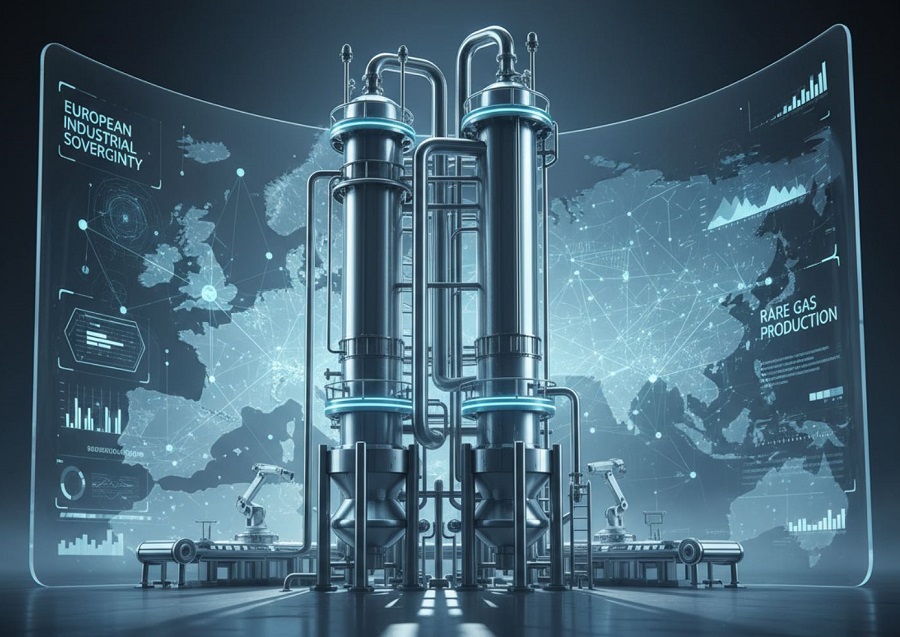
The future of Europe’s advanced manufacturing sector depends not only on production capacity but also on secure access to critical raw materials. Among these resources, rare gases occupy a particularly important position, supporting industries such as semiconductor manufacturing, electronics, scientific research, and high-precision industrial processes.
As European policymakers and industrial stakeholders place greater emphasis on technological sovereignty, the development of regional rare gas production capabilities has become a strategic priority. Reliable domestic supply helps reduce dependence on external markets while providing manufacturers with greater confidence in long-term production planning.
Companies specializing in cryogenic engineering and industrial gas technologies are playing an increasingly important role in this transition. Cryoin Europe contributes by designing and delivering engineering solutions for air separation plants (ASUs), cryogenic gas processing systems, purification units, and turnkey industrial gas facilities. The company also supports modernization projects that improve recovery rates, energy efficiency, and operational reliability of existing installations. These engineering capabilities help expand Europe’s domestic infrastructure for producing strategic gases while strengthening the resilience of industrial supply chains across the European Union.
Against this backdrop, the discussion around European sovereignty in rare gases extends beyond resource availability. It reflects a broader effort to reinforce the foundations of Europe’s semiconductor ecosystem and ensure that key industries have reliable access to the materials required for future growth.
Rare Gases as a Strategic Industrial Resource
Although often discussed within specialized engineering circles, rare gases occupy an essential position in modern manufacturing. Various industrial processes rely on highly purified gases for precision applications where process stability and material quality are critical.
The semiconductor sector represents one of the most visible examples. Semiconductor fabrication requires a reliable supply of specialty gases throughout multiple stages of production. Any disruption in supply chains can create challenges not only for chip manufacturers but also for downstream industries including automotive production, telecommunications, industrial automation, healthcare technology, and consumer electronics.
As Europe seeks to expand its semiconductor ecosystem, access to strategically important gases becomes a matter of industrial planning rather than simple procurement.
The question is no longer limited to purchasing raw materials from global markets. Increasingly, attention is being directed toward ensuring that production capacity exists within Europe itself.
Supply Security and Industrial Independence
The past decade has demonstrated how vulnerable international supply chains can become during periods of market disruption, transportation constraints, or geopolitical uncertainty.
For industrial operators, supply security is often evaluated through risk management frameworks rather than short-term commercial considerations. Manufacturers require confidence that essential raw materials will remain available throughout the lifecycle of long-term projects and production programs.
European production of rare gases contributes to this objective by reducing dependence on external suppliers and increasing visibility across the supply chain.
From an engineering perspective, localized production can simplify logistics, improve coordination between producers and industrial consumers, and provide greater transparency regarding material availability.
For sectors that operate under strict production schedules, these factors can become particularly important.
The Role of Engineering in Rare Gas Production
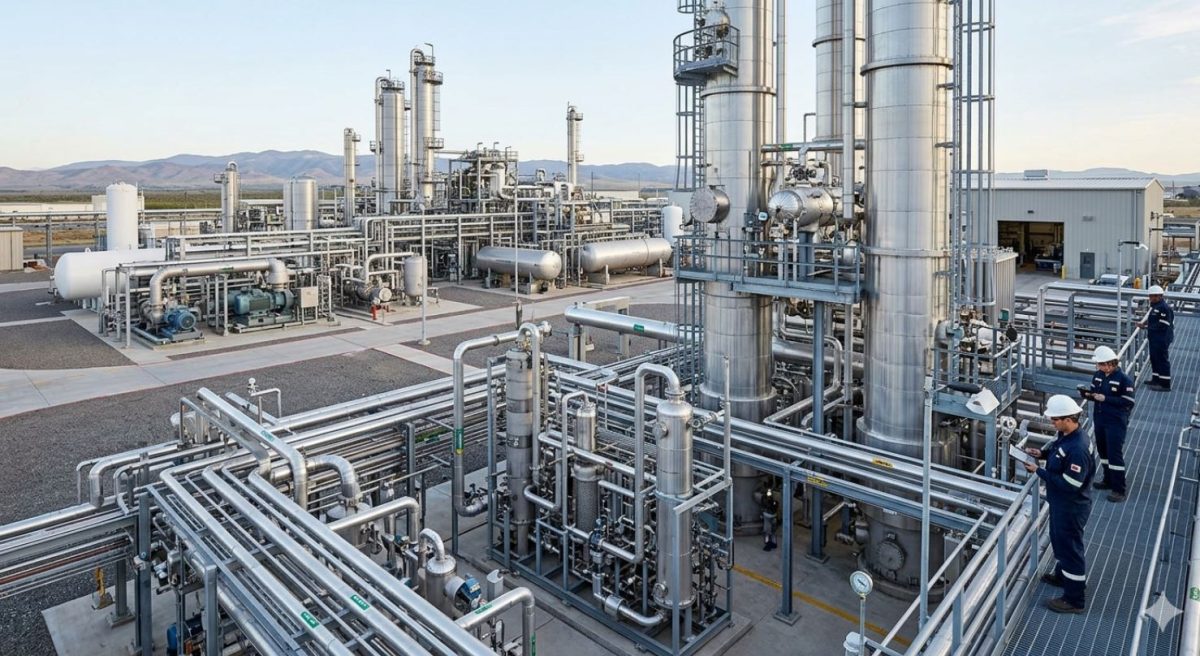
Producing high-purity rare gases requires far more than conventional industrial gas handling. Modern facilities combine cryogenic air separation, precision process control, advanced purification technologies, and continuous analytical monitoring to achieve the purity levels demanded by semiconductor and electronics manufacturers.
In a typical air separation unit (ASU), atmospheric air is compressed, purified to remove moisture and carbon dioxide, and cooled to cryogenic temperatures. Through fractional distillation, oxygen, nitrogen, argon, and rare gas fractions are separated based on their boiling points. Additional purification stages—including catalytic treatment, adsorption systems, and cryogenic rectification—are then used to recover high-value gases such as krypton and xenon at extremely high purity.
Cryoin Europe develops engineering solutions covering multiple stages of this process. Its expertise includes the design of cryogenic process equipment, gas purification systems, piping and instrumentation engineering, plant automation, equipment integration, commissioning, and technical support throughout the facility lifecycle. In addition to new installations, the company participates in upgrading existing industrial gas plants to improve process efficiency, increase rare gas recovery, and reduce energy consumption.
These capabilities demonstrate how engineering expertise directly supports Europe’s objective of expanding regional production capacity for strategic industrial gases.
Supporting the European Semiconductor Ecosystem
Semiconductor manufacturing has become a priority area for policymakers, investors, and industrial stakeholders throughout Europe.
However, semiconductor production cannot be viewed solely through the lens of chip fabrication facilities. The sector depends on a much larger network of suppliers, technology providers, engineering companies, and raw material producers.
Rare gases represent one element within this broader ecosystem.
A stable supply of industrial gases helps manufacturers plan capacity expansion, optimize production scheduling, and reduce exposure to supply disruptions originating outside the European market.
From a supply-chain perspective, local production creates additional flexibility. It allows industrial consumers to work more closely with regional suppliers and reduces reliance on extended international logistics routes.
For semiconductor manufacturers considering long-term investments within Europe, the availability of supporting infrastructure can be just as important as the fabrication facilities themselves.
Engineering Challenges and Operational Considerations
Building resilient rare gas production capacity involves more than installing industrial equipment.
Engineering teams must address challenges related to process integration, operational reliability, maintenance planning, and long-term facility performance. Consistent production requires careful coordination between multiple technical disciplines, including process engineering, mechanical systems, instrumentation, and plant operations.
In addition, industrial gas facilities operate within environments where efficiency, uptime, and process stability remain critical considerations.
The ability to maintain reliable operations over extended periods directly influences the effectiveness of supply chains that depend on these facilities.
Organizations such as Cryoin Europe operate within this engineering landscape by providing process engineering, mechanical design, instrumentation and control systems, EPC project execution, commissioning, and long-term technical support for cryogenic facilities. Maintaining stable operating conditions, optimizing heat-exchange performance, and ensuring precise control of cryogenic distillation columns are all essential for achieving consistent gas purity and production reliability.
The emphasis extends beyond production volume to include plant availability, process stability, energy efficiency, and product quality. These engineering parameters determine whether industrial gas facilities can reliably supply semiconductor manufacturers, research laboratories, electronics producers, and other technology-intensive industries that require uninterrupted access to ultra-high-purity gases.
A Broader Industrial Perspective
The discussion surrounding European sovereignty in rare gases ultimately extends beyond a single industry.
Advanced manufacturing, medical technologies, research institutions, aerospace programs, electronics production, and energy-related applications all depend on specialized gases in varying capacities.
As industrial policy increasingly focuses on resilience, domestic production capabilities are becoming part of broader efforts to strengthen Europe’s technological foundation.
This does not imply isolation from global markets. Rather, it reflects an effort to balance international cooperation with the development of internal capabilities that reduce strategic vulnerabilities.
Within this framework, companies involved in cryogenic engineering and gas production play an important supporting role. Cryoin Europe represents one example of how technical expertise can contribute to strengthening industrial infrastructure within the European market.
Conclusion
European sovereignty in rare gases is fundamentally an industrial resilience issue. Reliable access to strategic raw materials supports manufacturing continuity, investment planning, and long-term technological development.
As Europe expands its ambitions in semiconductor production and other advanced industries, the availability of regional rare gas production capacity becomes increasingly relevant. Cryogenic technologies, supply-chain reliability, and engineering expertise all contribute to this objective.
The continued development of European rare gas infrastructure is therefore not only a question of production capacity but also a broader investment in industrial stability, technological independence, and the long-term competitiveness of key manufacturing sectors.
 Apple App Store APIs on fingerprinting
 Tai TMS Helps Boost Transport Quadruple Shipment Volume
 DP World’s DUBUY.com launches digital trading route Morocco
 WALLIX recognised among global PAM leaders by analyst firm Quadrant Knowledge Solutions
 2020: Future of Manufacturing Technology
 Kuebix Provides Solution for the Truckload Capacity Crisis