
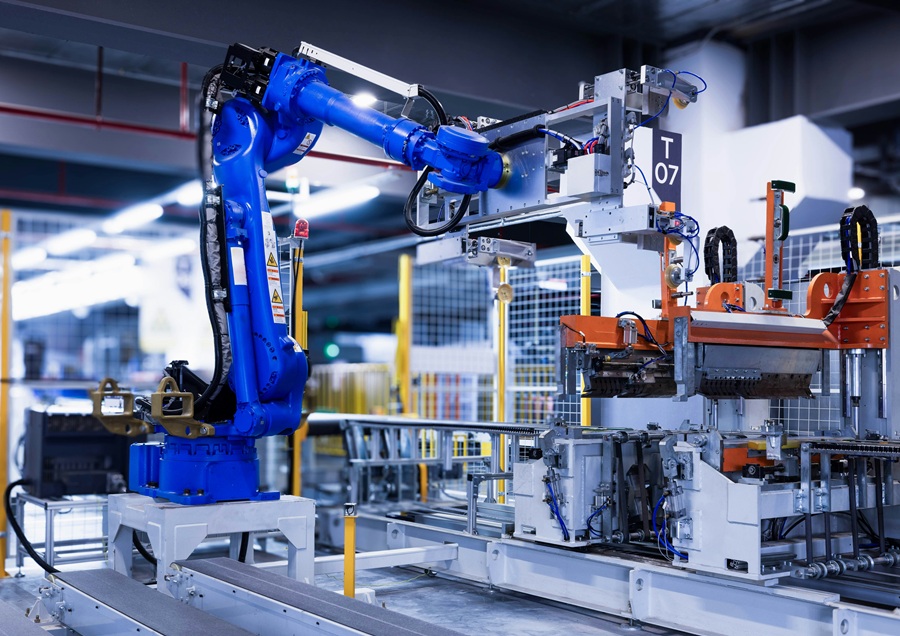
At yesterday’s Gartner IT Symposium/Xpo, it was predicted that by 2030, 80 percent of frontline workers will work alongside physical AI. Unveiled as one of Gartner’s top strategic predictions for 2027 and beyond, the forecast reflects AI’s transition into the physical world through technologies such as robots, drones and autonomous vehicles that sense and interact with their surroundings.
As physical AI becomes increasingly central to the workforce to automate hazardous and repetitive work, improve safety and unlock operational insights, the ability to collect, analyse and act on real-time data will become foundational to business operations. But amidst increasingly complex IoT infrastructure, the constant stream of data required for successful physical AI will depend on resilience across entire connected IoT estates.

Iain Davidson, Head of Product Marketing, Wireless Logic (pictured left), explains why IoT resilience will be critical to the deployment of these systems:
“While Gartner’s prediction seems extreme, increasingly capable AI orchestration and widespread investment has meant that AI was always going to reshape the workforce. This comes as organisations look to lower operating costs, boost productivity and gain deeper insights that contribute directly to measurable business outcomes. But as AI moves from the digital world into the physical, its success is entirely dependent on the infrastructure that supports it behind the scenes.
“Physical AI will generate and harness vast amounts of data that businesses will increasingly come to rely on for operational efficiency. As we see deployments increase leading up to 2030, the resilience of the IoT will be critical to keep physical AI systems connected and transmitting, not least because these systems are likely to underpin services in frontline industries such as healthcare, manufacturing and transport.
“As highlighted by Gartner, organisations must adopt a safety-first approach when implementing physical AI and invest in scalable platforms. Resilient IoT that prioritises enhanced security and minimises downtime will be central to the foundation of physical AI. Organisations should not simply rush to deploy smarter robots and models – they need systems and processes in place to ensure their connectivity is resilient, and that physical AI systems can be monitored, provisioned and ultimately execute tasks safely in real-time.”
 How To Beat The Algorithm & Not Let Your Online Presence Go Out
 Retailers are in between a rock and a hard place right now
 Da Vinci Capital Invests in Global Technology Consultancy DataArt
 Research from Gartner Predicts Over 75% of Companies Will Adopt Warehouse Automation By 2027
 FourKites Launches Loft: AI Platform to Orchestrate Enterprise Systems with Real-World Intelligence
 TSC Printronix Auto ID launches new healthcare printers, a USB-connected desktop & new mobile accessories