

Industries involving manufacturing are evolving at a fast pace that might have been unimaginable once. Automated systems are now available even in small businesses, and they’re not exclusive to massive corporations anymore.
Mid-sized fabricators can now get a chance to compete with the help of robotic solutions that can maintain a more consistent output while controlling material waste. See info about robotic welding when you go to this website.
Robotic welding is no wonder becoming popular today because they’re going to reshape how the metal components are joined. Instead of replacing skilled welders, they often reframe their role in a much safer position.
Humans can check the quality of the parts while they’re not exposed to the extreme heat that’s present in welding. They are also going to be able to use their judgment in areas where it matters the most, and companies can often look for a more dependable method that can provide them with accuracy.
Decision-makers are also integrating these robotic welders into their existing operations, and they love the flexibility of the product designs. They can make changes in the arm’s programming according to their current production needs, so most of their output can be produced on demand.
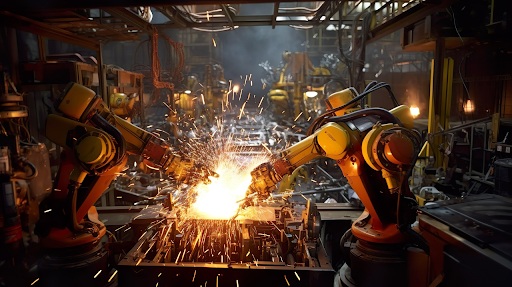
Robotic Arms Produce Consistency at Regular Intervals
So, why do fabricators get these arms, you ask? Well, the reason is that they can maintain their arc lengths at an exact level each time they help create a machinery part. The torch angles don’t change unless there’s human intervention, and they’re structurally strong. When they’re programmed at a correct level, they’re going to execute these identical motions across hundreds of deliverables without feeling fatigued. They’re also able to work long shifts, and this is valuable in sectors that demand high standards.
With their consistency, it also significantly decreases scraps, and it can help get through inspection days. The stable welds are also going to give planners the confidence to create forecasts while the purchasing teams are managing raw material flows more accurately. Over time, this is going to translate into a predictable cycle that many manual processes may struggle to repeat.
Also, factories often operate with other departments while they’re making a part. Fortunately, the robots are now able to communicate with enterprise planning personnel as well as design software to unlock their potential. The free-flowing data that drives coordination allows the engineers to stimulate the joint paths across multiple cells without stopping production. It’s an interconnected environment that shortens the cycle of development in many companies.
This kind of development can be found in the right company that manufactures the robots. A Welding Robot Software that companies can control can monitor the wire feed rates and determine the safety conditions in real time. See more of their contact information below:
Mach Machines
4460 Lake Forest Drive, Suite 210 Blue Ash, OH 45242
+1 513-314-6278
These Robots Help Transform Workforce Safety
Automation is able to introduce a different rhythm where everything is more organized. The technicians themselves can focus more on troubleshooting rather than getting exposed to a lot of fumes or damaging their eyes. This change is going to be beneficial for everyone because it can significantly improve everyone’s morale when they know that they’re not exposed to the heat sparks each working day.
Also, companies are able to improve their training requirements, where the emphasis can include programming logic. They might also invest in sensor calibration, where they collaborate with engineers to process improvements when necessary. Rather than replacing the skilled people, robotics often deepens understanding for many, so they can be more prepared to handle positions with higher responsibilities.
There’s Flexibility Available
Volatility in markets may mean that businesses are often required to handle frequent alterations in designs. In the past, manual welding was favored because they have an inherent ability to change the designs, but today’s robotic platforms have become more advanced, where the engineers can design modular tooling so product variants can be switched through controlled procedures.
Developers are also able to create weld schedules so workers can reuse them according to their current projects. It’s a flexibility that’s specifically attractive for contract factories that supply various parts to different companies, and this allows them to be more competitive.
Economic Considerations and Long-Term Value
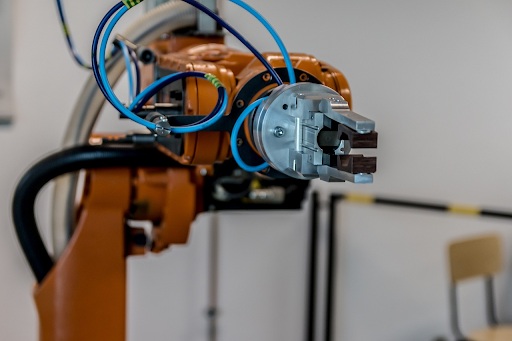
Usually, many companies might hesitate to invest due to the initial amount required, but when looking at it, the lifecycle of the robotic welding machines (https://www.ccohs.ca/oshanswers/safety_haz/welding/overview.html) can often extend the production capacity, and they can give hefty returns because they’re more efficient.
There are also advantages, like strong customer confidence and the ability to take on a lot of projects simultaneously, because the manufacturers are now able to cater to different sectors. They might extend beyond welding alone and move towards broader strategies that can make them a leader in their industries.
 MatchBack Systems, Inc. & SynchroNet Intermodal Services, Inc. Cooperate to Provide Unique Services
 PTV Logistics portfolio at Multimodal 2023
 The PSTN stop sell: all you need to know
 Printronix Auto ID launches T800 thermal printer; industrial features in a compact, desktop model
 Exploring the Pros and Cons of Different Types of Life Insurance Policies
 Could your ISP become a mobile connectivity provider?