

In the age of digitization, automation, and innovation, logistics is experiencing a true revolution, opening up new horizons for businesses worldwide.
I invite you to read on to learn how these changes impact our daily lives and business decisions.
Revolutionizing Supply Chain Management Through Technology
In recent years, technology has revolutionized many aspects of business, with one of the most dynamic advances being observed in logistics and supply chain management. Former methods that relied solely on human memory and paper documents are slowly becoming obsolete, giving way to digitization, automation, and advanced data analytics. Integrating modern technological solutions is therefore becoming not only a competitive advantage but the foundation of effective modern supply chain management.
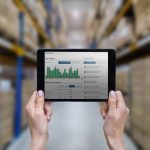
For example, warehouse management systems (WMS) that utilize technologies such as RFID programming and artificial intelligence enable rapid identification of goods and real-time monitoring of their movement. This significantly accelerates warehouse operations, improves inventory accuracy, and optimizes warehouse space.
As a result, inventory management becomes more precise, operating costs are reduced, and customer satisfaction increases due to faster and more reliable order fulfillment. Another breakthrough in logistics is the use of transport management systems, which integrate delivery route planning, loading optimization, and fleet management.
The implementation of intelligent solutions will not only impact companies themselves but also the global structure of markets, transforming traditional approaches to logistics processes and setting new standards in customer service. A technological revolution in supply chain management is therefore inevitable and represents one of the most exciting developments in the business world.
Supply Chain Optimization
Supply chain optimization involves improving processes, reducing costs, increasing efficiency, and improving quality throughout the supply chain. It is a comprehensive approach that encompasses managing the flow of goods, information, finances, and relationships between supply chain participants.
Optimization aims to improve every stage, from the supply of raw materials, through manufacturers, distributors, warehouses, and ultimately, the end customer.
Document Digitization and Outsource for Supply Chains
Integrating document digitization and outsource in supply chain management brings numerous benefits, including improved information flow between chain participants, which increases operational efficiency and shortens order fulfillment times. It also enables process automation and better coordination of activities, resulting in cost reduction and increased ability to respond quickly to changing market conditions.
Furthermore, it provides improved inventory visibility and risk management, which is crucial for maintaining supply continuity and customer satisfaction.
PDF Tools to Enhance the Flow of Transport Documents
The PDF programs streamline key processes related to the administration of transport documents. It enables fully generation, sharing, signing, and archiving of transport documents.
Digitization allows customers, among other things, constant access to order information thanks to inventory control. Accelerating the entire delivery process and eliminating errors distinguishes your company from others, ensuring future buyers will return—even if your product price is slightly higher than the competition. And a returning buyer guarantees profits.
A very important functionality of a reliable PDF program such as SwifDoo PDF in the context of PDF management is the possibility of full integration with already-ready PDF tools for logistics and supply chain.
Enhancements of the flow of PDF tools and integrating them with supply such a program brings many benefits, including:
- Increasing the efficiency of PDF documents processes
- Time optimization and process acceleration
- Reducing the risk of errors in document circulation
- Eliminating the need for manual data entry
- Improved document communication and easy access to information
- Flexibility and scalability of processes and the entire company
- OCR PDF documents such as images to PDFs, PDF to DWG, etc.
- Increased transparency of operations and easy access to data
- The ability to analyze data to make more effective decisions
Automation and robotization of logistics processes
Automation and robotization of logistics processes is a topic worthy of extensive consideration in the context of the modern supply chain. In an era where technology is developing at a rapid pace, logistics is experiencing a true revolution.
Effective management of goods flow is not only a sign of modernity but, above all, the key to achieving a competitive advantage. The use of advanced IT systems, warehouse robots, and automated parcel sorting machines are just some examples of how technology is impacting logistics. These technologies significantly shorten order fulfillment times, minimize the risk of errors, and increase productivity.
Automating data processes allows for precise analyses, predicting future trends, and optimizing the supply chain in real time. The financial aspect cannot be overlooked either – although robotization requires initial investment, it contributes to lower operating costs in the long run. An example is the use of autonomous transport vehicles (AGVs) in distribution centers, which continuously transport goods between different warehouse locations.
The impact of information technology on supply chain efficiency and transparency
In the age of digitalization, the role of information technology in shaping the efficiency and transparency of supply chains cannot be overstated. Technology not only significantly accelerates logistics operations but also enables uninterrupted communication between individual links in the chain.
Information technologies enable data visualization, allowing logistics managers to make informed decisions and respond quickly to changing market conditions. For example, telematics systems used in transportation allow for monitoring vehicle positions, fuel consumption, and driver driving habits.
Summary
Technology is revolutionizing logistics and supply chain management by introducing automation, improving communication, and increasing process transparency. Solutions such as artificial intelligence, the Internet of Things (IoT), and big data analytics contribute to optimizing the flow of goods, reducing costs, and shortening delivery times, ultimately increasing companies’ competitiveness in the market.
 Transporeon to offer autonomous spot freight procurement services, following acquisition of TNX Logistics
 Nulogy Secures $20 Million CAD Funding to Drive Supply Chain Collaboration & Digitisation Solutions
 Colt scales up Middle East operations to support surge in customer demand across the region
 What To Know When Your Business Needs A Warehouse
 XPO Logistics Releases Whitepaper: “Holiday Peak 2020: A Glimpse into the Future of E-Commerce”
 Elemica Acquires EMNS, a Leading Material Quality Compliance Provider